
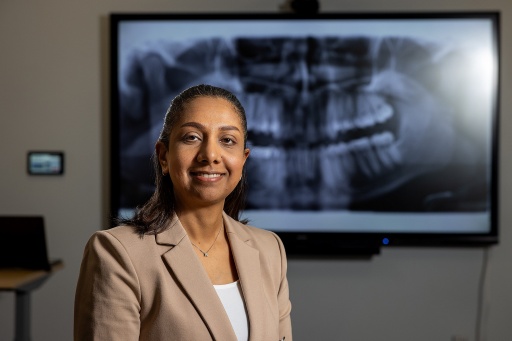
BUFFALO, N.Y. — In most individuals, permanent second premolars begin to erupt around age 11, pushing out the baby, or primary, teeth. However, in anywhere between 2 and 11% of the population, these permanent second premolars do not exist. “Tooth agenesis, a congenital condition characterized by the absence of one or more teeth, is among
Guarding the Source – Why the Future of Science Depends on Proven Data
In 2022, the scientific community confronted an uncomfortable reality about the use of AI in research.
That year, it was discovered that a prominent 2006 Alzheimer’s paper, foundational to years of research, contained manipulated images. For more than a decade, research programs and drug development efforts relied on compromised evidence.
The scientific method did not fail. The equations were not wrong.
The foundation was.
Science does not collapse when theories are challenged. It collapses when the evidence is corrupted. We often treat scientists as guardians of truth; however, science is not about truth.
Science is about objectivity.
Objectivity means conclusions follow data. Hypotheses yield to measurements. Evidence disciplines imagination, not the other way around.
The entire scientific enterprise rests on something fragile: the integrity of the observational record. Today, that record faces a new challenge.
Artificial intelligence systems can generate images, signals, transcripts, and even entire datasets that are statistically indistinguishable from human-generated data. This generation of synthetic data may occur either through intentional misuse or as an unintended byproduct when training new systems, potentially contaminating the evidentiary base.
The risk is not that AI replaces scientists. The risk is that it blurs the boundary between observation and fabrication.
Imagine a geopolitical crisis triggered by a satellite image. It could also start with a radar anomaly or a UAP video spreading before verification.
Was it recorded?
Was it altered?
Was it generated?
If provenance cannot be demonstrated, science does not simply drift into error. It dissolves into doubt. In a deeply divided world, doubt spreads faster than correction.
Doubt is not paranoia. We have seen how compromised evidence, from fabricated images to flawed datasets, from the Alzheimer’s case to cold fusion in physics, can redirect entire fields for years. In an era of synthetic media and autonomous AI agents, ensuring authenticity is no longer optional. It is essential for meaningful science.
These questions of origin are especially urgent for SETI.
The day we detect a signal that might indicate extraterrestrial intelligence, or a sensor records a strange phenomenon in the sky, the first response will not be celebration. It will be skepticism, and rightly so. The world will ask: Is it interference? Instrumental error? Human-made?
Those questions have defined SETI for more than six decades.
Now another must be added: Is it fabricated?
If we cannot prove the chain of custody from photons to publication, the signal will not survive scrutiny. In searching for extraterrestrial intelligence, credibility matters as much as sensitivity.
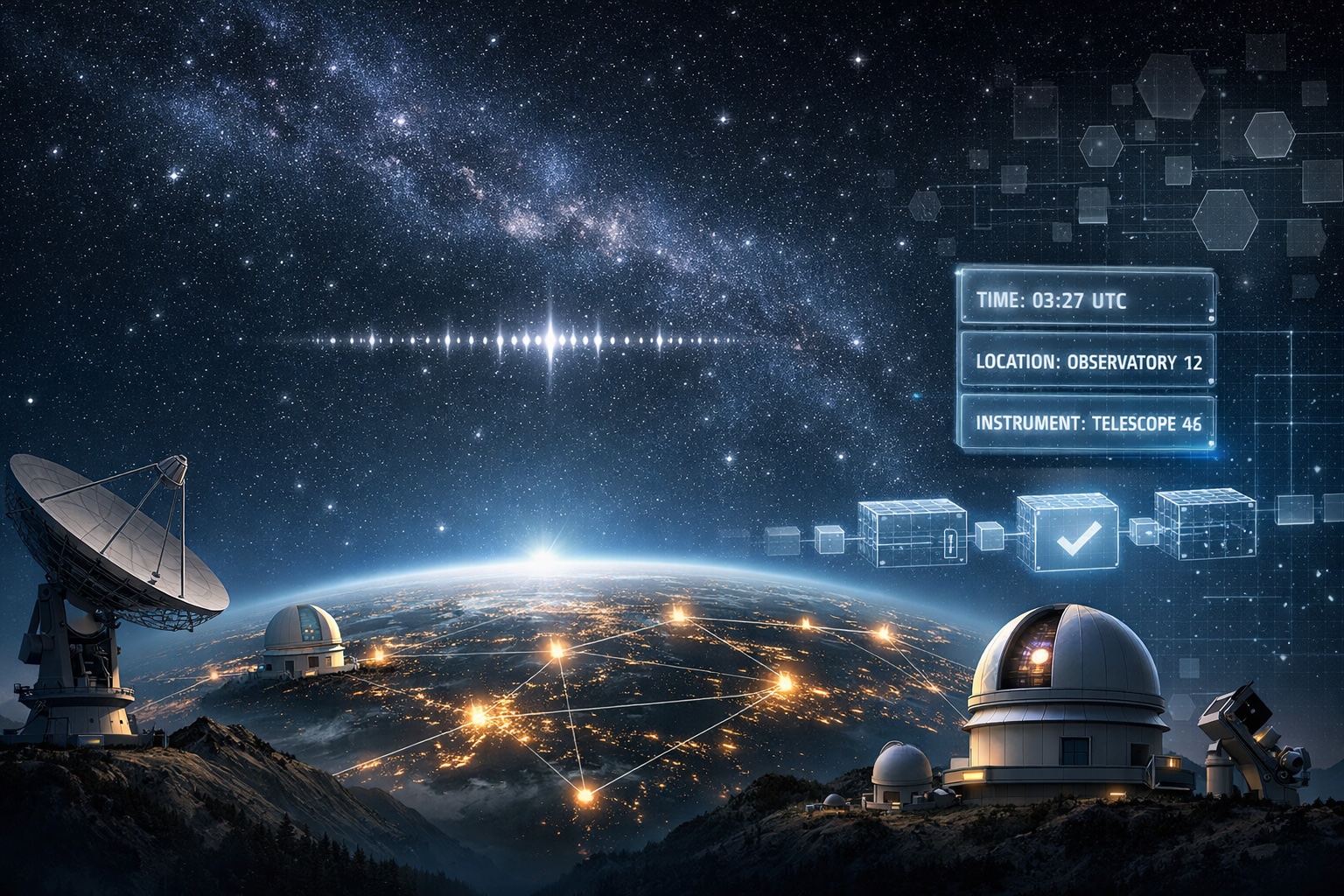
That is one reason I envisioned SkyMapper. SkyMapper is a distributed, Web3-enabled network of telescopes and all-sky instruments developed to make observations, from satellites to potential technosignatures, verifiable at their origin.
Yes, we use blockchain technology. Strip away the hype, and it is simply a distributed, tamper-evident ledger. Financial systems use such ledgers to prevent silent alteration of transactions. Science can use them to anchor observations to time, place, and instrument.
When a telescope records a satellite trajectory, a meteor flare, or a potential UAP detection, SkyMapper can demonstrate:
This signal came from this instrument.
At this time.
Under these conditions.
And it has not been modified.
Not because we distrust scientists.
But because science should not rely solely on trust.
The strength of science is not that it claims truth. Its strength lies in protecting objectivity.
And objectivity begins at the source.

Related Posts
![[talk]-alina-jade-barnett:-inherently-interpretable-deep-learning-models](https://sapio.asia/wp-content/uploads/2026/02/36509-talk-alina-jade-barnett-inherently-interpretable-deep-learning-models.jpg)