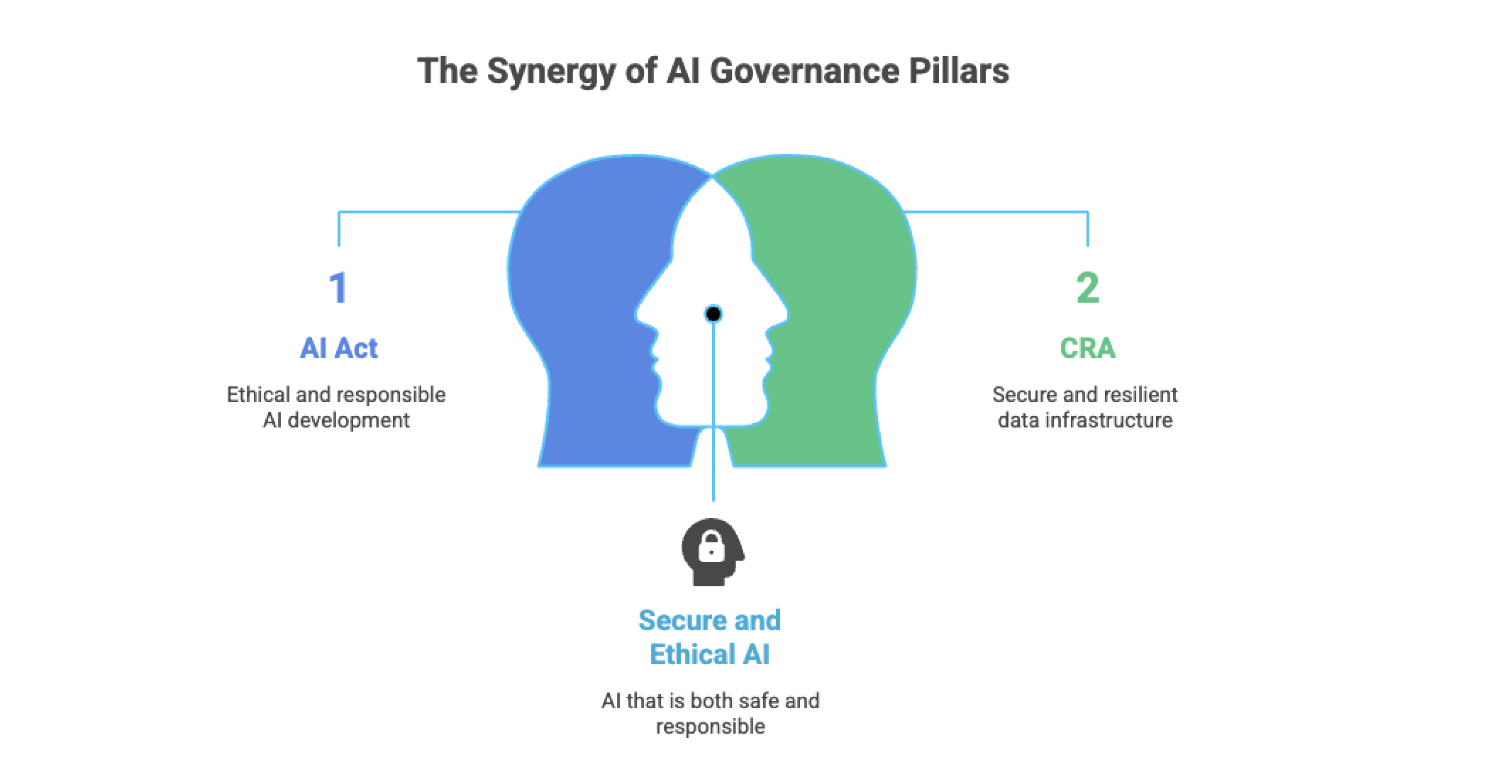
of data governance Data governance is the structured, ongoing process of managing an organization’s data to ensure its availability, usability, integrity, and security. It involves setting up a framework of roles, policies, standards, and metrics that control how data is created, used, stored, and protected throughout its lifecycle. Foundations of Data Governance, generated by Napkin AI

Classification of health product defect reports by deep learning – Scientific Reports
References
-
Nagaich, U. & Sadhna, D. Drug recall: An incubus for pharmaceutical companies and most serious drug recall of history. Int. J. Pharm. Investig. 5, 13–19 (2015).
Google Scholar
-
US Food & Drug Administration. Annual Report. (2022). https://www.fda.gov/media/166289/download
-
Lindström-Gommers, L. & Mullin, T. International Conference on Harmonization: Recent reforms as a driver of global regulatory harmonization and innovation in medical products. Clin. Pharmacol. Ther. 105, 926–931 (2019).
Google Scholar
-
Ang, P. S. et al. A risk classification model for prioritising the management of quality issues relating to substandard medicines in Singapore. Pharmacoepidemiol. Drug Saf. 31, 729–738 (2022).
Google Scholar
-
Vasey, B. et al. Reporting guideline for the early-stage clinical evaluation of decision support systems driven by artificial intelligence: DECIDE-AI. Nat. Med. 28, 924–933 (2022).
Google Scholar
-
Vaswani, A. et al. Attention Is All You Need. Adv. Neural Inf. Process. Syst. 30, 5999–6009 (2017).
Google Scholar
-
Vig, J. A. Multiscale Visualization of Attention in the Transformer Model. ACL 2019–57th Annual Meeting of the Association for Computational Linguistics, Proceedings of System Demonstrations 37–42. arXiv preprint arXiv:1906.05714 (2019).
-
Rogers, A., Kovaleva, O. & Rumshisky, A. A primer in bertology: What we know about how BERT works. Trans. Assoc. Comput. Linguist. 8, 842–866 (2020).
Google Scholar
-
Clark, K., Khandelwal, U., Levy, O. & Manning, C. D. What Does BERT Look At? An Analysis of BERT’s Attention. arXiv preprint arXiv:1906.04341. (2019).
-
He, P., Liu, X., Gao, J. & Chen, W. DeBERTa: Decoding-enhanced BERT with Disentangled Attention. arXiv preprint arXiv:2006.03654 (2020).
-
Suzgun, M. et al. Challenging BIG-Bench Tasks and Whether Chain-of-Thought Can Solve Them. (2022). arXiv preprint arXiv:2210.09261.
-
Raffel, C. et al. Exploring the Limits of Transfer Learning with a Unified Text-to-Text Transformer. J. Mach. Learn. Res. 21, 5485–5551 (2020).
Google Scholar
-
Radford, A. et al. Language Models are Unsupervised Multitask Learners. OpenAI blog. 1, 9 (2019).
Google Scholar
-
Yang, Z. et al. XLNet: Generalized Autoregressive Pretraining for Language Understanding. Adv Neural Inf. Process. Syst https://doi.org/10.48550/arXiv.1906.08237 (2019).
Google Scholar
-
Liu, Y. et al. RoBERTa: A Robustly Optimized BERT Pretraining Approach. arXiv preprint arXiv:1907.11692 (2019).
-
Brown, T. B. et al. Language Models are Few-Shot Learners. Adv. Neural Inf. Process. Syst. 33, 1877–1901 (2020).
Google Scholar
-
Clark, K. & ELECTRA. : Pre-training Text Encoders as Discriminators Rather Than Generators. arXiv preprint arXiv:2003.10555 (2020).
-
Bahdanau, D., Cho, K. H. & Bengio, Y. Neural Machine Translation by Jointly Learning to Align and Translate. 3rd International Conference on Learning Representations, ICLR – Conference Track Proceedings. arXiv preprint arXiv:1409.0473 (2014). arXiv preprint arXiv:1409.0473 (2014). (2015).
-
Bommasani, R. et al. On the Opportunities and Risks of Foundation Models. arXiv preprint arXiv:2108.07258 (2021).
-
Ghaseminejad Raeini, M. The evolution of language models: From N-Grams to LLMs, and beyond. Nat. Lang. Process. J. 12, 100168 (2025).
Google Scholar
-
Hu, Y. et al. PheCatcher: Leveraging LLM-Generated Synthetic Data for Automated Phenotype Definition Extraction from Biomedical Literature. Stud. Health Technol. Inf. 329, 718–722 (2025).
Google Scholar
-
Li, Y., Li, J., He, J. & Tao, C. AE-GPT: Using large language models to extract adverse events from surveillance reports-A use case with influenza vaccine adverse events. PLoS One https://doi.org/10.1371/journal.pone.0300919 (2024).
Google Scholar
-
Devlin, J. et al. BERT: Pre-training of Deep Bidirectional Transformers for Language Understanding. NAACL HLT 2019–2019 Conference of the North American Chapter of the Association for Computational Linguistics: Human Language Technologies – Proceedings of the Conference 1, 4171–4186. arXiv preprint arXiv:1810.04805 (2019).
-
Sun, C. et al. Biomedical named entity recognition using BERT in the machine reading comprehension framework. J Biomed. Inform 118, 103799 (2021).
Google Scholar
-
Gu, Y. U. et al. Domain-Specific Language Model Pretraining for Biomedical Natural Language Processing. ACM Trans. Comput. Healthc. (HEALTH). 3 (1), 1–23 (2021).
Google Scholar
-
Tan, F. et al. Multigrained Representation Analysis and Ensemble Learning for Text Moderation. IEEE Trans. Neural Netw. Learn. Syst. 34, 7014–7023 (2022).
Google Scholar
-
Senn, S., Tlachac, M. L., Flores, R. & Rundensteiner, E. Ensembles of BERT for depression classification. Annu. Int. Conf. IEEE Eng. Med. Biol. Soc. 2022, 4691–4694 (2022).
Google Scholar
-
Widad, A., El Habib, B. L. & Ayoub, E. F. Bert for Question Answering applied on Covid-19. Procedia Comput. Sci. 198, 379–384 (2022).
Google Scholar
-
Xu, C., Yuan, F. & Chen, S. BJBN: BERT-JOIN-BiLSTM networks for medical auxiliary diagnostic. J. Healthc. Eng. https://doi.org/10.1155/2022/3496810 (2022).
Google Scholar
-
Ji, Z., Wei, Q. & Xu, H. BERT-based ranking for biomedical entity normalization. AMIA Jt. Summits Transl. Sci. Proc. 2020, 269–277 (2020).
Google Scholar
-
Jiang, L. et al. IUP-BERT: Identification of umami peptides based on BERT features. Foods 11, 3742 (2022).
Google Scholar
-
Aldahdooh, J., Vähä-Koskela, M., Tang, J. & Tanoli, Z. Using BERT to identify drug-target interactions from whole PubMed. BMC Bioinformatics 23245. (2022).
Google Scholar
-
Tejani, A. S. et al. Performance of Multiple Pretrained BERT Models to Automate and Accelerate Data Annotation for Large Datasets. Radiol Artif. Intell 4, e220007 (2022).
Google Scholar
-
Kuo, C. C., Chen, K. Y. & Luo, S. B. Audio-Aware Spoken Multiple-Choice Question Answering with Pre-Trained Language Models. IEEE/ACM Trans. Audio Speech Lang. Process. 29, 3170–3179 (2021).
Google Scholar
-
Wang, Z. Y. et al. Pre-trained models based receiver design with natural redundancy for Chinese characters. IEEE Commun. Lett. 26, 2350–2354 (2022).
Google Scholar
-
Kowsher, M. et al. Bangla-BERT: Transformer-based efficient model for transfer learning and language understanding. IEEE Access 10, 91855–91870 (2022).
Google Scholar
-
Zhu, X., Wu, H. & Zhang, L. Automatic short-answer grading via BERT-based deep neural networks. IEEE Trans. Learn. Technol. 15, 364–375 (2022).
Google Scholar
-
Liu, N., Hu, Q., Xu, H., Xu, X. & Chen, M. Med-BERT: A pretraining framework for medical records named entity recognition. IEEE Trans. Industr Inf. 18, 5600–5608 (2022).
Google Scholar
-
Zhou, C. Comparative evaluation of GPT, BERT, and XLNet: Insights into their performance and applicability in NLP tasks. Trans. Comput. Sci. Intell. Syst. Res. 7, 415–421 (2024).
Google Scholar
-
Gardazi, N. M. et al. BERT applications in natural language processing: a review. Artif. Intell. Rev. 2025 58, 166 (2025).
Google Scholar
-
Zhong, R., Ghosh, D., Klein, D. & Steinhardt, J. Are Larger Pretrained Language Models Uniformly Better? Comparing Performance at the Instance Level. Findings of the Association for Computational Linguistics: ACL-IJCNLP 3813–3827 (2021).
-
Vinyals, O. et al. Matching Networks for One Shot Learning. Adv. Neural Inf. Process. Syst. 29, 3637–3645 (2016).
Google Scholar
-
Baevski, A. et al. Cloze-driven Pretraining of Self-attention Networks. EMNLP-IJCNLP 2019–2019 Conference on Empirical Methods in Natural Language Processing and 9th International Joint Conference on Natural Language Processing, Proceedings of the Conference 5360–5369. arXiv preprint arXiv:1903.07785 (2019).
-
Schick, T. & Schütze, H. Exploiting Cloze Questions for Few Shot Text Classification and Natural Language Inference. EACL –16th Conference of the European Chapter of the Association for Computational Linguistics, Proceedings of the Conference 255–269. arXiv preprint arXiv:2001.07676 (2020). 255–269. arXiv preprint arXiv:2001.07676 (2020). (2021).
-
Schick, T. & Schütze, H. It’s Not Just Size That Matters: Small Language Models Are Also Few-Shot Learners. NAACL-HLT 2021–2021 Conference of the North American Chapter of the Association for Computational Linguistics: Human Language Technologies, Proceedings of the Conference 2339–2352. arXiv preprint arXiv:2009.07118 (2020).
-
Gao, T., Fisch, A. & Chen, D. Making Pre-trained Language Models Better Few-shot Learners. ACL-IJCNLP 2021–59th Annual Meeting of the Association for Computational Linguistics and the 11th International Joint Conference on Natural Language Processing, Proceedings of the Conference 3816–3830. arXiv preprint arXiv:2012.15723 (2020).
-
Shin, T. et al. Eliciting Knowledge from Language Models with Automatically Generated Prompts. EMNLP –2020 Conference on Empirical Methods in Natural Language Processing, Proceedings of the Conference 4222–4235. arXiv preprint arXiv:2010.15980 (2020). 4222–4235. arXiv preprint arXiv:2010.15980 (2020).
-
Lester, B., Al-Rfou, R. & Constant, N. The Power of Scale for Parameter-Efficient Prompt Tuning. EMNLP –2021 Conference on Empirical Methods in Natural Language Processing, Proceedings 3045–3059. arXiv preprint arXiv:2104.08691 (2021). 3045–3059. arXiv preprint arXiv:2104.08691 (2021).
-
Liu, X. et al. GPT Understands, Too. AI Open https://doi.org/10.1016/j.aiopen.2023.08.012(2023).
-
Li, X. L., Liang, P. & Prefix-Tuning Optimizing Continuous Prompts for Generation. ACL-IJCNLP 2021–59th Annual Meeting of the Association for Computational Linguistics and the 11th International Joint Conference on Natural Language Processing, Proceedings of the Conference 4582–4597. arXiv preprint arXiv:2101.00190 (2021).
-
Qin, G. & Eisner, J. Learning How to Ask: Querying LMs with Mixtures of Soft Prompts. NAACL-HLT 2021–2021 Conference of the North American Chapter of the Association for Computational Linguistics: Human Language Technologies, Proceedings of the Conference 5203–5212. arXiv preprint arXiv:2104.06599 (2021).
-
Liu, X. et al. P-Tuning v2: Prompt Tuning Can Be Comparable to Fine-tuning Universally Across Scales and Tasks. arXiv preprint arXiv:2110.07602 (2021).
-
Khandelwal, U., He, H., Qi, P., Jurafsky, D. S. & Nearby Fuzzy Far Away: How Neural Language Models Use Context. ACL –56th Annual Meeting of the Association for Computational Linguistics, Proceedings of the Conference (Long Papers) 1, 284–294. arXiv preprint arXiv:1805.04623 (2018). 1, 284–294. arXiv preprint arXiv:1805.04623 (2018).
-
Zorzi, M., Combi, C., Lora, R., Pagliarini, M. & Moretti, U. Automagically encoding Adverse Drug Reactions in MedDRA. International Conference on Healthcare Informatics, IEEE 90–99 (2015). 90–99 (2015).
-
Tiftikci, M., Özgür, A., He, Y. & Hur, J. Machine learning-based identification and rule-based normalization of adverse drug reactions in drug labels. BMC Bioinform. 20, 1–9 (2019).
Google Scholar
-
Létinier, L. et al. Artificial Intelligence for Unstructured Healthcare Data: Application to Coding of Patient Reporting of Adverse Drug Reactions. Clin. Pharmacol. Ther. 110, 392–400 (2021).
Google Scholar
-
McInnes, L., Healy, J. & Melville, J. U. M. A. P. Uniform Manifold Approximation and Projection for Dimension Reduction. arXiv preprint arXiv:1802.03426 (2018).
-
Lundberg, S. M. & Lee, S. I. A Unified Approach to Interpreting Model Predictions. Adv Neural Inf. Process. Syst https://doi.org/10.48550/arXiv.1705.07874 (2017).
Google Scholar
-
Peryea, T. et al. Global Substance Registration System: consistent scientific descriptions for substances related to health. Nucleic Acids Res. 49, D1179–D1185 (2021).
Google Scholar
-
Li, Y. et al. Artificial intelligence-powered pharmacovigilance: A review of machine and deep learning in clinical text-based adverse drug event detection for benchmark datasets. J. Biomed. Inf. 152, 104621 (2024).
Google Scholar
-
Howard, J. & Ruder, S. Universal Language Model Fine-tuning for Text Classification. ACL –56th Annual Meeting of the Association for Computational Linguistics, Proceedings of the Conference (Long Papers) 1, 328–339. arXiv preprint arXiv:1801.06146 (2018). 1, 328–339. arXiv preprint arXiv:1801.06146 (2018).
-
He, J. et al. Prompt Tuning in Biomedical Relation Extraction. J. Healthc. Inf. Res. 8, 206–224 (2024).
Google Scholar
-
Chooi, W. H. et al. Vaccine contamination: Causes and control. Vaccine 40, 1699–1701 (2022).
Google Scholar
-
Wu, Y. et al. Google’s Neural Machine Translation System: Bridging the Gap between Human and Machine Translation. arXiv preprint arXiv :160908144 (2016).
-
Hao, Y., Dong, L., Wei, F. & Xu, K. Visualizing and Understanding the Effectiveness of BERT. EMNLP-IJCNLP 2019–2019 Conference on Empirical Methods in Natural Language Processing and 9th International Joint Conference on Natural Language Processing, Proceedings of the Conference 4143–4152. arXiv preprint arXiv:1908.05620 (2019).
-
Tan, C. et al. A Survey on Deep Transfer Learning. In: Kůrková, V., Manolopoulos, Y., Hammer, B., Iliadis, L., Maglogiannis, I. (eds) Artificial Neural Networks and Machine Learning – ICANN 2018. ICANN 2018. Lecture Notes in Computer Science(), vol 11141. Springer, Cham. https://doi.org/10.1007/978-3-030-01424-7_27 (2018)
-
Kingma, D. P., Ba, J. L. & Adam A Method for Stochastic Optimization. 3rd International Conference on Learning Representations, ICLR – Conference Track Proceedings. arXiv preprint arXiv:1412.6980 (2014). arXiv preprint arXiv:1412.6980 (2014). (2015).
-
Loshchilov, I. & Hutter, F. Decoupled Weight Decay Regularization. 7th International Conference on Learning Representations, ICLR. arXiv preprint arXiv:1711.05101 (2017). arXiv preprint arXiv:1711.05101 (2017). (2019).
-
Beltagy, I., Lo, K. & Cohan, A. SciBERT: A Pretrained Language Model for Scientific Text. EMNLP-IJCNLP –2019 Conference on Empirical Methods in Natural Language Processing and 9th International Joint Conference on Natural Language Processing, Proceedings of the Conference 3615–3620 (2019). 3615–3620 (2019).
-
Alsentzer, E. et al. Publicly Available Clinical BERT Embeddings. Proceedings of the 2nd Clinical Natural Language Processing Workshop, 72–78 (2019).
-
Johnson, A. E. W. et al. MIMIC-III, a freely accessible critical care database. Sci. Data. 2016 3, 1–9 (2016).
Google Scholar
-
Lee, J. et al. BioBERT: A pre-trained biomedical language representation model for biomedical text mining. Bioinformatics 36, 1234–1240 (2019).
Google Scholar
-
Shrikumar, A., Greenside, P. & Kundaje, A. Learning important features through propagating activation differences. 34th International Conference on Machine Learning ICML 2017 70, 3145–3153 (2017).
Google Scholar
Download references

Related Posts