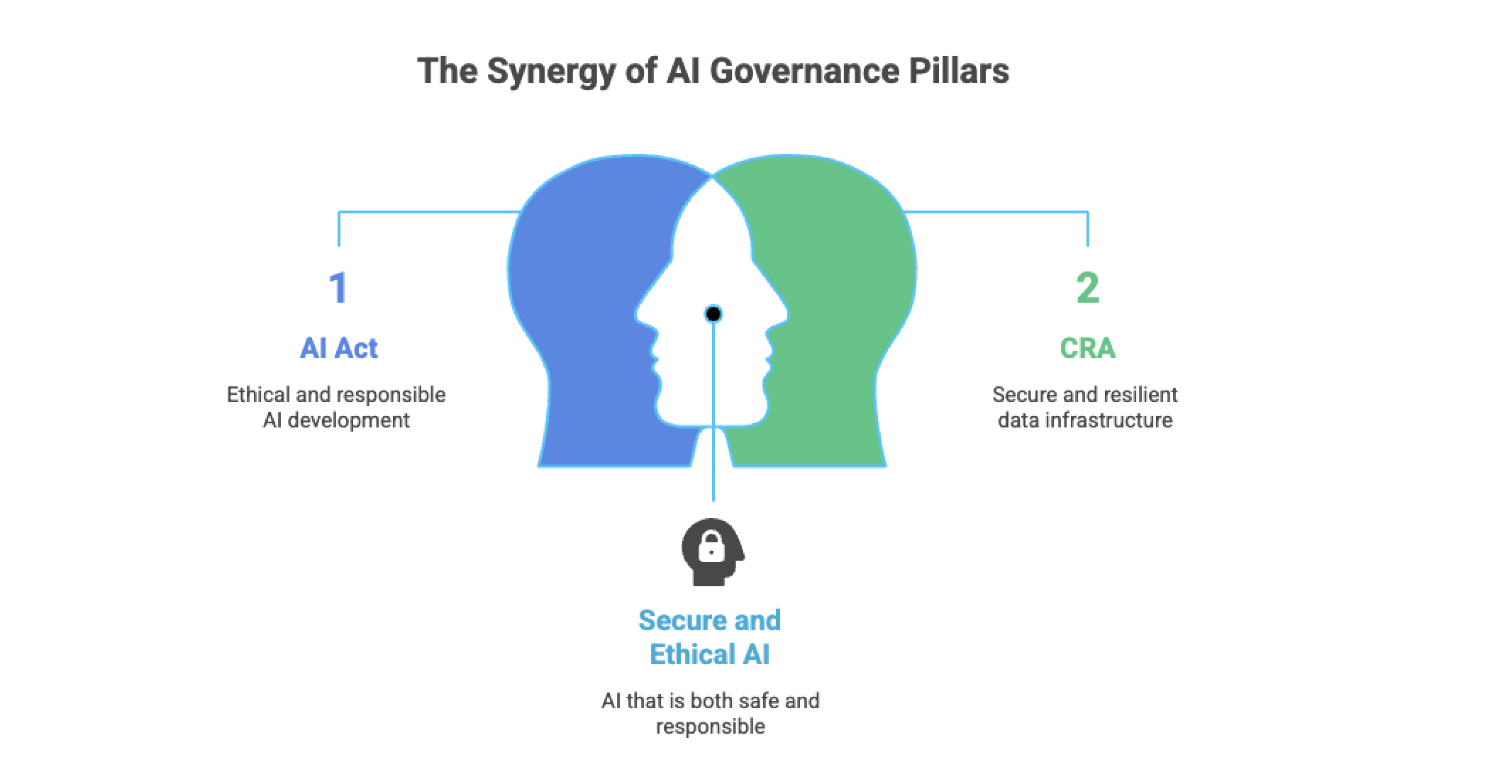
of data governance Data governance is the structured, ongoing process of managing an organization’s data to ensure its availability, usability, integrity, and security. It involves setting up a framework of roles, policies, standards, and metrics that control how data is created, used, stored, and protected throughout its lifecycle. Foundations of Data Governance, generated by Napkin AI

Explainable deep learning for early diagnosis of chronic kidney disease from CT images in Bangladeshi patients – Scientific Reports
- Article
- Open access
- Published:
- Fariha Jahan1,4,5 na1,
- Ahmed Shakib Reza2,4 na1,
- Md Kishor Morol4,
- Dip Nandi1,4,
- Md. Jakir Hossen3 &
- …
- Mashiour Rahman1
Scientific Reports , Article number: (2026) Cite this article
We are providing an unedited version of this manuscript to give early access to its findings. Before final publication, the manuscript will undergo further editing. Please note there may be errors present which affect the content, and all legal disclaimers apply.
Subjects
Abstract
Kidney failure, or end-stage renal disease (ESRD), represents the final stage of chronic kidney disease (CKD) and poses a life-threatening risk if not addressed promptly. Early detection of CKD is critical for preventing progression to ESRD, yet current diagnostic methods remain time-consuming and often reliant on manual interpretation. This study introduces an integrated framework for automated CKD diagnosis, specifically designed for the Bangladeshi population, which combines segmentation, classification, and explainable artificial intelligence (XAI). Using the CT Kidney Dataset, a modified U-Net model was developed for kidney region segmentation, achieving an accuracy of 98%, a Dice coefficient of 98%, and an Intersection over Union (IoU) of 97%. For the classification task, a novel lightweight Kid-Net model, based on EfficientNetB3, was proposed, achieving 99.30% accuracy in cross-validation for distinguishing between normal, cyst, stone, and tumor categories. To enhance model transparency, Grad-CAM was applied for visualizing the regions of interest, thus improving interpretability. Furthermore, the KidVision framework was introduced to outline the clinical deployment pipeline, offering a scalable and efficient solution for real-world nephrology applications. The results demonstrate that the proposed framework not only delivers high accuracy but also facilitates early and automated detection of kidney-related disorders, contributing to improved clinical decision-making and patient outcomes.
Data availability
The dataset used in this research is available at https://www.kaggle.com/datasets/nazmul0087/ ct-kidney-dataset-normal-cyst-tumor-and-stone
References
-
da Cruz, L. B. et al. Kidney segmentation from computed tomography images using deep neural network. Comput. Biol. Med. 123, 103906. https://doi.org/10.1016/j.compbiomed.2020.103906 (2020).
Google Scholar
-
Neha, F. Kidney, localization and stone segmentation from a CT scan image. In 7th International Conference On Computing, Communication, Control and Automation (ICCUBEA) 1–6 (IEEE, 2023). https://doi.org/10.1109/ICCUBEA58933.2023.10391948.
-
Kovesdy, C. P. Epidemiology of chronic kidney disease: An update 2022. Kidney Int. Suppl. 12, 7–11. https://doi.org/10.1016/j.kisu.2021.11.003 (2022).
Google Scholar
-
Institute for Health Metrics and Evaluation. Global burden of disease (GBD) (2024). Accessed: Nov. 06, 2024.
-
Mondal, R., Banik, P. C., Faruque, M., Mashreky, S. R. & Ali, L. Association of exposure to salinity in groundwater with chronic kidney disease among diabetic population in Bangladesh. PLoS ONE 18, e0284126. https://doi.org/10.1371/journal.pone.0284126 (2023).
Google Scholar
-
Ogunleye, A. & Wang, Q.-G. Xgboost model for chronic kidney disease diagnosis. IEEE/ACM Trans. Comput. Biol. Bioinform. 17, 2131–2140. https://doi.org/10.1109/TCBB.2019.2911071 (2019).
Google Scholar
-
Wang, W., Chakraborty, G. & Chakraborty, B. Predicting the risk of chronic kidney disease (CKD) using machine learning algorithm. Appl. Sci. 11, 202. https://doi.org/10.3390/app11010202 (2020).
Google Scholar
-
Valente, S. et al. A comparative study of deep learning methods for multi-class semantic segmentation of 2D kidney ultrasound images. In 2023 45th Annual International Conference of the IEEE Engineering in Medicine & Biology Society (EMBC) 1–4 (2023). https://doi.org/10.1109/EMBC.2023.10234567.
-
Aruna, S. K., Deepa, N. & Devi, T. A deep learning approach based on Ct images for an automatic detection of polycystic kidney disease. In 2023 International Conference on Computer Communication and Informatics (ICCCI) 1–5 (2023) https://doi.org/10.1109/ICCCI56725.2023.10012345.
-
Mahmood, T., Saba, T. & Rehman, A. Breast cancer diagnosis with MFF-HistoNet: A multi-modal feature fusion network integrating CNNs and quantum tensor networks. J. Big Data 12, 60. https://doi.org/10.5281/zenodo.14808037 (2025).
Google Scholar
-
Mostafa, S., Mondal, D., Panjvani, K., Kochian, L. & Stavness, I. Explainable deep learning in plant phenotyping. Front. Artif. Intell. 6, 1203546. https://doi.org/10.3389/frai.2023.1203546 (2023).
Google Scholar
-
Sasikaladevi, N. & Revathi, A. Digital twin of renal system with CT-radiography for the early diagnosis of chronic kidney diseases. Biomed. Signal Process. Control 88, 105632. https://doi.org/10.1016/j.bspc.2023.105632 (2024).
Google Scholar
-
Zhang, L. et al. A novel approach for automated diagnosis of kidney stones from CT images using optimized inceptionv4 based on combined dwarf mongoose optimizer. Biomed. Signal Process. Control 94, 106356. https://doi.org/10.1016/j.bspc.2023.106356 (2024).
Google Scholar
-
Pande, S. D. & Agarwal, R. Multi-class kidney abnormalities detecting novel system through computed tomography. IEEE Access 12, 123456. https://doi.org/10.1109/ACCESS.2024.1234567 (2024).
Google Scholar
-
Ma, F., Sun, T., Liu, L. & Jing, H. Detection and diagnosis of chronic kidney disease using deep learning-based heterogeneous modified artificial neural network. Futur. Gener. Comput. Syst. 111, 17–26. https://doi.org/10.1016/j.future.2020.04.017 (2020).
Google Scholar
-
Inoue, K. et al. The utility of automatic segmentation of kidney MRI in chronic kidney disease using a 3D convolutional neural network. Sci. Rep. 13, 17361. https://doi.org/10.1038/s41598-023-43447-6 (2023).
Google Scholar
-
Oghli, M. G. et al. Fully automated kidney image biomarker prediction in ultrasound scans using Fast-Unet++. Sci. Rep. 14, 4782. https://doi.org/10.1038/s41598-024-42778-x (2024).
Google Scholar
-
Nithya, A., Appathurai, A., Venkatadri, N., Ramji, D. & Palagan, C. A. Kidney disease detection and segmentation using artificial neural network and multi-kernel k-means clustering for ultrasound images. Measurement 149, 106952. https://doi.org/10.1016/j.measurement.2019.106952 (2020).
Google Scholar
-
Sri, V. S. & Lakshmi, G. J. Detection analysis of abnormality in kidney using deep learning techniques and its optimization. In 2023 Second International Conference on Electrical, Electronics, Information and Communication Technologies (ICEEICT) 1–6, (IEEE, 2023). https://doi.org/10.1109/ICEEICT57855.2023.10141864.
-
Rehman, A., Mahmood, T. & Saba, T. Robust kidney carcinoma prognosis and characterization using Swin-ViT and DeepLabV3+ with multi-model transfer learning. Appl. Soft Comput. 170, 112518. https://doi.org/10.1016/j.asoc.2024.112518 (2025).
Google Scholar
-
Ct kidney dataset: Normal-cyst-tumor and stone. Available on Kaggle: https://www.kaggle.com/datasets/nazmul0087/ct-kidney-dataset-normal-cyst-tumor-and-stone.
-
Cvat: Computer vision annotation tool. https://cvat.org/, Accessed: Nov. 08, (2024)
-
Chen, J. et al. TransUNet: Rethinking the U-Net architecture design for medical image segmentation through the lens of transformers. Med. Image Anal. 97, 103280. https://doi.org/10.1016/j.media.2024.103280 (2024).
Google Scholar
-
Gomes, R., Pham, T., He, N., Kamrowski, C. & Wildenberg, J. Analysis of Swin-UNet vision transformer for Inferior Vena Cava filter segmentation from CT scans. Artif. Intell. Life Sci. 4, 100084. https://doi.org/10.1016/j.ailsci.2023.100084 (2023).
Google Scholar
-
Malik, P., Dureja, A., Dureja, A., Rathore, R. S. & Malhotra, N. Enhancing intracranial hemorrhage diagnosis through deep learning models. Procedia Comput. Sci. 235, 1664–1673. https://doi.org/10.1016/j.procs.2024.01.214 (2024).
Google Scholar
-
Indraswari, R., Rokhana, R. & Herulambang, W. Melanoma image classification based on mobilenetv2 network. Procedia Comput. Sci. 197, 198–207. https://doi.org/10.1016/j.procs.2021.12.155 (2022).
Google Scholar
-
Kalaiarasi, P. & Esther Rani, P. A comparative analysis of alexnet and googlenet with a simple DCNN for face recognition. In Advances in Smart System Technologies: Select Proceedings of ICFSST 2019 655–668 (Springer, 2021). https://doi.org/10.1007/978-981-16-3044-8_59.
-
Shanthi, T. & Sabeenian, R. S. Modified alexnet architecture for classification of diabetic retinopathy images. Comput. Electr. Eng. 76, 56–64. https://doi.org/10.1016/j.compeleceng.2019.03.004 (2019).
Google Scholar
-
Ghadimi, N. et al. Squeezenet for the forecasting of the energy demand using a combined version of the sewing training-based optimization algorithm. Heliyon 9, e16210. https://doi.org/10.1016/j.heliyon.2023.e16210 (2023).
Google Scholar
-
PyTorch Vision Contributors. Torchvision models and pre-trained weights (2026). Accessed: 2026–01-06.
-
Schöttl, A. Improving the interpretability of gradcams in deep classification networks. Procedia Comput. Sci. 200, 620–628. https://doi.org/10.1016/j.procs.2022.01.256 (2022).
Google Scholar
-
Survarachakan, S. et al. Deep learning for image-based liver analysis—a comprehensive review focusing on malignant lesions. Artif. Intell. Med. 130, 102331. https://doi.org/10.1016/j.artmed.2022.102331 (2022).
Google Scholar
-
Huang, S. et al. Sd-net: a semi-supervised double-cooperative network for liver segmentation from computed tomography (ct) images. J. Cancer Res. Clin. Oncol. 150, 479–490. https://doi.org/10.1007/s00432-023-05564-7 (2024).
Google Scholar
-
Khakhar, P. & Dubey, R. K. The integrity of machine learning algorithms against software defect prediction. In Artificial Intelligence and Machine Learning for EDGE Computing 65–74 (Elsevier, 2022). https://doi.org/10.1016/B978-0-12-824054-0.00027-7.
-
Hand, D. J., Christen, P. & Kirielle, N. F*: An interpretable transformation of the f-measure. Mach. Learn. 110, 451–456. https://doi.org/10.1007/s10994-021-05964-1 (2021).
Google Scholar
Download references
Acknowledgements
We would like to express our sincere gratitude to Dr. Christe Antora Chowdhury of Popular Medical College, Dhaka, Bangladesh, for her invaluable assistance in annotating the dataset. We also extend our thanks to Multimedia University and ELITE Research Lab for their support in facilitating this research.
Ethics declarations
Competing interests
The authors declare no competing interests.
Additional information
Publisher’s note
Springer Nature remains neutral with regard to jurisdictional claims in published maps and institutional affiliations.
Rights and permissions
Open Access This article is licensed under a Creative Commons Attribution-NonCommercial-NoDerivatives 4.0 International License, which permits any non-commercial use, sharing, distribution and reproduction in any medium or format, as long as you give appropriate credit to the original author(s) and the source, provide a link to the Creative Commons licence, and indicate if you modified the licensed material. You do not have permission under this licence to share adapted material derived from this article or parts of it. The images or other third party material in this article are included in the article’s Creative Commons licence, unless indicated otherwise in a credit line to the material. If material is not included in the article’s Creative Commons licence and your intended use is not permitted by statutory regulation or exceeds the permitted use, you will need to obtain permission directly from the copyright holder. To view a copy of this licence, visit http://creativecommons.org/licenses/by-nc-nd/4.0/.
Reprints and permissions
About this article

Cite this article
Jahan, F., Reza, A.S., Morol, M. et al. Explainable deep learning for early diagnosis of chronic kidney disease from CT images in Bangladeshi patients. Sci Rep (2026). https://doi.org/10.1038/s41598-026-42654-1
Download citation
-
Received:
-
Accepted:
-
Published:
-
DOI: https://doi.org/10.1038/s41598-026-42654-1

Related Posts