Two years of promises about cost savings have given way to a reality that's even more expensive, as compute, tokens and infrastructure costs surge rapidly; a study found AI is cheaper than humans in only 23% of tasks, while tokens and maintenance costs inflate budgets For two years, the dominant narrative in Silicon Valley was
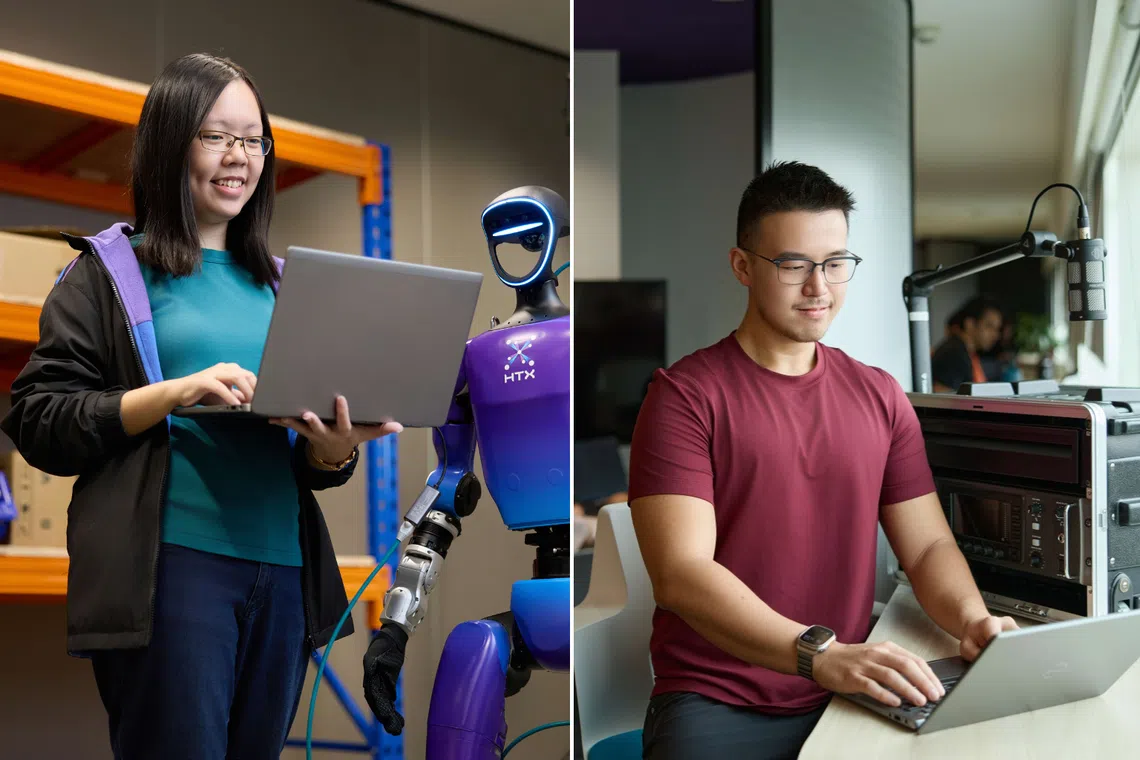
Life at HTX: Meet young officers thriving in science and AI
Read more about Singapore’s Best Employers 2026 here.
From insect robots that navigate the chaos of a disaster to artificial intelligence systems that understand the nuances of everyday speech, the technologies that HTX advances are anything but ordinary.
The Home Team Science and Technology Agency brings together people from various disciplines to build tools that Home Team officers depend on, using science, engineering and the latest technologies.
Both HTX employees profiled here are under the age of 30, but have been entrusted with projects that help enhance public safety and front-line operations.
They say it is the work environment at HTX that empowers them: mentorship and training that accelerate personal and professional growth, the freedom to experiment and, most of all, the chance to contribute to a larger mission.
Those qualities have helped make HTX one of Singapore’s best employers, in a list compiled by global research firm Statista in collaboration with The Straits Times.
Ms Aw Rui Huan has always harboured a deep-seated fear of cockroaches. Yet, for four years, she set those fears aside to work on a project that put her in proximity with Madagascar hissing cockroaches – each about 6cm long.
The project involved fitting these insects with circuitry and sensors so they can scuttle through disaster zones in search of survivors. Electrical signals sent to the cockroach’s neuromuscular system direct its movement, and cameras and sensors gather information processed by a machine-learning algorithm to determine if there are signs of life.
“When I was first told about the project in 2021, I thought I would be working with a robot that was made to look like a cockroach,” says the 28-year-old engineer.
But Ms Aw did not let her phobia overcome her.
“When you know that the purpose of this project is search and rescue, you try to focus on the goal at hand. So, I had to keep telling myself that the project was not as scary as I thought, that it would be very useful in the future,” she says.
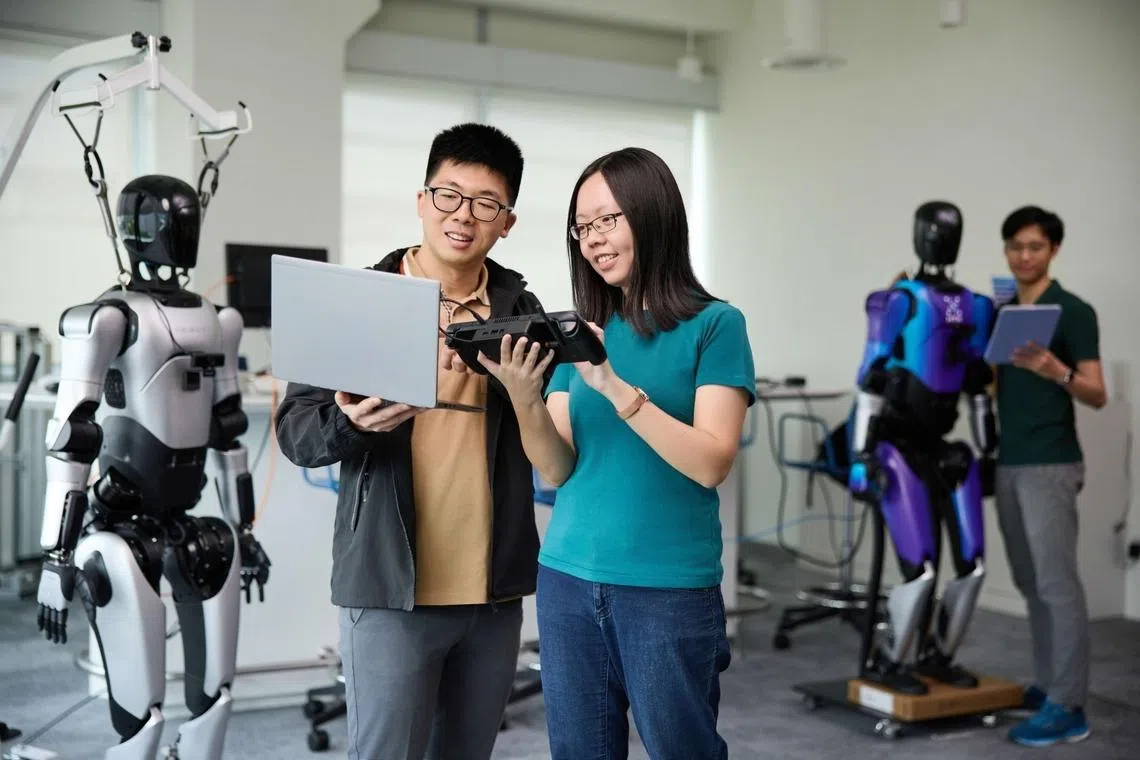
Ms Aw (in green) is working on AI-enabled robots that can respond to instructions during front-line operations.
PHOTO: HOME TEAM SCIENCE AND TECHNOLOGY AGENCY
Being aware of the mission and impact of every project at HTX is what drives its development teams.
Ms Aw works at the Robotics, Automation and Unmanned Systems Centre of Expertise, the team behind innovations such as teleoperated humanoids that can perform hazardous tasks, and airport patrol robot Gibson, which is being trialled at Changi Airport Terminal 4.
Across these projects, employees are challenged to think about how they can make the world a safer place using the latest technologies.
The insect-hybrid robot that Ms Aw was working on was deployed in earthquake-hit Myanmar in 2025 to search for survivors, reaching tight spaces that rescuers and larger machines may not be able to access.
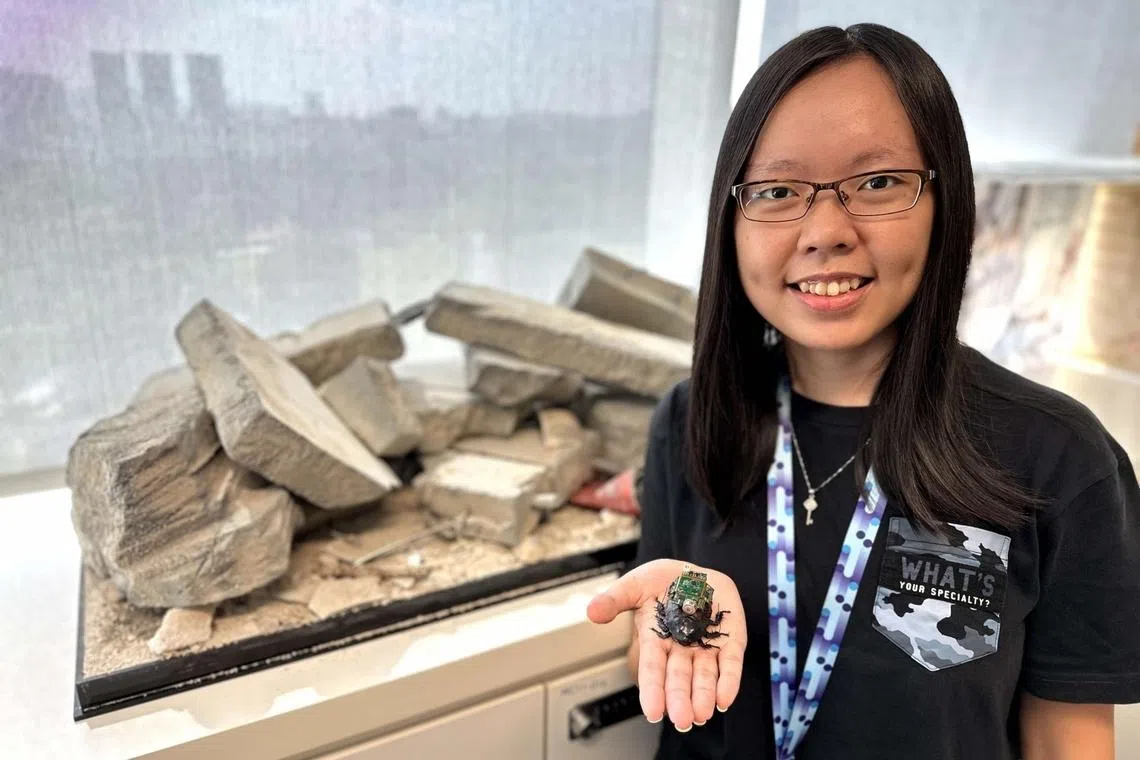
Setting aside her fear of cockroaches, Ms Aw diligently worked on the search-and-rescue insect-hybrid robot for four years.
PHOTO: HOME TEAM SCIENCE AND TECHNOLOGY AGENCY
While the team encountered technical challenges on site, they pushed through and took away valuable insights for future deployments.
“As a team, we all understood the challenge and encouraged one another not to give up,” she says.
Following the Myanmar operation, they persisted for months in a continuous cycle of trial and refinement based on operational feedback, until they found a wireless technology that worked better.
Mentorship and autonomy are also key drivers of innovation at HTX.
As part of HTX’s Associate Programme, Ms Aw was mentored by her deputy director on a self-conceptualised Greenfield Project, a key requirement of the programme.
She designed an automation system for the Central Narcotics Bureau to replace the labour-intensive exhibit photo-taking task, where officers would manually photograph hundreds of evidence items for up to 15 hours at a stretch.
Guidance from her deputy director aside, she led the project and steadily handled various technical tasks. “I had the opportunity to take ownership of the innovation process,” she says.
Ms Aw is now working on an embodied AI mobile manipulator, where she integrates multimodal systems into a robot so it can respond to natural language commands, identify objects without prior training and execute complex tasks.
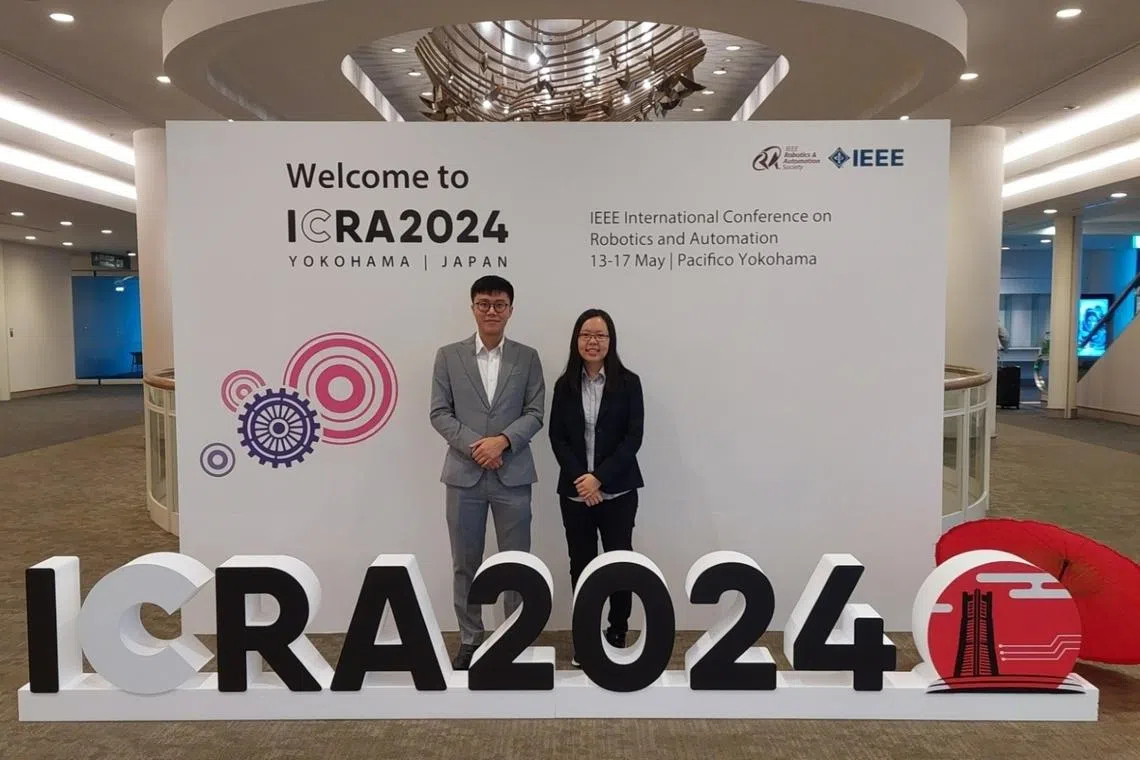
Overseas exposure is part of Ms Aw’s growth at HTX, including attending the International Conference on Robotics and Automation in Yokohama, Japan, in 2024.
PHOTO: HOME TEAM SCIENCE AND TECHNOLOGY AGENCY
This could support operations such as police patrols, where officers may need a robot to assess a scene quickly and identify potentially dangerous objects.
“I find it fulfilling to know that my engineering skills will contribute directly to public safety,” she says. “This aligns with my personal goal to use my technical skills for meaningful work.”
What sets HTX apart from other science and tech agencies, in Ms Aw’s view, is the agency’s willingness to embrace uncertainty and failure as part of the process.
“If we realise that the path that we are taking may not be the best, we take it as lessons learnt and move ahead in seeking better solutions,” she says.
That mindset is reflected in HTX’s Undaunted Award, which recognises officers who test new ideas even when they do not succeed.
Ms Aw, who is heartened by such incentives, adds: “We are still recognised for our effort and courage to even try.”
Mr Clarence Teo, 27, never expected that having a linguistics degree would lead him to join the field of engineering. But at HTX, that specialised skill turned out to be exactly what was needed.
As an engineer in the Language AI Development team under HTX’s AI R&D xData group, Mr Teo works with colleagues from different disciplines to help machines understand Singaporean lingo.
“We build language AI capabilities that can understand and speak in Singapore’s colloquial languages,” he says. “This is necessary because everyday speech in Singapore is layered with accents, dialects such as Hokkien and Teochew, and informal expressions.”
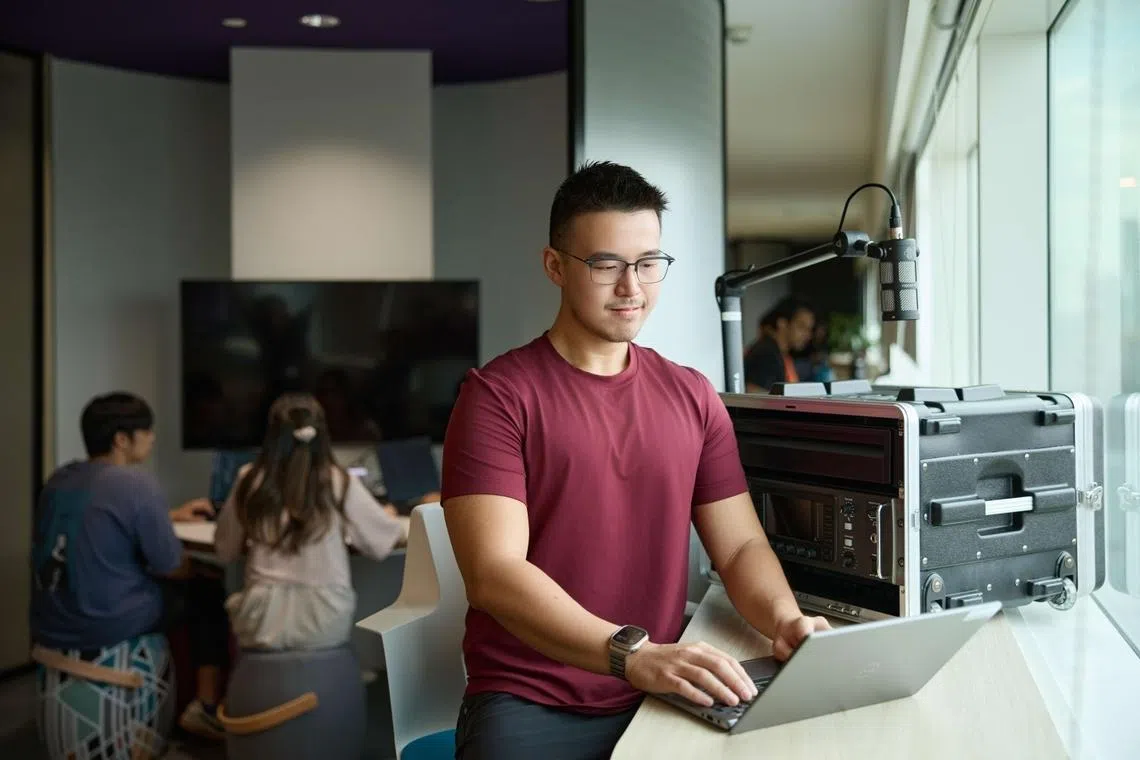
Mr Teo uses specialised audio equipment to record and analyse speech data to develop language AI systems that can understand accents, dialects and informal expressions used in Singapore.
PHOTO: HOME TEAM SCIENCE AND TECHNOLOGY AGENCY
The AI agent is already being used by multiple teams across the Home Team, including in tools that support police work, such as transcribing interviews and other spoken interactions for police records.
“We have different registers of Singapore English,” says Mr Teo. “Sometimes, the police officers use a lower register – a more colloquial form of the way we speak. And there are insertions of dialect words into their sentences.”
In front-line settings, capturing speech accurately can reduce miscommunication and give officers clearer information to respond effectively.
Mr Teo is also working on a community engagement robot that can detect its audience’s age and play appropriate crime prevention videos, for instance. It may be deployed at all police headquarters across Singapore.
At university, Mr Teo specialised in computational linguistics, focusing on how language can be modelled through computer science. He had intended to pursue postgraduate studies, but an internship at HTX changed his mind.
“They needed someone with linguistic expertise to help solve language problems in an engineering-dominated environment,” he recalls. “That drew me in. I was always interested in using my skills on projects that went beyond the classroom or laboratory, where I could see real use cases in action.”
To strengthen his specialist knowledge in generative speech technologies, Mr Teo has taken sponsored courses in deep learning and AI deployment. He also signed up for HTX’s multiple learning paths, which include free Udemy courses and regular engagement with industry experts, such as Google developers.
“The training programmes in HTX are quite comprehensive,” he says. “They allow me to continuously upskill myself throughout my time here.”
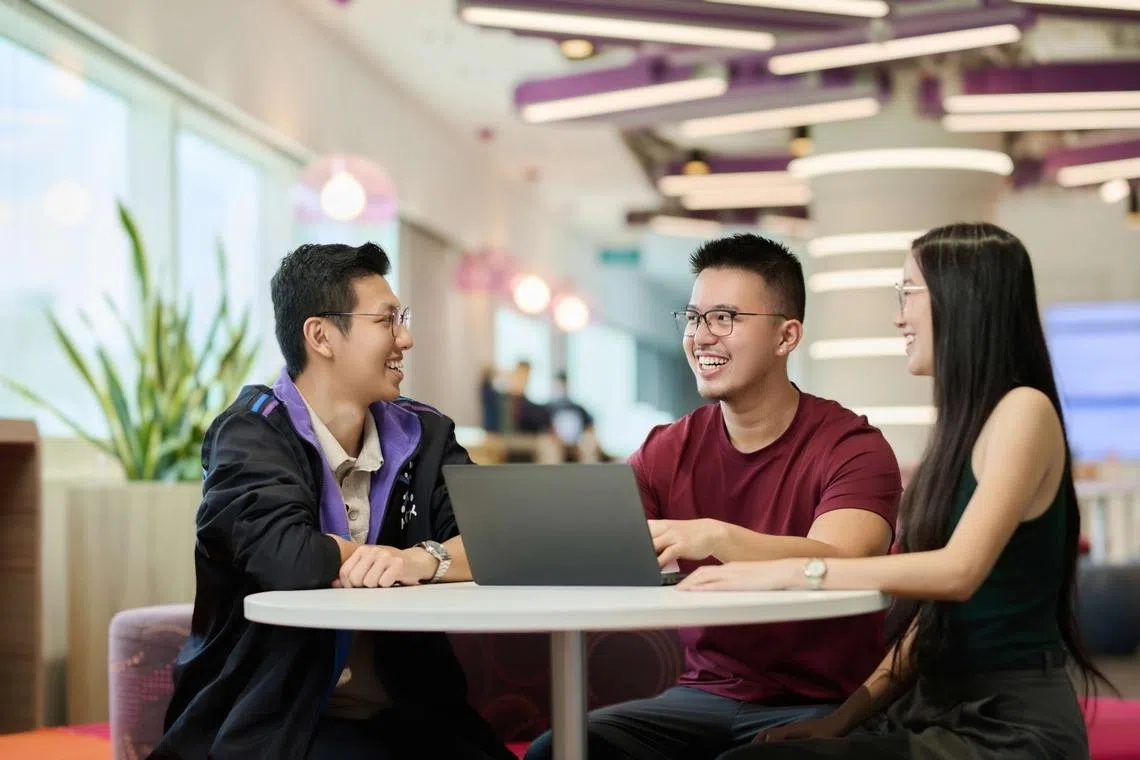
Mr Teo (centre) works with colleagues in the xData group and also collaborates with teams from other disciplines across HTX.
PHOTO: HOME TEAM SCIENCE AND TECHNOLOGY AGENCY
Being involved in major HTX events is another way Mr Teo has enriched himself. As part of the organising committee for the upcoming Milipol TechX Summit (MTX) 2026, a convention that gathers global industry experts and thought leaders to exchange ideas on public safety, he leads the developer zone featuring innovations from across HTX.
MTX will be held at Marina Bay Sands Expo and Convention Centre from Apr 28 to 30. The experience has given him a broader view of how different teams apply AI to operational needs.
Mr Teo has also benefited from overseas work trips. In 2025, he attended Interspeech in Rotterdam, one of the world’s leading conferences in speech technology.
“It was unreal to be there in person,” he says. “I was learning from and exchanging ideas with researchers behind the papers I used to read in university.”
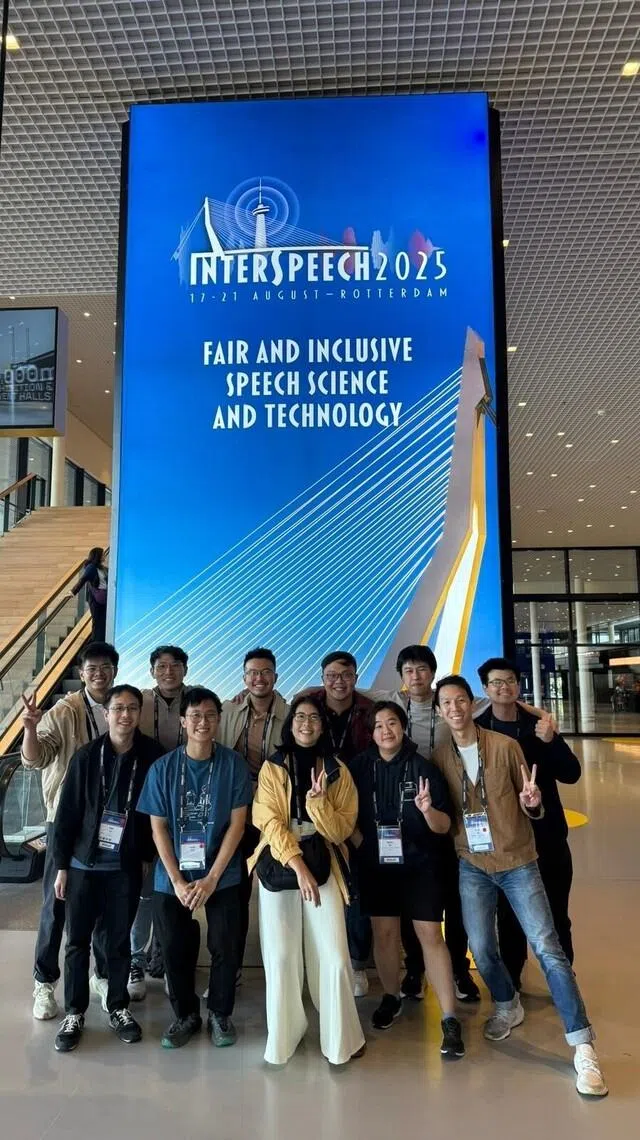
Attending Interspeech 2025 in Rotterdam gave Mr Teo the chance to learn from and exchange ideas with researchers in speech technology.
PHOTO: HOME TEAM SCIENCE AND TECHNOLOGY AGENCY
Apart from the space to grow professionally, Mr Teo values the sense of connection at HTX. He has bonded with colleagues through company-wide activities such as movie screenings, as well as through Communities of Interest, self-initiated groups that bring together staff from across divisions over shared hobbies.
He and a colleague recently started a Coffee Community of Interest for fellow enthusiasts.
“What I appreciate is that people here genuinely make time to connect, whether it is through organised activities or something as simple as having a coffee together,” he adds.


Related Posts