Read more about Singapore’s Best Employers 2026 here. From insect robots that navigate the chaos of a disaster to artificial intelligence systems that understand the nuances of everyday speech, the technologies that HTX advances are anything but ordinary. The Home Team Science and Technology Agency brings together people from various disciplines to build tools that
A
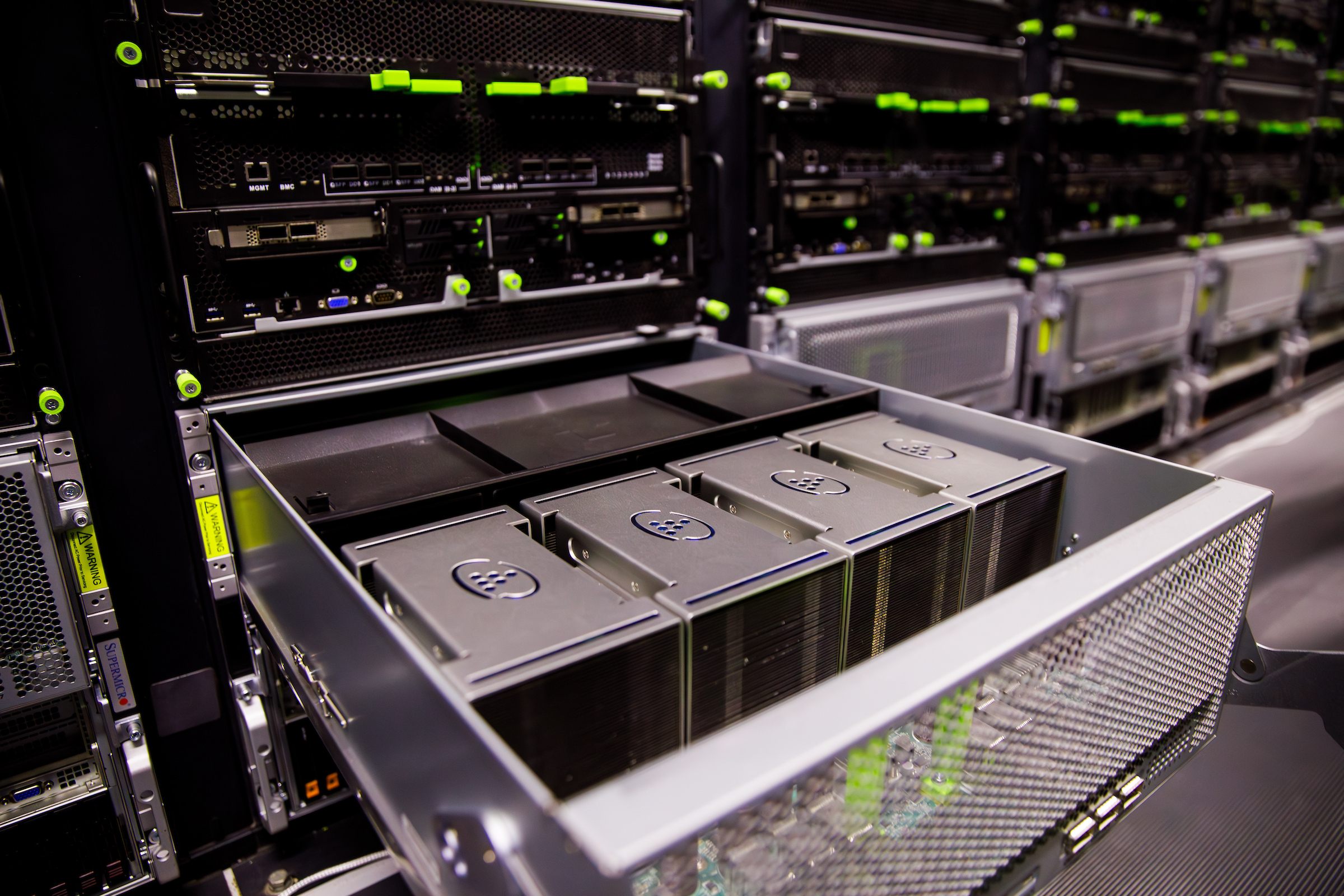
Arizona State University is expanding its artificial intelligence research capabilities following a multimillion-dollar technology donation from Intel.
The donation, part of ASU’s Changing Futures campaign to advance technology for good, supports a larger university priority to strengthen national competitiveness in AI and expand access to high-performance computing for researchers and students.
The sizable hardware donation significantly increases the scale and flexibility of AI workloads ASU researchers can pursue, supporting larger, more complex projects across disciplines.
“At ASU, this powerful and transformative technology must be accessible,” President Michael Crow said. “Lowering the barriers to entry and encouraging researchers and students to use AI will further the pursuit of innovative solutions to our greatest challenges in society. This collaboration with Intel reflects our shared commitment to the principled application of AI to further research and advance education.”
Intel and ASU have formed a long-standing partnership to address the U.S. semiconductor workforce shortage critical to economic competitiveness. The collaboration supports graduate and undergraduate research, educator training, curriculum development and experiential learning through industry mentorship, equipment donations and simulation tools.
By building an integrated talent pipeline from K–12 through higher education, the alliance demonstrates how coordinated industry–academic efforts can scale workforce solutions in advanced technology fields.
Expanding access for the research community
The new hardware underpins the ASU AI Research Acceleration Platform, or AIR Platform, a universitywide initiative aimed at removing barriers to advanced computing and broadening AI adoption and literacy among researchers. Led by ASU Knowledge Enterprise, the AIR Platform is a secure, open-access framework that pairs Intel’s hardware donation with ASU’s existing globally ranked Sol supercomputer.
Get started on ASU AI Research Platform
Researchers and staff can access AIR through CreateAI, the university’s AI tool kit. Launch the CreateAI Builder, start a “New AI Project” and select the Gemma4 31B IT model designated as ASU AIR.
“The AIR Platform isn’t just infrastructure — it’s a coordinated, programmatic capability that lowers the barrier to advanced AI methods across disciplines,” said Sally C. Morton, executive vice president of ASU Knowledge Enterprise. “By making these tools accessible and integrated into research workflows, we enable faculty and students to move faster from idea to insight. That’s core to Knowledge Enterprise: accelerating discovery and translating it into tangible impact at scale.”
ASU researchers, faculty and staff can access AIR and the increased AI compute capacity through the university’s flagship AI tool kit CreateAI.
The AI research platform is accessible through CreateAI Builder, which offers a curated selection of leading open‑source large language models and tools such as Google’s Gemma and Meta’ s Llama Scout. By connecting these models to expanded compute capacity, the platform enables researchers and students to build custom AI experiences using their own knowledge bases, data and instructions.
This is a significant milestone for the university to expand CreateAI Builder as a driver of ASU research and discovery. To date, the ASU community has developed over 8,000 custom AI experiences for academics, research and operations using CreateAI Builder.
In addition to serving ASU researchers, the AIR Platform also positions ASU to contribute to national priorities in AI — advancing innovation, scientific discovery and economic development.

Supercharging research computing
“The technology introduces a new type of high-performance computing capacity,” said Sean Dudley, associate vice president at Knowledge Enterprise who leads the Research Technology Office. “This technology enables us to support thousands of additional users that are developing or engaging generative AI models while shifting these workloads off our existing resources to free them up for other computationally intensive projects.”
Prior to the donation, the university operated hundreds of the latest NVIDIA GPUs, which form the backbone of ASU’s Sol supercomputer, a system ranked among the world’s Top500. The AI accelerator chips expand and diversify university supercomputing resources.
The scale of this expansion allows ASU researchers to privately pursue projects in-house that would previously require computing resources from expensive and in-demand national supercomputing systems. An added benefit is privacy. By managing this new platform as a regional cloud offering, the university is fully able to protect and manage its data.
“This allows our researchers to securely execute and rapidly iterate complicated, large-scale generative AI projects,” Dudley said.
Powering research and education
In June 2025, College of Health Solutions Professor Jianming Liang developed an AI tool called Ark+ to help physicians interpret chest X-rays more accurately. The model was trained on more than six public datasets of medical images, along with detailed physician notes, allowing it to identify common, rare and emerging diseases.
Liang wants to build upon this research with the computational power of the AI accelerator chips. He’s hoping to utilize more than 1,000 datasets to train a new model that can identify diseases throughout the body — not just those detected by chest imaging. In addition, his plans for the new model could not only identify diseases but also precisely locate them and their affected areas.
Intel’s donation is also shaping how artificial intelligence is taught at ASU.
Suren Jayasuriya, associate professor in The GAME School and the School of Electrical, Computer and Energy Engineering, incorporated the AI accelerators into his deep learning class. Students were assigned a project to benchmark machine learning workloads on AI accelerators compared to GPUs.
Apply AI to your work
The next phase in realizing the potential of the donation is adoption. Expanded university computing capabilities frees researchers from previous constraints, encouraging more ambitious, data-intensive research across disciplines — and opens new opportunities for staff and students to apply AI to their work.
To learn more about incorporating AI into research, contact the Research Computing Office for a consultation.

Related Posts