
Key Takeaways HealthTech Solutions is at the forefront of AI-powered remote patient monitoring, a market projected to reach $100-$138 billion by 2033, driven by a fundamental shift towards proactive, value-based healthcare. The company's solutions deliver substantial clinical and operational benefits, including reducing hospital readmissions by up to 38% and cutting clinician documentation time by up

New AI Master’s Program Offers Real-World Expertise
07
May
2026
|
07:00 AM
America/Chicago
New Faculty Member Brings Real-World Focus to New AI Master’s Program
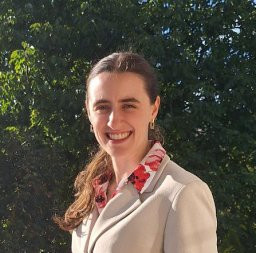
headshot
When most people think about artificial intelligence, they think about tools like ChatGPT.
Dr. Ashley Babjac, Assistant Professor of Artificial Intelligence, sees something much bigger.
“AI has been around for decades,” she said. “It’s behind so many systems we rely on every day.”
That broader view is shaped by a career spanning statistics, computer science and bioinformatics—and now informs her role at Bellevue University, where she will teach in the Master of Science in Artificial Intelligence program set to launch this summer.
Looking beyond the hype
For Babjac, the current moment in AI is less about novelty and more about acceleration.
“What’s changing now is how quickly we can apply it to solve complex problems,” she said.
That includes work in healthcare, infrastructure and environmental science. Her research has ranged from predicting patient outcomes to using AI to identify enzymes capable of breaking down pollutants like ocean plastics—work that can significantly reduce the time and cost of scientific discovery.
“Each experiment can cost thousands of dollars,” she said. “AI helps narrow down the possibilities so you can focus on the most promising options.”
It’s also why she emphasizes that understanding AI requires more than knowing how to use a tool.
“If you ask a bad question, you’ll get a bad answer,” she said. “AI is powerful, but only if you understand the fundamentals behind it.”
A program built for real-world application
That focus is central to Bellevue University’s new master’s program.
“What really stood out to me is how well-rounded it is,” Babjac said. “It covers a lot of ground, but it also goes deep where it matters. Students aren’t just learning theory, they’re applying it.”
The program is designed to give students a holistic view of AI, combining foundational concepts, data science and hands-on application, with the goal of solving real-world business problems.
Students will work with real data, explore case studies and build practical solutions that mirror challenges they may encounter in the workforce. In Babjac’s courses, that includes projects like robotics simulations and reinforcement learning models.
“We want students to be able to do something with what they’ve learned,” she said. “Not just understand it but apply it.”
While the field continues to evolve, Babjac points to the importance of a strong foundation.
“

The field changes quickly, but the fundamentals don’t. If you understand those, you can adapt to whatever comes next.
Dr. Ashley Babjac, Assistant Professor
„


Related Posts