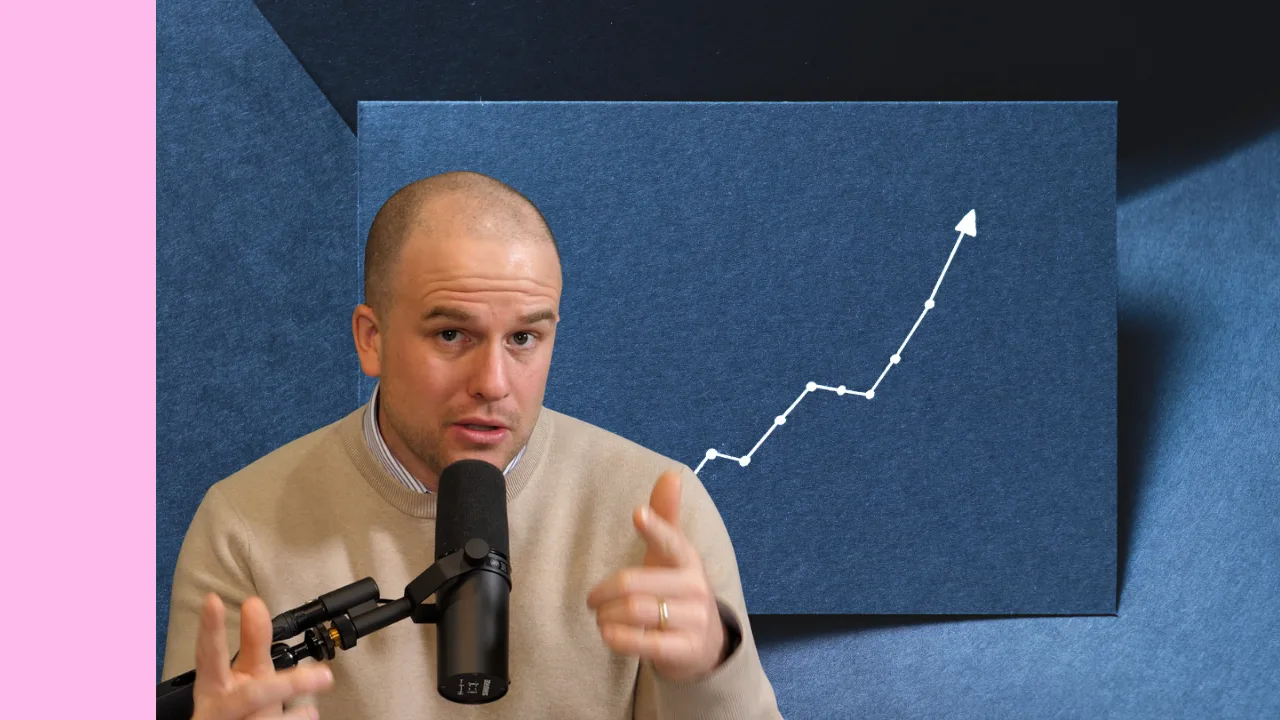
I’ve been thinking a lot about power laws. Not the academic version. The real-world version. Like this… The version where a tiny number of companies, people, ideas and technologies capture most of the value. Investing has always worked this way. A small number of shares drive most of the long-term returns in the share market.
A hyperspectral imaging framework integrating band selection and deep learning for beverage stain classification in forensic analysis – Scientific Reports
- Article
- Open access
- Published:
- Jitendra Shit1,
- Partha Pratim Roy3 &
- V. M. Manikandan1,2
Scientific Reports (2026) Cite this article
We are providing an unedited version of this manuscript to give early access to its findings. Before final publication, the manuscript will undergo further editing. Please note there may be errors present which affect the content, and all legal disclaimers apply.
Subjects
Abstract
The technique of Hyperspectral Imaging (HSI) is significant in the field of non-destructive forensic crime scene investigation, as it allows for the identification of minor spectral changes over a broad range of wavelengths. In the present study, the spectral characteristics of nine beverage stains, such as Papaya, Coffee, Pomegranate, Orange, Tea, Wine, Whisky, Rum, and Brandy, were studied by simulating a controlled environment for a mock crime scene. The hyperspectral images were collected by an HSI system with 204 spectral bands in the visible and near-infrared (VNIR) range. To eliminate spectral redundancy, the ANOVA-based feature selection technique was implemented, which selected 162 spectral bands. These spectral characteristics were employed to train four architectures of deep learning for the classification of the beverage stains, which were implemented as Multi-Layer Perceptron (MLP), one-dimensional Convolutional Neural Network (1D-CNN), Long Short-Term Memory (LSTM), and CNN-LSTM. The training process was carried out using standardized spectral data with adaptive learning rates and early stopping for stable convergence. The strength of the models was evaluated through five-fold cross-validation on stratified data. The experimental results demonstrate that the MLP model attained the greatest classification accuracy of 95.58%. The results show that there is great potential for combining hyperspectral imaging with deep learning for non-destructive stain identification in forensics.
Acknowledgements
The authors gratefully acknowledge the host institutions SRM University-AP India, IIT (ISM) Dhanbad India. We particularly appreciate the computational facilities, hyperspectral image capturing support and all other resources that contributed to the successful completion of this research work.
Funding
This research work is supported by SRM University-AP, Andhra Pradesh, India.
Ethics declarations
Competing Interests
The authors declare no competing interests.
Additional information
Publisher’s note
Springer Nature remains neutral with regard to jurisdictional claims in published maps and institutional affiliations.
Rights and permissions
Open Access This article is licensed under a Creative Commons Attribution 4.0 International License, which permits use, sharing, adaptation, distribution and reproduction in any medium or format, as long as you give appropriate credit to the original author(s) and the source, provide a link to the Creative Commons licence, and indicate if changes were made. The images or other third party material in this article are included in the article’s Creative Commons licence, unless indicated otherwise in a credit line to the material. If material is not included in the article’s Creative Commons licence and your intended use is not permitted by statutory regulation or exceeds the permitted use, you will need to obtain permission directly from the copyright holder. To view a copy of this licence, visit http://creativecommons.org/licenses/by/4.0/.
Reprints and permissions
About this article

Cite this article
Shit, J., Roy, P.P. & Manikandan, V.M. A hyperspectral imaging framework integrating band selection and deep learning for beverage stain classification in forensic analysis. Sci Rep (2026). https://doi.org/10.1038/s41598-026-49928-8
Download citation
-
Received:
-
Accepted:
-
Published:
-
DOI: https://doi.org/10.1038/s41598-026-49928-8
Keywords

Related Posts