
There is something deep in our nature that is always fascinated by transformations. Artificial intelligence (AI) made it possible for just about anyone with internet access to instantly swap faces of people. And the results are now more realistic than they have ever been. By using the best AI face swap tools, the results are
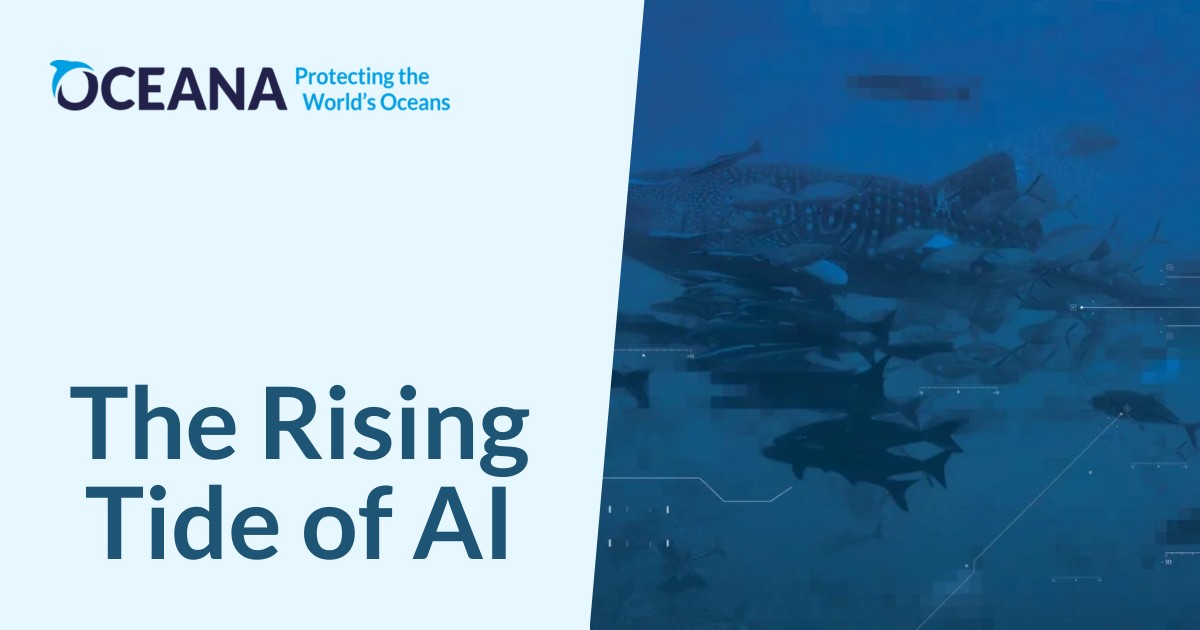
The Rising Tide of AI | Oceana
Will artificial intelligence help or harm ocean conservation?
From orbit, satellites silently monitor the ocean depths, gathering more information than could ever be collected from ships or shore. They capture the ocean’s color, surface temperature, and movement, revealing where marine ecosystems are flourishing — and where they are under pressure.
But this global view comes with a challenge. Satellites generate an overwhelming volume of data, far more than scientists can analyze on their own. To the human eye, many satellite images look nearly identical. Important signals can disappear into the noise.
Nearly three decades ago, researchers turned to machine learning, a form of artificial intelligence (AI), to bridge that gap. Early AI systems could sort, classify, and quickly compare vast datasets, uncovering patterns that transformed how scientists understand the oceans.
Today, AI offers unprecedented insight into the oceans. It can forecast fish migrations, track plastic pollution, and predict coral bleaching, helping scientists act faster. But the same tools can enable overfishing, expand offshore drilling, and concentrate power in the hands of a few.
Will better data lead to stronger protections? Or could this energy-intensive tool accelerate exploitation rather than conservation?
Inside the algorithm
Artificial intelligence is often framed as a solution, but in practice, it is a tool. An AI algorithm is “like a recipe,” says Oceana’s Dr. Max Valentine, who leads the organization’s U.S. illegal fishing and transparency campaign, and often consults satellite data to track suspicious activities at sea. “It’s a series of steps that tells computers how to interpret the data.”
For over a decade, Oceana has partnered with Skytruth and Google to unmask illegal fishing using satellite imagery, radar, and machine learning. The result is Global Fishing Watch, a publicly available, near-real-time map of global fishing activity. Governments in at least 20 countries have used this data to bring charges against companies fishing illegally and to pass policies to hold fishers accountable.
The system relies on neural networks — loosely modeled on the human brain — to process massive streams of satellite data. Using “if–then” logic, the models identify patterns in vessel movement, Valentine explains. “If a vessel moves a certain way, then we know it’s fishing. Is it moving in tight circles or wider arcs? That tells us the type of fishing.”
Data quality is key. “When I started working on this six years ago, the data required a lot of filtering,” says Valentine. “Sometimes the algorithm mistakenly flagged idle vessels as fishing.”
The models have grown sharper over time: early versions of the Global Fishing Watch map distinguished just three fishing types; now the technology can separate 16 kinds of fishing and adapt as new behaviors emerge. A recent Oceana analysis used the upgraded methods to highlight destructive bottom trawling in France’s most iconic marine protected areas ahead of the 2025 United Nations Ocean Conference, which took place in Nice in June.
AI has also helped identify vessels that turn off trackers to hide illegal fishing, including vessels involved in human rights abuses and forced labor.
“Our oceans are dark and nebulous territory,” says Valentine. “Each year, as the models improve, more of the ocean becomes visible. Vessels find it harder to hide, monitoring becomes easier, and transparency grows — but we always need human oversight.”

A tool for conservation
For researchers, whale identification is time-intensive. Critically endangered North Atlantic right whales have unique patterns and scars on their bodies, and scientists spend countless hours looking at photographs to match individual whales in the water with the whales in their database.
But human attention has its limits. “We’re naturally drawn to what’s new,” says Oceana’s Senior Campaign Director in Canada, Kim Elmslie. Scientists are more likely to notice fresh scars or markings, she explains, and may overlook older features or subtle changes over time.
According to the U.S. National Oceanic and Atmospheric Administration, AI programs trained on thousands of whale photos can quickly narrow down possible identifications. Research that took months of manual work can now be done much faster, though scientists still review every match to ensure accuracy.
AI is also being used alongside underwater listening devices. Robotic gliders equipped with microphones move through the ocean, recording whale calls. AI tools help sort through vast audio datasets to identify different species and patterns of movement.
Scientists imagine future applications of AI that could help protect whales. AI systems might send real-time alerts to mariners when right whales are spotted, helping prevent deadly vessel strikes, suggests Hanna Vatcher, Oceana’s campaigner for North Atlantic right whales in Canada.
As AI increasingly comes under scrutiny, “there’s an appetite for AI to be used for good things,” points out Vatcher.
Still, they have concerns. “Who owns the data put into the AI system?” wonders Elmslie. “Who would own the analysis?” Scientists could risk data being gatekept by tech companies or hacked by outside agents. Many AI companies guard both data and algorithms, posing a dilemma for researchers.
Scientists also fear that AI could encourage dangerous research shortcuts. For example, a scientific paper published in the Springer Nature journal China Population and Development Studies in October 2025 was retracted following the discovery that it contained numerous AI-generated, non-existent references.
“Rigorous oversight is essential to ensure the technology supports, rather than undermines, credible research,” Elmslie says.

Weighing the risks
Dr. Daniel Skerritt, Senior Manager on Oceana’s global science team, spends most of his time poring over research papers and preparing recommendations for policymakers to help protect the oceans. He’s grateful for AI’s ability to crunch the numbers — helping analysts like him to work faster. But he worries about cases that require value judgements to be made.
“We’re often interpreting fuzzy information and data and trying to turn that into policy recommendations,” Skerritt says. “In most cases, there isn’t a simple yes-or-no answer.”
Skerritt and his team care about equitable access to fisheries and improving food security. But, he says, there’s no way to ensure that the AI algorithm shares these values.
“AI is like having a million workers we haven’t vetted. We haven’t interviewed them, we don’t know who’s funding them, where their information is from, or their worldview. We don’t know what data is training these models or what values they carry. There is a huge degree of trust needed to use any outcomes they generate,” he explains.
“Racist and misogynistic biases embedded in historical data can be amplified by AI and end up influencing policy recommendations,” Skerritt elaborates. If analysts and policymakers accept AI outputs without question, they may overlook local knowledge or make decisions that harm the very environments they aim to protect.

The elephant in the environment
In environmental circles, AI has become something of a “dirty word,” Valentine says.
Training and running large AI models requires significant energy. Cornell researchers have found that the current rate of AI growth could annually put 24 to 44 million metric tons of carbon dioxide into the atmosphere by 2030, equal to the annual carbon footprint of 3–6 million American households.
Far more energy-intensive than traditional systems, AI data centers feed the climate change that is warming and acidifying the oceans. They also demand unprecedented water use to keep the systems cool. While data centers can run on renewable energy, most still operate on fossil fuels.
Some countries, including China and Scotland, are now placing some data centers underwater — sinking the hot, energy-hungry systems into the sea itself. This approach will surely impact these ocean ecosystems, says Dr. Kathryn Matthews, Oceana’s chief scientist and senior vice president.
Put into perspective, the amount of energy used to run a machine-learning platform like the Global Fishing Watch map is negligible compared to other applications of the technology, says Valentine. Since Global Fishing Watch is designed for a specific application and uses more limited datasets, its energy consumption is likely far lower than the energy needed to train large-scale models like ChatGPT, though exact comparisons are difficult.
Matthews says the ends matter when deciding whether or not to use artificial intelligence. “I’m far less interested in frivolous uses of AI than in applications that actually contribute to human wellbeing and environmental protection,” she says. “Right now, so much AI is unnecessary or even damaging.”
Like any tool, artificial intelligence can be applied to helpful or harmful ends, says Matthews. “Whether AI benefits the oceans depends on us. Will we resist pipe dreams of easy solutions, and commit to the hard work these complex challenges ask of us? Ultimately, we must stay focused on directing these technologies in ways that genuinely help our communities and ecosystems.”

Related Posts