Skip to content Ooops! I can't find the page you're looking for You may not be able to find the page you were after because of: An out-of-date bookmark/favorite A search engine that has an out-of-date listing for us A mis-typed address You might find one of the following links useful: Terms While we only
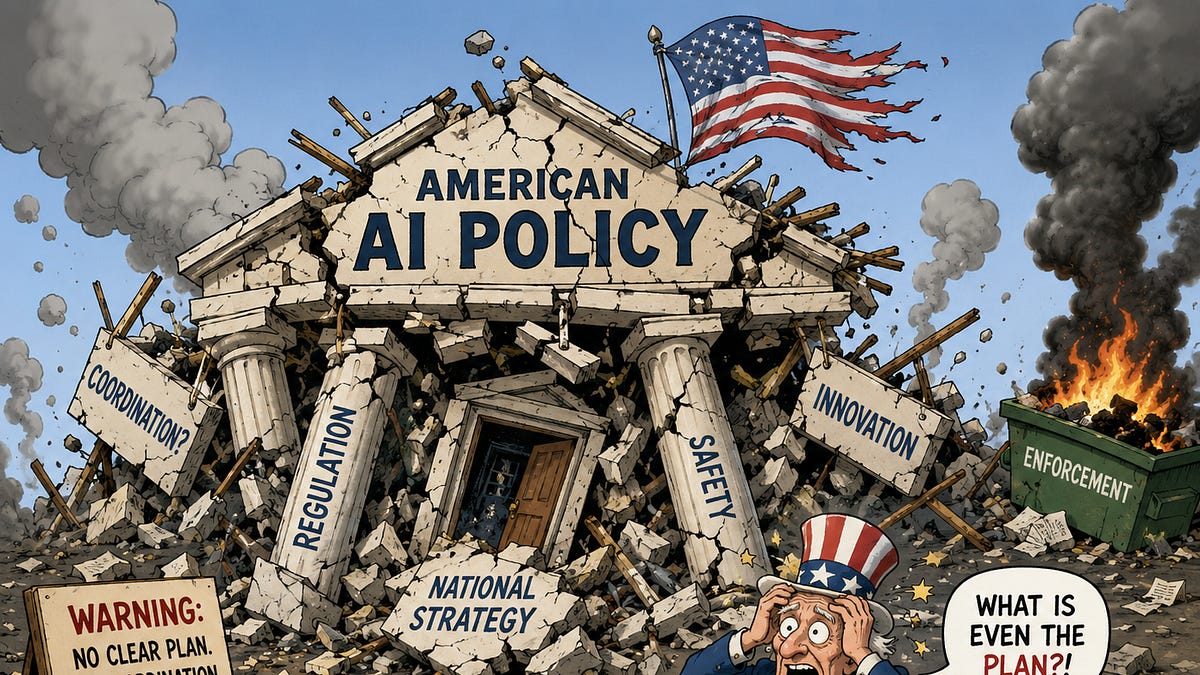
The White House’s shambolic AI policy
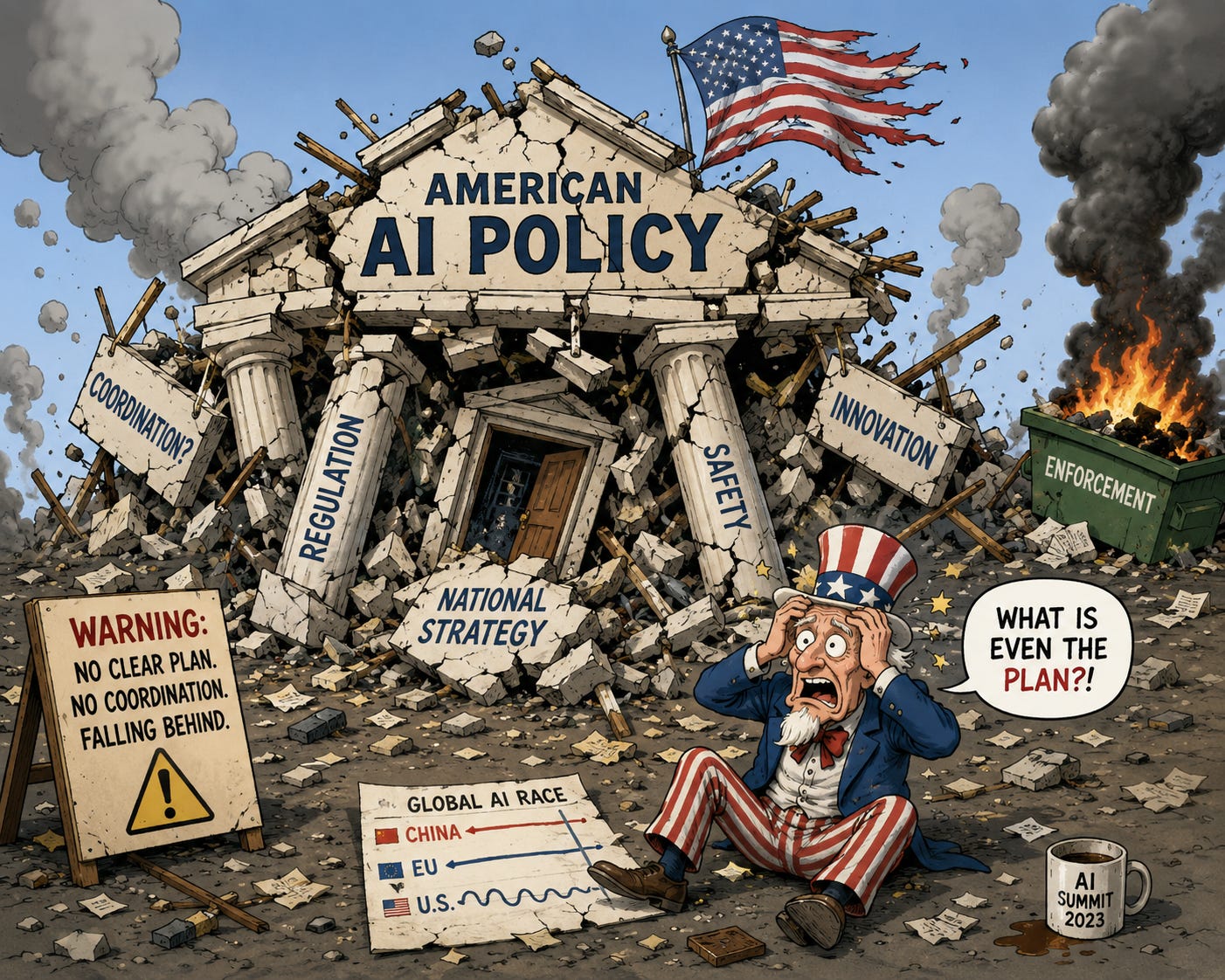
Where is the US with respect to AI policy? It’s a mess.
Let’s start with Trump’s Executive Order from June 2, and then turn to last night’s Commerce order; neither gets things right. (I will end with some suggestions about what might better).
As I noted when the EO came out (seems like a lifetime ago, even though it is actually less than two weeks!) I thought it was fantastic that Trump has issued an executive order that encourages AI companies to do some preflight testing.
But at the same time, the part of the EO on preflight testing is too weak. It is voluntary; and too narrow, focused primarily on cybersecurity. Companies can choose to ignore it, defeating the purpose of the order, and lots of things aren’t covered.
Florida’s recent lawsuit – the first state lawsuit against OpenAI– address many things that would not be covered, and highlights some of the ways in which the EO falls short. Here are some excerpts of the facts what the Attorney General for Florida—a Republican state—alleges:
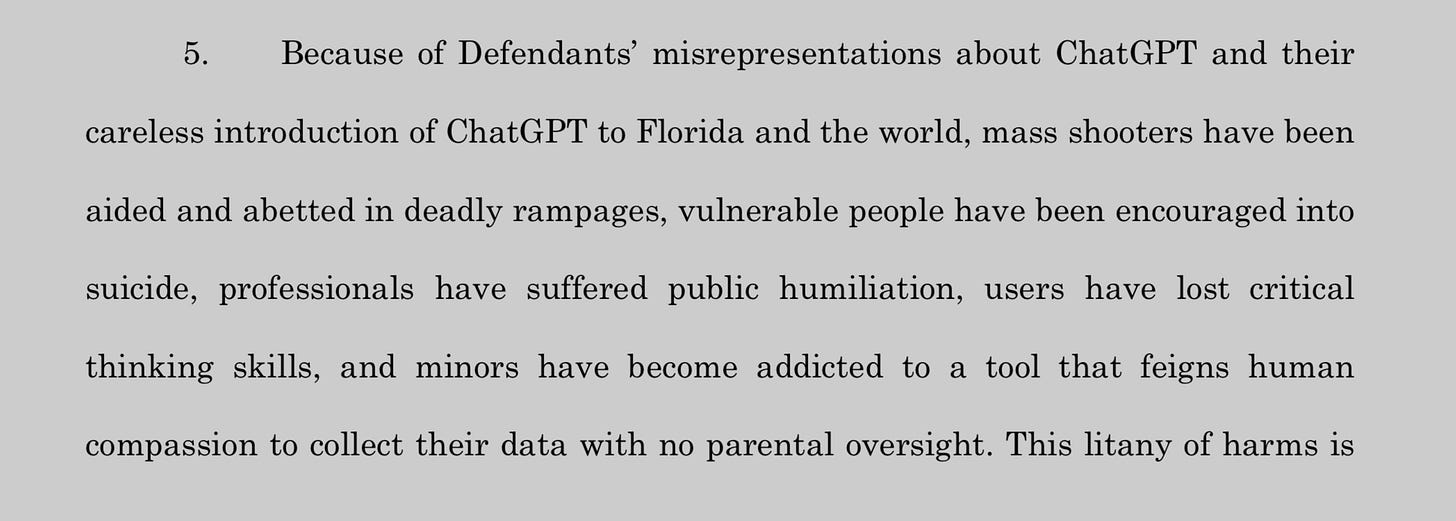
(I omit the rest of that bit but encourage readers to read the full complaint)
and also alleges
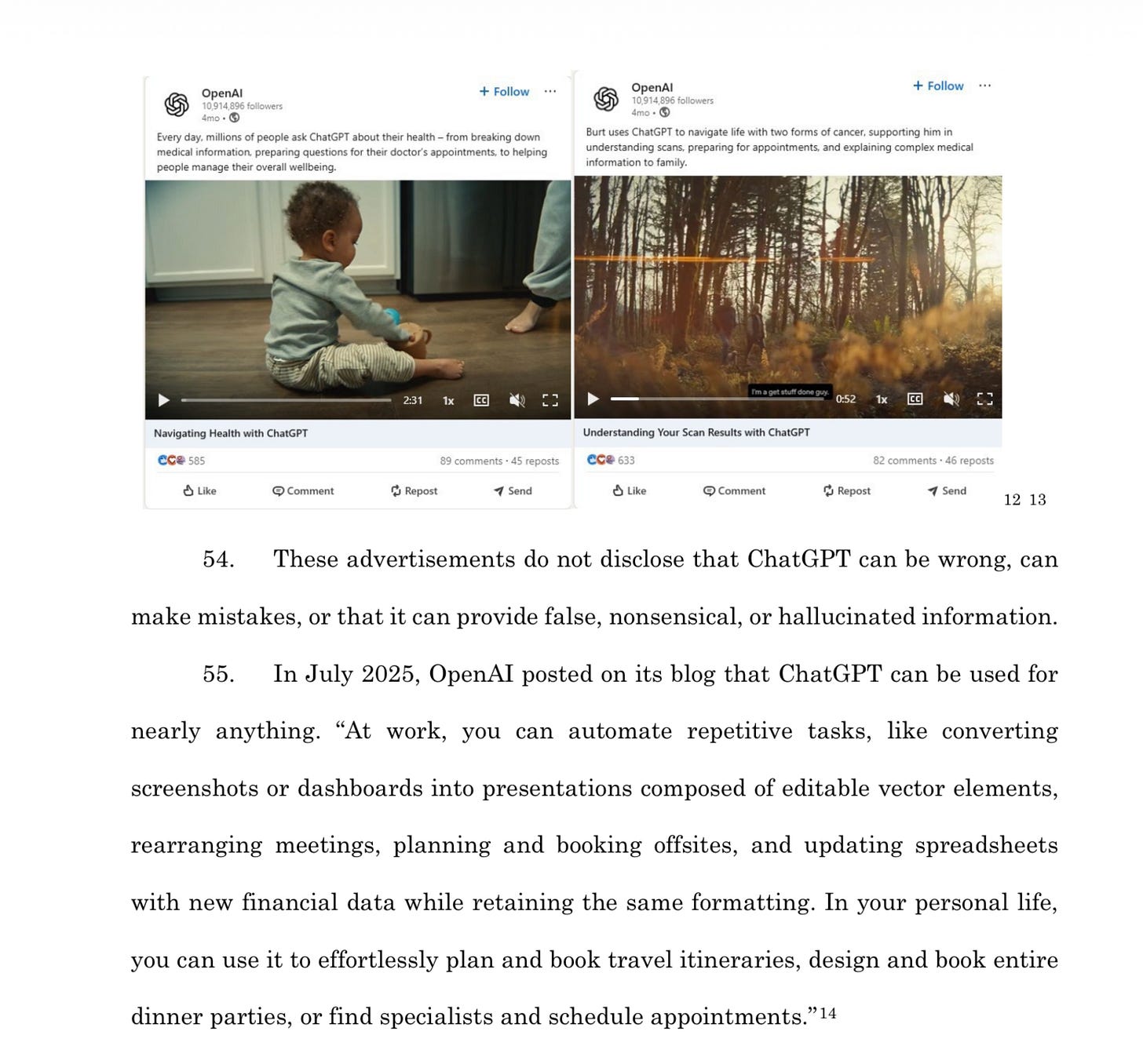
they also argue for a kind of false advertising
And, of course, all of these risks were foreseeable. (Indeed I pointed to most of them in my 2023 Senate testimony and in many other writings).
Trump’s Executive Order is genuinely a step in the right direction. But it addresses basically none of these harms, and does not require companies to consider them, even voluntarily. Instead, it allows AI companies to release software that could cause all of these harms, and demands little or no effort to mitigate them. We need a stronger hand from the government in forcing companies to address those harms.
For now, and until the US government takes a more comprehensive approach to addressing AI risks, states will have little choice but to file lawsuits like these; unfortunately, those can only be filed after harms have been caused.
And indeed, in a major scoop yesterday from The Wall Street Journal that got eclipsed, New York, working with several other states, has just subpoenaed OpenAI in a massive way, demanding information on ““a range of its activities and impact on users, including advertising, user engagement and retention, handling of consumer data and health data, activities related to minors and seniors, deep learning models, model sycophancy and company policies”.
States have no choice but to pick up the slack if they are to protect their citizens.
Now let’s consider last night’s Commerce Department cut-off-your-nose-to-spite-your-face export control order, which has basically led to the (temporary?) shutdown of Fable and Mythos, perhaps sparking a crisis in the US AI industry.
You can tell almost nobody outside some very small circle even considered the order before it was issued, because almost everyone I have read — right and left, pro-tech and not — has panned it. It was both bad policy and bad politics.
§
To be sure, Anthropic brought this on themselves to a considerable degree, by (a) overselling doom and their own wares and (b) by literally and repeatedly calling for export controls themselves. If you say “Ohhhh it’s so dangerous something something beat China something something 10% chance of destroying all civilization something” often enough, sooner or later people might indeed want to put limits around your product.
That said, no industry can thrive if the government appears arbitrary and capricious, as they did last night, (effectively) abruptly shutting down an entire thriving industry, and appearing very selective and reactive in the choices it made.
What we need now is something I have not seen of the Trump administration: carefully considered nuance. Shoot first and ask questions later is not what we need right now.
Instead, the government appears to have panicked when Amazon showed them that Anthropic’s Fable could be jail-broken. Which is naive, since essentially every LLM-based system can be jailbroken. This is not a new problem. Whatever you might think about Mythos or Fable or AI in general, what was just identified was not new and likely not specific to Mythos or Fable and in any case should not have been addressed in such a hasty, arbitrary way, with such little attention to downstream consequences.
I still believe, absolutely, that we cannot count on the AI industry to self-regulate, and that government must look—in a comprehensive way considering the full range of known risks—at new advances that are likely to be massively deployed models before they are released.
More broadly, what we should all demand from our leaders is strong but measured AI oversight that is (a) bipartisan, (b) technically well-informed, and (c) calm and considered, proactive rather than reactive.
Share
Discussion about this post
Ready for more?

Related Posts