Researchers are applying a new approach to optimizing neural quantum states (NQS), utilizing a 1.5 billion-parameter RWKV-7 model to scale these approximations of quantum many-body wavefunctions beyond previous limitations. The team, spanning Mila Quebec AI Institute, Applied Quantum Algorithms, and Delft University of Technology, addresses challenges with existing optimization methods like stochastic reconfiguration, which they
A
Chen Qian, PhD, Shanghai Jiao Tong University, China
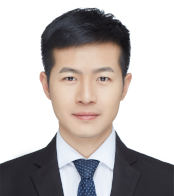 Qian Chen is a tenure-track Associate Professor and Ph.D. advisor at the School of Artificial Intelligence, Shanghai Jiao Tong University, where he founded the Agentic AI Lab (AAIL) to explore human–agent collaboration and build toward a symbiotic worldware. He received his Ph.D. in Software Engineering from Tsinghua University and conducted postdoctoral research in the THUNLP Lab through the Shuimu Tsinghua Scholar Program, before which he worked as an algorithm engineer in Tencent’s AI Platform Department. His research focuses on LLM-based agents, multi-agent collaboration, and collective intelligence, advancing the field from trial-and-error approaches toward rigorous scientific paradigms, with results published in leading venues including Nature Portfolio, NeurIPS, ICLR, ICML, and ACL, where he also serves as an area chair. He led the development of ChatDev, one of the first multi-agent systems to apply large-model collaboration to autonomous task solving; the project topped GitHub Trending, has accrued over 30,000 stars, ranked first in citation count among all long papers accepted at ACL 2024 (as of April 2026), and was recognized by NVIDIA as one of five representative agent frameworks for enterprise applications..
Dagang Li, PhD, Macau University of Science and Technology (MUST), Macau, China
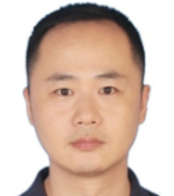 Dagang Li is an Associate Professor at the Macau University of Science and Technology (MUST), specializing in reinforcement learning, agentic AI, and data mining. He earned his B.E. in Telecommunication Engineering from Huazhong University of Science and Technology, and his M.S. and Ph.D. in Electrical Engineering from Katholieke Universiteit Leuven, Belgium, where he also conducted postdoctoral research. His career includes roles as a research assistant at IMEC, Belgium, and as a lecturer and assistant professor at Peking University before joining MUST in 2020. Prof. Li has registered more than 10 patents and published over 100 articles in peer-reviewed international journals and conferences in his research areas. His selected works include studies on autonomous driving and agentic vehicles, IIoT networks and edge computing, battery management system, stock index prediction, and medical data mining, reflecting his ability to bridge AI theory with practical applications across transportation, networking, green energy, finance and healthcare. His research continues to advance autonomous intelligent systems and secure, efficient infrastructures, earning him recognition as a leading figure in applied artificial intelligence and computer engineering.
Dacheng Tao, PhD, Nanyang Technological University (NTU), Singapore
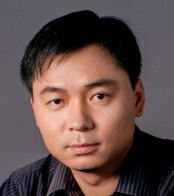 Professor Dacheng Tao is currently a Distinguished University Professor and Professor of Artificial Intelligence in the College of Computing and Data Science, Nanyang Business School, and LKC School of Medicine at Nanyang Technological University. He is also the inaugural Director of the Generative AI Lab (GrAIL). He earned his Ph.D. in computer vision from the University of London in 2007 under Stephen Maybank, and previously held the Peter Nicol Russell Chair Professorship and Australian Laureate Fellowship at the University of Sydney, where he founded the Sydney AI Centre. He has also served as Senior Vice President at JD.com, inaugural director of JD Explore Academy, and Chief Scientist of AI at UBTECH Robotics. His research applies statistics and mathematics to artificial intelligence, with contributions spanning computer vision, deep learning, natural language processing, multimedia, and medical informatics. He has authored a monograph and more than 300 peer‑reviewed papers in leading venues such as NeurIPS, CVPR, ICCV, and AAAI, earning numerous best paper and test‑of‑time awards. His global impact is widely recognized. Prof. Tao has received prestigious honors including the Australian Museum Eureka Prize for Excellence in Data Science (2015, 2020), the IEEE ICDM Research Contributions Award (2018), and the IEEE Computer Society McCluskey Technical Achievement Award (2021). He is a Fellow of the Australian Academy of Science, Royal Society of NSW, World Academy of Sciences, AAAS, ACM, and IEEE, underscoring his leadership in advancing AI research and its applications.
Meng Fang, PhD, University of Liverpool, United Kingdom
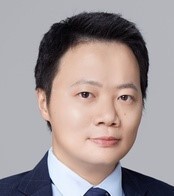 Dr. Meng Fang is an Assistant Professor in Artificial Intelligence at the University of Liverpool. His research focuses on building AI agent systems capable of human-like learning, reasoning, and decision-making. He received his PhD in Computer Science from the University of Technology Sydney and subsequently conducted postdoctoral research at the University of Melbourne. He currently holds a visiting professorship in Mathematics and Computer Science at Eindhoven University of Technology. His research spans natural language processing, reinforcement learning, embodied agents, and responsible AI. Dr. Fang has published widely in leading venues such as NeurIPS, ICLR, ICML, and ACL. He actively serves as an Area Chair for NeurIPS, ACL Rolling Review, and AAMAS. His work has received multiple accolades, including the Best Student Paper Award at the International Conference on Pattern Recognition and the Best Paper Award at the Learning on Graphs Conference.
Seunghwa Ryu, PhD, the Korea Advanced Institute of Science and Technology (KAIST), Republic of Korea
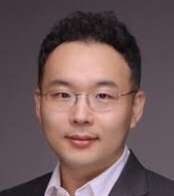 Professor Seunghwa Ryu is a KAIST Endowed Chair Professor of Mechanical Engineering, Head of the AX Department, and Director of the PRISM‑AI Center at KAIST. He earned his B.S. in Physics from KAIST in 2004 and his Ph.D. in Physics from Stanford University in 2011, followed by postdoctoral research at MIT and Stanford. His academic career at KAIST began in 2013, progressing from Assistant Professor to Full Professor in 2022, with visiting appointments at UC Berkeley, Stanford, and the University of Trento. Professor Ryu’s research focuses on multiscale and multiphysics simulations of materials and structures, homogenization theory of composites, and AI‑based design for manufacturing industries, including additive manufacturing. He has pioneered deep learning frameworks for material design space exploration, machine learning‑based inverse design methods, and advanced modeling techniques for composites and nanostructures. His work integrates AI algorithms with simulations and experiments to innovate materials, structures, and processes, and he has published extensively in leading journals and conferences. With over two decades of experience, he is recognized internationally for advancing computational mechanics and AI‑driven materials design, and he actively contributes to global symposiums and editorial boards.

Related Posts