In the pursuit of more robust and adaptable AI agents, the concept of continual learning is paramount. Soheil Feizi, Founder & Chief Scientist at RELAI and Associate Professor in Computer Science at the University of Maryland, recently delved into this critical area. His presentation, “Continual Learning for AI Agents: From Failures to Durable Improvements,” outlined the challenges and principles behind building AI agents that can learn and improve over time without regressions.
Soheil Feizi on Continual Learning for AI Agents — from AI Engineer
Visual TL;DR. AI Agent Learning faces Forgetting Problem. Forgetting Problem solved by Replayable Environments. Replayable Environments enables Three Improvement Layers. Three Improvement Layers demonstrated in Benchmark: Meridian. Three Improvement Layers leads to Durable Improvements. Human Learning Parallel inspired by AI Agent Learning.
Related startups
AI Agent Learning: agents learn and improve from experiences without forgetting
Forgetting Problem: agents forget past knowledge when learning new tasks
Replayable Environments: environments that allow agents to revisit past experiences
Three Improvement Layers: holistic, lifelong, and efficient agent improvements
Benchmark: Meridian: a practical application of continual learning principles
Durable Improvements: AI agents that learn without regressions
Human Learning Parallel: emulating human interaction and feedback cycles
Visual TL;DR
The Core of Continual Learning for AI Agents
Feizi began by drawing a parallel between human learning and the desired capabilities of AI agents. Humans learn from experience by interacting with the world and receiving feedback, a cycle that AI agents should ideally emulate. The goal of continual learning for AI agents is to enable them to continuously improve from their experiences without forgetting what they have already learned.
He identified two fundamental challenges in achieving this: first, how to effectively get feedback on an agent’s performance, and second, how to act upon that feedback to optimize the agent. In production environments, raw logs are not enough; they need to be transformed into actionable feedback. This can be achieved either through automated analysis by LLMs or code, or through critical human feedback from domain experts.
Welcome to Eye on AI. Beatrice Nolan here. In today’s issue: Amazon’s CTO on the AI coding revolution. All the news from AI for Good. SpaceXAI launches Grok 4.5. And OpenAI says a key benchmark is broken. I’ve been on the ground in Geneva this week at the UN’s AI for Good Summit. The Summit
MSPs lose hours every day bouncing between tools. Super Magic puts it all in one place and does the work. Thread, the AI-powered platform built for managed service providers, today announced the general availability of Super Magic — a fully integrated AI assistant that replaces the traditional help-desk search box with something that actually executes.
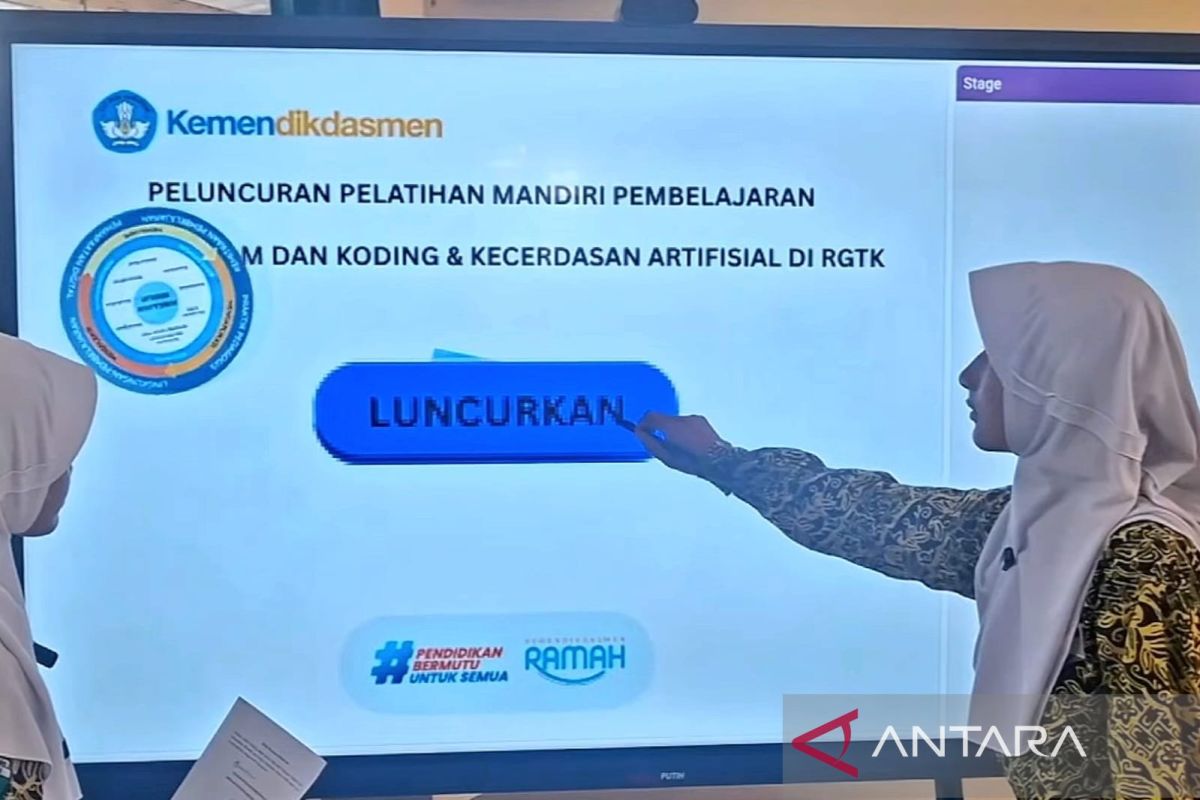
Jakarta (ANTARA) - The Indonesian Ministry of Primary and Secondary Education aims to train 361,000 teachers to strengthen their competencies in deep learning, coding, and artificial intelligence (AI) this year to accelerate digital transformation in schools. "More than 361,000 teachers and school staff can participate in deep learning, coding, and artificial intelligence training in 2026,"
We use cookies on our website to give you the most relevant experience by remembering your preferences and repeat visits. By clicking “Accept”, you consent to the use of ALL the cookies.
This website uses cookies to improve your experience while you navigate through the website. Out of these, the cookies that are categorized as necessary are stored on your browser as they are essential for the working of basic functionalities of the website. We also use third-party cookies that help us analyze and understand how you use this website. These cookies will be stored in your browser only with your consent. You also have the option to opt-out of these cookies. But opting out of some of these cookies may affect your browsing experience.
Necessary cookies are absolutely essential for the website to function properly. This category only includes cookies that ensures basic functionalities and security features of the website. These cookies do not store any personal information.
Any cookies that may not be particularly necessary for the website to function and is used specifically to collect user personal data via analytics, ads, other embedded contents are termed as non-necessary cookies. It is mandatory to procure user consent prior to running these cookies on your website.