Click to enter your existing username and password or create a new account. Click to purchase an individual user subscription with your credit card. Expert Opinion Artificial Intelligence AI poses new risks to trade secrets through data leaks, reverse-engineering, and challenges to protections. Solutions include legal protections (copyright, patents), technical safeguards (encryption, watermarks), and specialized
Enhanced deep learning model for anomaly object detection and tracking from surveillance videos – Scientific Reports
- Article
- Open access
- Published:
- Baliram Sambhaji Gayal1,
- Sandip Raosaheb Patil2,
- Dewanand Atmaram Meshram3,
- Rane Charushila Vijay4 &
- …
- Gitanjali S. Mate5
Scientific Reports (2026) Cite this article
We are providing an unedited version of this manuscript to give early access to its findings. Before final publication, the manuscript will undergo further editing. Please note there may be errors present which affect the content, and all legal disclaimers apply.
Subjects
Abstract
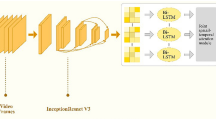
Video anomaly detection plays a crucial role in video surveillance, which identifies suspicious intruders without human intervention. Moreover, the rapid growth of video surveillance applications such as intrusion detection, health monitoring systems, and fault detection provides a secure environment. Furthermore, detecting anomalous intruders from video is a challenging task because of diverse contexts, lack of training data, and environmental variations. Several conventional techniques use various Deep Learning algorithms for anomaly detection, which possess limitations including high false positive rates and occlusion. Therefore, to overcome the drawbacks, efficient anomaly object detection and tracking system is proposed using an enhanced wolf Crocuta optimization-based deep Bidirectional Long Short-Term Memory (EnWC-DBiLSTM) classifier. Here, an effective keyframe selection is attained by the Timber Prairie Wolf Optimization (TPWO) strategy, which optimally selects the required keyframes for further processing. Further, the combination DBiLSTM classifier processes the input data accurately and detects the target object, in both directions. Moreover, the enhanced Wolf Crocuta optimization (EnWC) helps to eliminate local power resolution, which improves the convergence speed of the model. Henceforth, the proposed model achieved an accuracy of 98.226%, equal error rate, sensitivity, and specificity of 1.774, 98.111%, and 99.551%, respectively, for the ShanghaiTech campus dataset.
Acknowledgements
I would like to express my very great appreciation to the co-authors of this manuscript for their valuable and constructive suggestions during the planning and development of this research work.
Funding
This research did not receive any specific funding.
Ethics declarations
Competing interests
The authors declare no conflict of interest
Ethical approval
This paper does not contain any studies with human participants or animals performed by any of the authors.
Additional information
Publisher’s note
Springer Nature remains neutral with regard to jurisdictional claims in published maps and institutional affiliations.
Rights and permissions
Open Access This article is licensed under a Creative Commons Attribution-NonCommercial-NoDerivatives 4.0 International License, which permits any non-commercial use, sharing, distribution and reproduction in any medium or format, as long as you give appropriate credit to the original author(s) and the source, provide a link to the Creative Commons licence, and indicate if you modified the licensed material. You do not have permission under this licence to share adapted material derived from this article or parts of it. The images or other third party material in this article are included in the article’s Creative Commons licence, unless indicated otherwise in a credit line to the material. If material is not included in the article’s Creative Commons licence and your intended use is not permitted by statutory regulation or exceeds the permitted use, you will need to obtain permission directly from the copyright holder. To view a copy of this licence, visit http://creativecommons.org/licenses/by-nc-nd/4.0/.
Reprints and permissions
About this article

Cite this article
Gayal, B.S., Patil, S.R., Meshram, D.A. et al. Enhanced deep learning model for anomaly object detection and tracking from surveillance videos. Sci Rep (2026). https://doi.org/10.1038/s41598-026-61680-7
Download citation
-
Received:
-
Accepted:
-
Published:
-
DOI: https://doi.org/10.1038/s41598-026-61680-7
Keywords

Related Posts