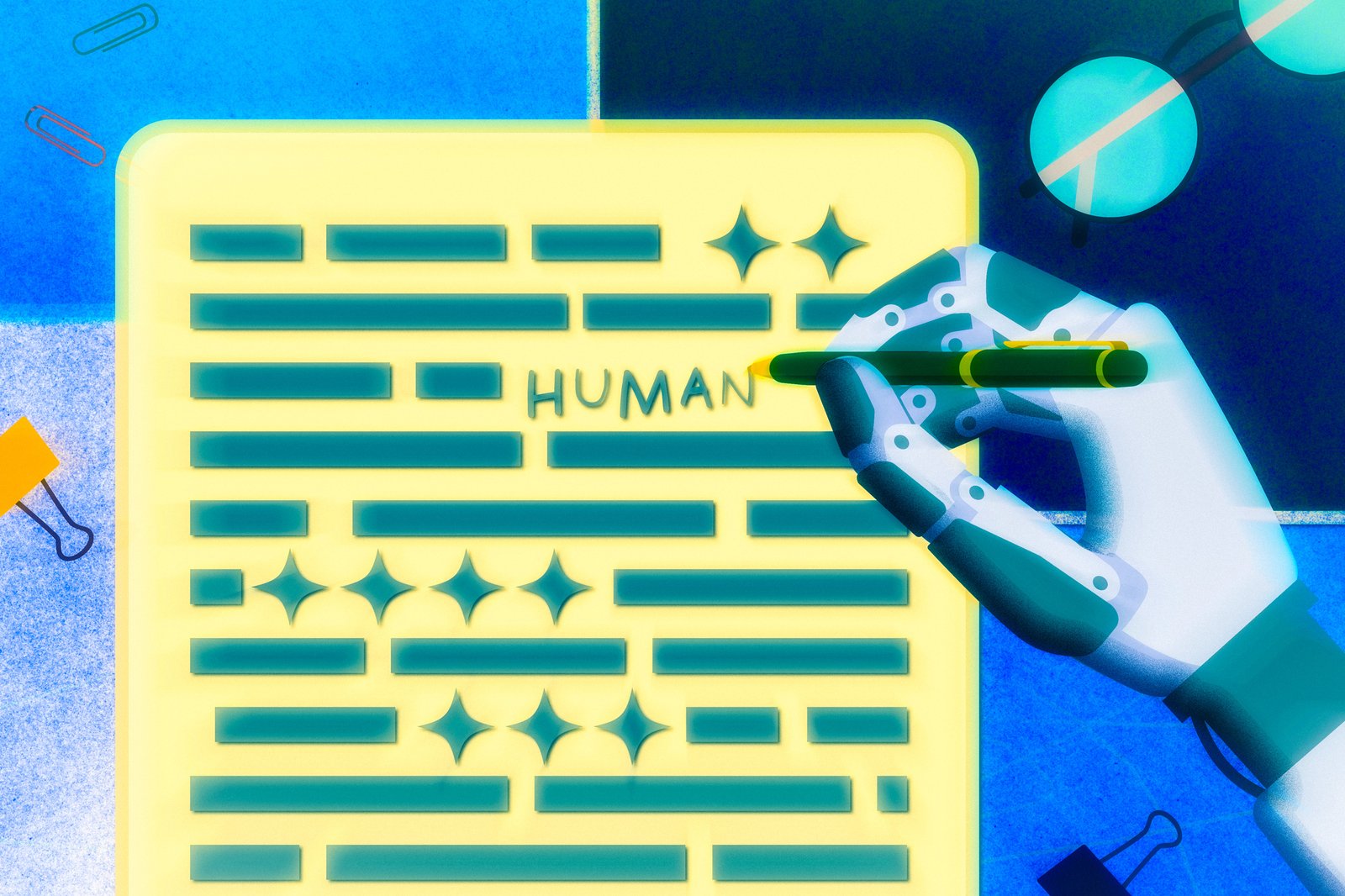
A teacher who believes a student’s term paper may have been written by a large language model (LLM) can use a tool for detecting artificial intelligence-generated text to help confirm their suspicions. But the teacher may want to think twice before putting all their trust in the detector. Researchers from MIT and Cornell University showed
Europe
Imran Khan,
Contributing Editor,GameDeveloper.com
November 17, 2026
schedule2 Min Read

Image via IWGB Game Workers
The IWGB Game Workers’ Branch has released a joint proclamation with members from Game Workers Unite Ireland, CSVI of Spain, and FIOM-CGIL Milan Work Council to outline grievances and pitfalls with generative AI use (stylized in the publication as genAI) and proposed solutions for game developer unions to avoid using it.
The manifesto itself tackles the subject of genAI from several different angles, including socioeconomic and environmental, ethical, and concerns about production qualtiy.
The document’s key argument, and one easy to imagine a worker’s union focusing on, is that genAI creates worse working conditions and job losses. The published work asserts that genAI is being sold as an alternative to human workers, that its use creates unrealistic pressure in terms of policy and timescales, and that it enables employers to abdicate responsibility in both cases.
“GenAI is currently harming the games industry, its workers and the games they produce. Left unchecked, this harm will continue to grow and impact more workers, more games, and more players, even more acutely,” the manifesto reads. “Our goal is to bring to light the risks and dangers genAI poses to the workforce, as well as to set guidelines and standards for games industry workers, stakeholders, and regulators, suggesting actions which can be taken to reduce—and ideally eliminate—these dangers.”
Related:Witcher 3 devs use AI to help Polish voice actor reprise role of Geralt after stroke
The proclamation goes on to propose actions to reduce harm, including stopping all genAI use whenever possible. This year’s State of the Game Industry survey states that 40 percent of game industry professionals use generative AI tools as part of their job, up from 36 percent the previous year. However, 55 percent say generative AI is having a negative impact on the industry, with 35 percent believing it is mixed, and only 8 percent arguing it is positive.
The manifesto has critics, as well. In a thread on the subject on Reddit’s Gamedev community, one commenter points out that it is overly-focused on genAI as a threat to artists, but says little about it costing programming jobs.
At the bottom of the manifesto, a rather pointed frequently-asked-questions section posits why the collective game workers are “against the future.”
“We are not [against the future],” the manifesto answers itself. “We simply believe that workers have the right to shape their future. Being exploited and overworked is not a future we are willing to accept. Time will prove genAI ‘tools’ and their usefulness, let us not be trampled in the meantime. The future is not yet written.”
Related:GenAI-using developers say they mostly employ it for ‘research and brainstorming’
About the Author

Contributing Editor, GameDeveloper.com
Imran Khan has been in the games industry in various forms for over two decades. He has been a former senior editor at Game Informer, a professional loudmouth at Kinda Funny, and news director at Fanbyte. He has also been doing PR for Vicarious PR and Head of U.S. PR for Japanese VR studio MyDearest, in addition to Producer work on their latest title Brazen Blaze.

Related Posts