
The AI Pulse Check Panelists discuss how machine learning lifts pharma yields, but AI batch decisions need Annex 22-ready validation. When a molecule designed by an AI agent arrives in a regulatory dossier, reviewers will eventually ask which model designed it and which data it drew on. In this episode of PharmTech AI Pulse Check
INL Computing Facility becomes DOE-NE user facility, launches Arco

A message from Westinghouse Electric Company LLC
Unleash Your Organizational Superpower Through Talent Development
Learn More

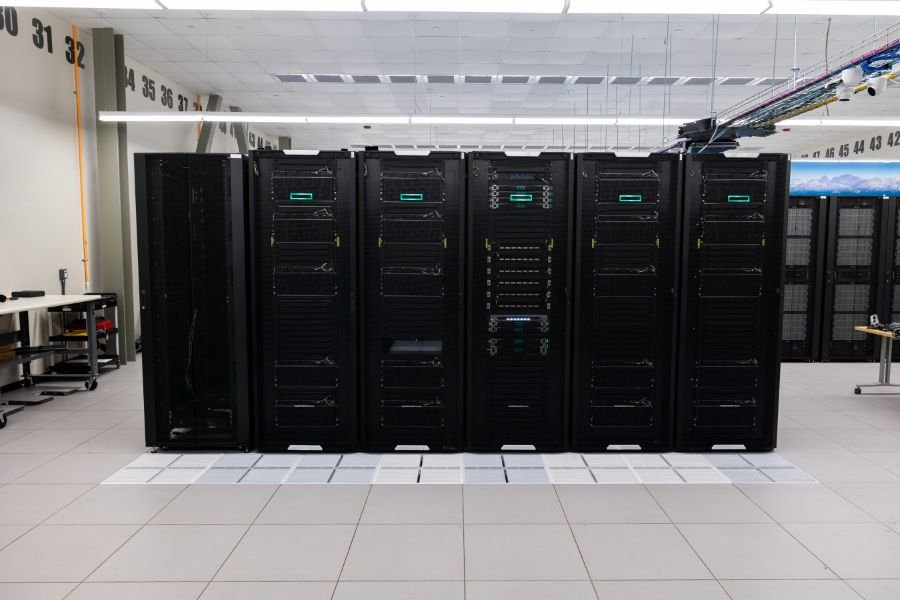
The Arco supercomputer at INL’s Collaborative Computing Center in Idaho Falls, Idaho.
The Department of Energy’s Office of Nuclear Energy has designated the Idaho National Laboratory Computing Facility (INLCF) as an official user facility, making it the first such facility in the United States for high-performance computing focused on nuclear energy research.
Christian Natoni, the deputy manager for facilities, programs, and partnerships at the DOE Idaho Operations Office, said, “Making these computing resources available as a DOE Office of Nuclear Energy user facility gives researchers across the nuclear energy community access to capabilities they need to tackle complex challenges.”
The user facility designation aligns with INL’s role in the DOE’s Genesis Mission, the federally supported national initiative to accelerate scientific discovery through artificial intelligence. It also provides a boost for INL as it leads the 32-partner collaboration called Prometheus, which recently received a Genesis Mission award to deploy AI across nuclear power plant design, licensing, manufacturing, construction, and operations.
INLCF: INLCF and its Collaborative Computing Center offer advanced modeling and simulation resources that support a range of research activities, including multiscale multiphysics performance analyses of nuclear fuels, reactors, and other nuclear-related materials and equipment. The lab is available to users in industry, universities, national laboratories, and federal agencies. The Nuclear Science User Facilities provides support for INLCF.
INLCF hosts a number of high-performance supercomputing systems, including two recent additions, Teton and Arco. These two newest computer systems provide researchers with complementary central processing unit (CPU) and graphics processing unit (GPU) resources for demanding nuclear energy research workloads.
Teton: Teton, which was commissioned for business this past January, contains 1,024 compute nodes, each equipped with 384 compute cores and 768 GB of memory, and it can deliver 20.8 quadrillion calculations per second. This supercomputer has quadrupled the computing capacity of INL. It is being used to support advanced computational research in a variety of scientific domains, including regarding the modeling and simulation codes that are needed for nuclear reactor design.
Arco: Arco—which arrived at INL this past July and was officially launched to coincide with the DOE-NE user facility designation—is a GPU-accelerated supercomputer featuring Nvidia H200 GPUs and a Hewlett Packard Enterprise XD670 deep learning distributed memory system. Arco is optimized for the complex modeling, simulation, and automation requirements of nuclear energy research, including machine learning and artificial intelligence workloads. It will be used for’ Genesis Mission and Prometheus work.
Related Articles

We’ve crossed the nuclear tipping point
Demand, government, and capital have finally aligned. All that’s left is to deliver.
September 16, 2026, 7:08 amNuclear NewsRian Bahran
Twenty years ago, I walked across a graduation stage with a nuclear engineering degree and a promise that the nuclear renaissance was coming. It never came. The hard part was not the physics….
.jpg)
Valar’s Ward 250 reaches criticality in Utah
El Segundo, Calif.–based start-up Valar Atomics has taken its Ward 250 test reactor critical at the Utah San Rafael Energy Lab (USREL), becoming the second company in the Department of…

Related Posts