
⇓ More from ICTworks By Wayan Vota on July 20, 2026 Asia-Pacific is the most disaster-prone region in the world. The UN Economic and Social Commission for Asia and the Pacific projects that climate-induced disaster losses could near US$1 trillion annually, or 3 percent of regional GDP, under a 2°C warming scenario. Green technology is
A deep-learning based gait classification and anomaly detection framework for healthcare surveillance – Scientific Reports
- Article
- Open access
- Published:
- Mohammad F. Alfridi1
Scientific Reports (2026) Cite this article
We are providing an unedited version of this manuscript to give early access to its findings. Before final publication, the manuscript will undergo further editing. Please note there may be errors present which affect the content, and all legal disclaimers apply.
Subjects
Abstract
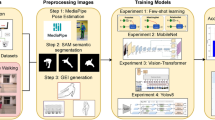
Gait classification and anomaly detection are non-intrusive approaches that can support healthcare surveillance and clinical gait analysis by identifying abnormal walking patterns. Despite recent advancements, existing methods remain limited by model complexity, high computational requirements, and privacy concerns. This study proposes a unified framework that combines three complementary components: (i) transformer-based temporal modeling to capture both short-term and long-term gait dynamics, (ii) lightweight architectures for efficient deployment on edge devices, and (iii) federated learning (FL) for privacy-preserving distributed training without requiring raw data sharing. Experiments were conducted on a balanced subset of 60,000 images from the Gait Detection Processed dataset using a controlled federated learning environment designed as a proof-of-concept evaluation rather than a large-scale deployment setting. The dataset consisted of three categories: background/non-gait, normal gait, and abnormal gait. Vision Transformer (ViT), ConvLSTM, and MobileViT architectures were evaluated for three-class gait classification and anomaly detection under a federated learning setting. Among the evaluated models, MobileViT-Large achieved the highest performance with 97.2% accuracy, 96.8% precision, 97.5% recall, and 97.1% F1-score, although it required higher computational resources and showed greater overfitting tendencies. MobileViT-Small achieved the best balance between efficiency and performance with 94.0% accuracy, making it more suitable for edge deployment. SHAP-based analysis further showed that the models focused on meaningful gait regions, such as torso and limb movements. This proposed framework provides a comparative benchmark of recurrent and transformer-based architectures within a privacy-preserving framework for healthcare monitoring applications.
Acknowledgements
The researcher would like to thank the Deanship of Graduate Studies and Scientific Research at Qassim University, Qassim, Saudi Arabia (www.qu.edu.sa) for financial support (QU-APC-2026).
Ethics declarations
Competing interests
The authors declare no competing interests.
Additional information
Publisher’s note
Springer Nature remains neutral with regard to jurisdictional claims in published maps and institutional affiliations.
Rights and permissions
Open Access This article is licensed under a Creative Commons Attribution-NonCommercial-NoDerivatives 4.0 International License, which permits any non-commercial use, sharing, distribution and reproduction in any medium or format, as long as you give appropriate credit to the original author(s) and the source, provide a link to the Creative Commons licence, and indicate if you modified the licensed material. You do not have permission under this licence to share adapted material derived from this article or parts of it. The images or other third party material in this article are included in the article’s Creative Commons licence, unless indicated otherwise in a credit line to the material. If material is not included in the article’s Creative Commons licence and your intended use is not permitted by statutory regulation or exceeds the permitted use, you will need to obtain permission directly from the copyright holder. To view a copy of this licence, visit http://creativecommons.org/licenses/by-nc-nd/4.0/.
Reprints and permissions
About this article

Cite this article
Alfridi, M.F. A deep-learning based gait classification and anomaly detection framework for healthcare surveillance. Sci Rep (2026). https://doi.org/10.1038/s41598-026-62788-6
Download citation
-
Received:
-
Accepted:
-
Published:
-
DOI: https://doi.org/10.1038/s41598-026-62788-6
Keywords

Related Posts