
USC Viterbi and Stevens new faculty: Ajey Jacob (top left), Haowei Shi (top center), Itay Hen (top right), Morley Mao (bottom left), Sasan Razmkhah (bottom center) and Scott Mahlke (bottom right) The USC Stevens School of Computing and Artificial Intelligence welcomes six new faculty members whose research advances the frontiers of artificial intelligence, computing and
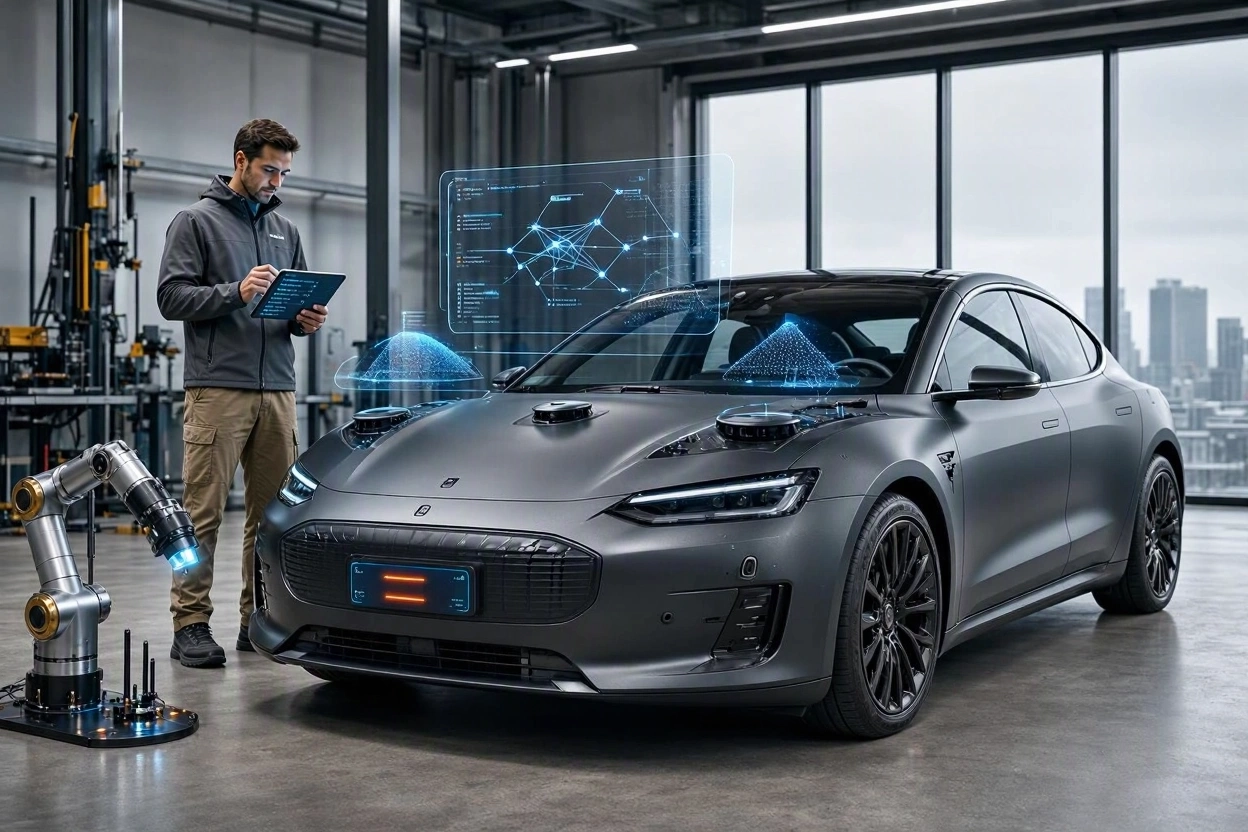
Automotive AI Technology Innovation Key Trends, Growth Drivers and Opportunities
Automotive AI refers to the use of artificial intelligence technologies including machine learning, computer vision, deep neural networks, natural language processing, and sensor fusion to make vehicles safer, smarter, and more autonomous. Powered by high-performance AI chips, IoT connectivity, 5G networks, cloud computing, and edge intelligence, modern vehicles can now perceive their surroundings, predict risks, and assist drivers in real time. From advanced driver-assistance systems (ADAS) and autonomous driving platforms to in-cabin voice assistants, predictive maintenance, and intelligent fleet management, AI is becoming the core intelligence layer of the software-defined vehicle.
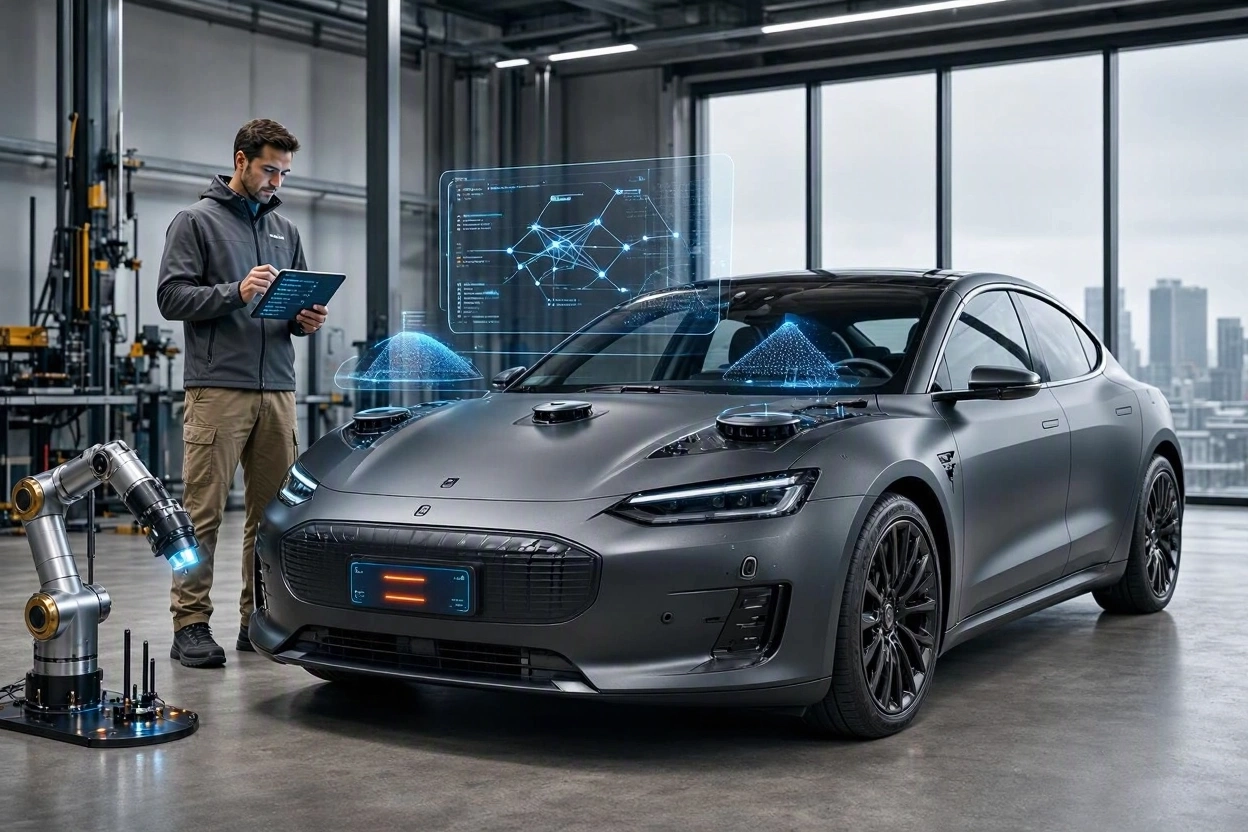
Evolution of automotive AI
The automotive AI industry has evolved from simple electronic control units and cruise control systems into intelligent, connected mobility ecosystems. Advances in semiconductor technology, high-bandwidth sensors, LiDAR and radar, over-the-air software updates, and deep learning models have enabled vehicles to support autonomous navigation, driver monitoring, predictive safety, and personalized in-cabin experiences. What began as basic automation in premium vehicles is now rapidly scaling across mass-market cars, commercial fleets, and electric vehicles, making AI a foundational technology for the future of transportation.
Benefits of automotive AI
Automotive AI offers numerous advantages across consumers, OEMs, mobility providers, and enterprises:
- Enhanced road safety through real-time hazard detection and collision avoidance.
- Higher levels of autonomous driving and driver-assistance capability.
- Predictive maintenance that reduces downtime and repair costs.
- Personalized in-cabin experiences, voice assistants, and smart navigation.
- Improved fleet efficiency, route optimization, and energy management.
- Stronger cybersecurity and over-the-air software upgradability.
Current market size and growth trends of automotive AI industry
The automotive AI market is experiencing robust growth as autonomous driving, connected vehicles, and software-defined architectures become mainstream. According to MarketsandMarkets, the global automotive AI market size was valued at USD 18.83 billion in 2025 and is projected to reach USD 38.45 billion by 2030, growing at a CAGR of 15.3% from 2025 to 2030. Rising adoption of ADAS, electric vehicles, AI-enabled infotainment, and centralized computing platforms continues to accelerate market expansion. Increasing regulatory focus on vehicle safety and rapid advancements in AI chipsets are further strengthening long-term demand across global automotive markets.
Download PDF Brochure @ https://www.marketsandmarkets.com/pdfdownloadNew.asp?id=248804391
- Growing demand for AI-enabled ADAS and autonomous driving.
- Expansion of electric and software-defined vehicles.
- Increasing consumer adoption of smart, connected cars.
- Continuous innovation in AI chips, sensors, and edge computing.
Key drivers and factors influencing the future of automotive AI
AI, IoT, 5G, cloud analytics, and edge intelligence are enabling more capable vehicles across industries. Automakers are shifting from hardware-centric designs to AI-driven software platforms that can be updated continuously. Regulatory mandates for safety features, consumer expectations for personalization, and the rise of robotaxis and autonomous logistics are pushing investment into automotive AI. At the same time, partnerships between OEMs, chipmakers, and software providers are compressing innovation cycles and bringing advanced intelligence to mass-market vehicles faster than ever before.
- AI-powered predictive safety and autonomous driving.
- Real-time vehicle health monitoring and maintenance.
- Enterprise digitalization of mobility and fleet operations.
- Industrial and commercial autonomous vehicles.
- Smart manufacturing and connected factory integration.
Emerging trends in automotive AI
Generative AI assistants, centralized zonal architectures, transformer-based perception models, and non-invasive driver monitoring are reshaping the industry. Vehicles are becoming AI-defined platforms where software, sensors, and cloud services converge. Multimodal AI that combines vision, radar, LiDAR, and voice is improving reliability in complex driving conditions. Meanwhile, automotive-grade AI chips and edge inference are reducing latency and dependence on constant cloud connectivity, enabling safer and faster decision-making on the road.
- Generative AI in-cabin assistants
- Autonomous driving and robotaxis
- Software-defined vehicle architectures
- Edge AI and automotive-grade chips
- Advanced sensor fusion and multimodal perception
Opportunities and challenges in the automotive AI market
Autonomous mobility, electric vehicles, logistics, and smart cities offer major opportunities, while data privacy, cybersecurity, functional safety, and high development costs remain important challenges. Automotive AI systems must meet strict regulatory and safety standards, and any failure can have life-critical consequences. Interoperability across brands, suppliers, and regions adds complexity, and the massive volume of vehicle data raises concerns about ownership and compliance. Battery, compute, and thermal constraints in EVs also limit how much AI processing can run onboard.
- Autonomous and assisted driving expansion
- Commercial fleets and logistics automation
- Cybersecurity and data privacy
- Functional safety and regulatory compliance
- Compute, power, and thermal efficiency
Innovations and advancements in automotive AI
Neural processing units, centralized computing platforms, cloud-native development, simulation, and digital twins are driving innovation. Automakers are using synthetic data and virtual testing to train and validate AI models far faster than physical road testing alone. Over-the-air updates allow vehicles to improve after purchase, while high-definition mapping and vehicle-to-everything (V2X) communication extend perception beyond onboard sensors. These advancements are transforming cars into continuously evolving, intelligent machines.
- Automotive-grade AI processors
- Cloud connectivity and OTA updates
- Digital twins and simulation
- V2X communication
- Advanced driver and occupant monitoring
AI in electric and autonomous mobility ecosystems
AI is central to the convergence of electric vehicles, autonomous driving, and mobility-as-a-service. It optimizes battery range, charging schedules, and energy recovery, while enabling robotaxi fleets, autonomous delivery, and smart traffic coordination. AI-driven platforms also support fleet predictive maintenance and dynamic route planning, reducing costs and emissions. As cities invest in connected infrastructure, automotive AI will increasingly operate as part of a broader intelligent mobility ecosystem rather than as an isolated in-vehicle feature.
Future applications and industries that will benefit from automotive AI
Automotive, transportation, logistics, manufacturing, insurance, retail, defense, and smart cities will increasingly benefit from automotive AI innovation. Insurance providers can use driving data for risk-based pricing, while logistics firms can deploy autonomous trucks and optimized routing. Manufacturers benefit from AI-driven quality control and predictive maintenance, and smart cities gain smoother traffic flow and improved safety. Defense and public safety applications include autonomous patrol, surveillance, and emergency response vehicles.
- Automotive and transportation
- Logistics and commercial fleets
- Manufacturing and supply chain
- Insurance and mobility services
- Defense and smart cities
The promising future of automotive AI
Automotive AI will remain a cornerstone of digital transformation as autonomous driving, IoT, and advanced sensing technologies continue to evolve. Organizations investing in automotive AI innovation can improve road safety, operational efficiency, product differentiation, and customer experiences. As AI chips, software platforms, and connectivity mature, intelligent vehicles will become central nodes in a connected, sustainable, and increasingly autonomous mobility ecosystem. Companies that act early will shape the standards, partnerships, and platforms defining the next decade of transportation.
Download Sample Research Report for Automotive AI Market Future: https://www.marketsandmarkets.com/Market-Reports/automotive-artificial-intelligence-market-248804391.html

Related Posts