
Chris Kerr, Senior Editor, News, GameDeveloper.com April 1, 2026 5 Min Read Nexon, the South Korean publisher behind Arc Raiders and MapleStory , has told investors it intends to leverage AI tools across every step of its development process and live services. During a capital markets briefing held in Tokyo on March 31, 2026, Nexon
Automotive sector accelerates carbon footprint reduction with advanced AI and cloud framework
A team of researchers presents a novel interdisciplinary strategy to tackle the complex challenge of Scope 3 emissions within the automotive manufacturing sector. With global climate change concerns escalating, this industry faces immense pressure to minimize its greenhouse gas (GHG) output. Indirect Scope 3 emissions, originating from activities across the value chain, often represent the largest component of an organization’s environmental impact, yet their accurate quantification and management have historically remained elusive. This investigation outlines a comprehensive methodology that integrates sophisticated technologies to enhance emission data precision and optimize supply chain operations.
Integrating Cutting-Edge Technologies for Emission Management
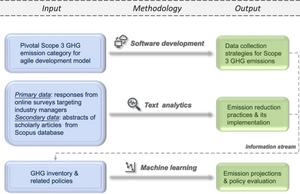
The proposed methodology unites cloud computing, text analysis, and machine learning to forge a robust framework for emission data management and reduction. Cloud computing provides a powerful infrastructure for storing, processing, and analyzing vast datasets, enabling the development of a tailored Software as a Service (SaaS) platform. This platform facilitates the seamless collection of primary emission data from diverse stakeholders throughout the automotive value chain, significantly improving data accuracy compared to traditional reliance on industry averages. Concurrently, text analysis, particularly topic modeling, distills actionable knowledge from industrial operations and academic literature, informing strategic blueprints for eco-friendly transformations within supply chains.
Machine learning algorithms further bolster this framework, offering potent capabilities for emissions prediction and the identification of optimal mitigation strategies. Utilizing precise carbon emission data gathered by the SaaS platform, a tiered approach employs traditional models like Linear Regression and Decision Trees, progresses to ensemble learning algorithms such as Gradient Boosting Decision Trees (GBDT), and culminates in multi-layer Artificial Neural Networks (ANN) for complex pattern recognition. These models forecast the efficacy of specific emission reduction strategies, guiding enterprises in developing impactful carbon reduction projects.
Optimizing Supply Chains and Quantifying Emissions
A central pillar of this approach involves meticulously quantifying Scope 3 GHG emissions by adhering to international guidelines like ISO 14064 and GHG Protocol Standards. A “progressive narrowing” method identifies predominant emission contributors within the fifteen Scope 3 categories, directing the development of the customized SaaS platform. This platform is designed to engage various stakeholders, from product users inputting usage data to freight forwarding companies logging transportation details, ensuring thorough aggregation of primary data. The platform’s agile development model ensures continuous refinement and adaptability to evolving standards and user feedback, fostering transparency and collaborative efforts to minimize carbon footprints.
Supply chain optimization is identified as a critical pathway for emission reduction. Employing topic modeling on both academic literature and insights from industry managers, the methodology helps generate specific emission reduction strategies. These strategies, such as fuel substitution or cleaner transport modes, are then evaluated against established baseline scenarios. The framework provides a dynamic tool for companies to monitor and measure the impact of their interventions, allowing for comparative analysis against post-implementation GHG reductions and supporting informed decision-making for sustainable operations.
While the interdisciplinary approach offers substantial promise, it also confronts notable challenges. The exponential growth of data complicates its effective management and analysis. The globalized nature of automotive supply chains necessitates adaptation to diverse regulatory environments and operational complexities across jurisdictions. Furthermore, the significant initial investments required for adopting emerging technologies and enhancing supply chain processes can deter some enterprises, making the return on investment a key consideration. Maintaining stakeholder engagement across an extensive value chain also presents an ongoing organizational challenge.
Looking ahead, the research outlines several promising trajectories for these strategies. Continued advancements in artificial intelligence will further refine predictive models and enhance corporate insights into emission patterns. Expanded Internet of Things (IoT) integration in supply chain management promises more granular and real-time monitoring of emissions. The adoption of blockchain technology could elevate data transparency and security, streamlining information exchange among stakeholders. The ongoing shifts in policy and market landscapes, driven by increasing climate change focus and consumer demand for sustainability, will continue to shape and necessitate adaptive emission management strategies.
Dr. Yuanzhe Li, a corresponding author from National University of Singapore, shares his perspective: “Addressing Scope 3 emissions effectively requires more than just accounting; it demands an intelligent, adaptive ecosystem. Our work demonstrates that by strategically integrating cloud platforms, advanced analytics, and machine learning, the automotive industry can not only pinpoint emission hotspots with unprecedented accuracy but also proactively design and implement impactful reduction pathways. This multidisciplinary approach equips organizations with the tools to navigate environmental challenges and drive tangible progress toward sustainability goals.”
The development of such adaptive and flexible strategies, coupled with continuous monitoring of external variations, will be essential for the long-term effectiveness of Scope 3 emissions management. By embracing technological progress and market evolution, the automotive manufacturing sector can move beyond mere compliance to foster genuine sustainability and contribute meaningfully to global environmental objectives.
Corresponding Author: Yuanzhe Li
Original Source: https://doi.org/10.1007/s44246-024-00131-2
Contributions: Conceptualization and methodology were developed by Yu Hao and Yan Wang; validation was conducted by Yan Wang and Yuanzhe Li; Yu Hao and Yilin Hou conducted formal analysis; investigation was performed by Yu Hao, Yilin Hou and Yan Wang; Quan Quan and Yuanzhe Li acquired resources; writing the original draft was performed by Yan Wang, Yu Hao and Yuanzhe Li; Quan Quan, Yan Wang, Yilin Hou and Yuanzhe Li contributed to the review and editing process; visualization was performed by Yan Wang, Quan Quan and Yuanzhe Li; Yuanzhe Li supervised the study; project administration was performed by Yuanzhe Li and Yu Hao. All authors have read and agreed to the published version of the manuscript.
Disclaimer: AAAS and EurekAlert! are not responsible for the accuracy of news releases posted to EurekAlert! by contributing institutions or for the use of any information through the EurekAlert system.

Related Posts