
Article Open access Published: 01 May 2026 Yongjian Wang1 Scientific Reports , Article number: (2026) Cite this article We are providing an unedited version of this manuscript to give early access to its findings. Before final publication, the manuscript will undergo further editing. Please note there may be errors present which affect the content, and all
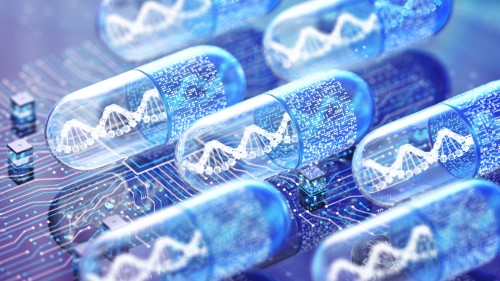
Computational Drug Repurposing in the Era of Multimodal Data and Artificial Intelligence
Drug repurposing — the identification of new therapeutic indications for approved drugs or clinical-stage candidates — offers one of the most efficient strategies to deliver new treatments to patients. By leveraging existing safety, pharmacokinetic, and manufacturing data, repurposing can dramatically reduce development timelines and costs compared with traditional de novo drug discovery. In the current landscape, however, the full potential of repurposing remains unrealized due to the complexity of human disease biology and the limitations of single-modality approaches.
The convergence of multimodal biomedical data (genomics, transcriptomics, proteomics, metabolomics, clinical records, real-world evidence, imaging, digital phenotyping, and adverse event reports) with advanced artificial intelligence (AI) and machine learning methodologies is transforming computational drug repurposing. Large language models, graph neural networks, multimodal transformers, knowledge-graph embeddings, and generative AI now enable the integration of heterogeneous data sources at unprecedented scale and resolution. These advances are uncovering hidden biological connections, predicting novel drug–disease associations, and generating mechanistic hypotheses that can be rapidly tested in clinical settings.
This Special Collection in npj Digital Medicine aims to showcase cutting-edge research and thought leadership at the intersection of computational drug repurposing, multimodal data science, and AI. We welcome original research articles, comprehensive reviews, and perspectives that address methodological innovations, validation strategies, clinical translation, ethical considerations, and real-world impact in this rapidly evolving field.
Topics of interest include (but are not limited to):
- Integration of multimodal omics, electronic health records, adverse effect reports, and digital sensor data for drug repurposing
- AI-driven approaches, including deep learning, reinforcement learning, and generative models for indication expansion
- Knowledge graph construction, embedding, and reasoning for drug–target–disease networks
- Causal inference and counterfactual modeling in repurposing predictions
- Explainable AI and model interpretability for clinical acceptance and translation
- Legal and regulatory considerations in AI-enabled drug repurposing
- Case studies demonstrating successful translation from computational prediction to clinical outcome
- Benchmarking datasets, platforms, and open-source tools for the community of computational drug discovery
We particularly encourage submissions that demonstrate clinical relevance, address health disparities, or tackle complex, multifactorial diseases (e.g., neurodegenerative, cancer, rare disease, infectious, or immune-mediated disorders) where repurposing can have outsized impact.
This collection will serve as a timely resource for researchers, clinicians, data scientists, pharmaceutical developers, and policymakers seeking to harness the power of multimodal data and AI to accelerate therapeutic innovation. By highlighting rigorous computational methods grounded in biological and clinical reality, we aim to advance the field toward more predictable, efficient, and equitable drug repurposing.

Related Posts