Ultimately, he and his group want to help people design more accurate and robust deep-learning models that are better suited for their intended application. “We used to debug systems just by looking at their parameters and figuring out whether they make sense or not. Now, we need ‘mind-reading tools’ that can take this really complicated
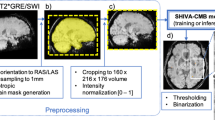
Deep learning-based computer-aided detection of cerebral microbleeds achieves high sensitivity with a low false-positive rate in a confirmatory clinical trial – Scientific Reports
Abstract
Cerebral microbleeds (CMBs) are small, focal brain lesions recognized as critical biomarkers of cerebrovascular disease and cognitive decline. Despite advances in MRI technology, detecting CMBs remains challenging, highlighting the need for automated tools. This study aimed to evaluate the standalone performance of Neurophet SCALE MRI for automated CMB detection. The model was trained on 201 SWI and phase examinations. Neurophet SCALE MRI employs a two-stage deep learning pipeline with preprocessing steps, including reorientation, resampling, and data augmentation. In the first stage, CMB candidates are generated using a multiscale backbone and bidirectional convolutional Long Short-Term Memory. The second stage reduces false positives through a Squeeze-and-Excitation ResNet-based classifier and brain tissue segmentation. In this retrospective, single-center clinical trial, the model was tested on 457 MRI examinations. The primary endpoints were lesion-wise sensitivity (> 85.7%) and false positive rate (< 2.35 per patient). In addition, patient-wise and group-wise analyses were conducted. A total of 456 participants (224 CMB-positive, 232 CMB-negative) with 515 CMB lesions were included for the statistical analysis. The device exceeded all predefined performance criteria, demonstrating a lesion-wise sensitivity of 88.35% (95% CI: 86.61–90.17) and a false positive rate of 0.95 per patient (95% CI: 0.83–1.07). Patient-wise sensitivity and specificity were 1.0 (95% CI: 0.98–1.0) and 0.86 (95% CI: 0.81–0.90), respectively. For group-wise classification (0–4 vs. ≥5 CMBs), sensitivity and specificity were 0.91 (95% CI: 0.88–0.93) and 0.95 (95% CI: 0.74–1.0). Neurophet SCALE MRI demonstrated high sensitivity and specificity along with a low false-positive rate, supporting its potential clinical utility. Further validation by expert readers in a broader population is warranted.
Acknowledgements
This research was supported by the Ministry of SMEs and Startups (MSS) and Korea Institute for Advancement of Technology (KIAT), through the Innovation Development for Global Regulation-Free Special Zone (R&D) (RS-2024-00507182).
Funding
The SCALE MRI clinical trial was sponsored by Neurophet Inc.
Ethics declarations
Competing interests
E.L., M.L., S-Y.J., D.S., H.J., D.K. and K.L. are current or former employees of Neurophet Inc., the manufacturer of SCALE MRI, and may hold shares or stock options in the company. The remaining authors declare no competing interests.
Additional information
Publisher’s note
Springer Nature remains neutral with regard to jurisdictional claims in published maps and institutional affiliations.
Supplementary Information
Rights and permissions
Open Access This article is licensed under a Creative Commons Attribution 4.0 International License, which permits use, sharing, adaptation, distribution and reproduction in any medium or format, as long as you give appropriate credit to the original author(s) and the source, provide a link to the Creative Commons licence, and indicate if changes were made. The images or other third party material in this article are included in the article’s Creative Commons licence, unless indicated otherwise in a credit line to the material. If material is not included in the article’s Creative Commons licence and your intended use is not permitted by statutory regulation or exceeds the permitted use, you will need to obtain permission directly from the copyright holder. To view a copy of this licence, visit http://creativecommons.org/licenses/by/4.0/.
Reprints and permissions
About this article

Cite this article
Kim, HG., Lee, E., Yoon, J.T. et al. Deep learning-based computer-aided detection of cerebral microbleeds achieves high sensitivity with a low false-positive rate in a confirmatory clinical trial. Sci Rep (2026). https://doi.org/10.1038/s41598-026-77551-0
Download citation
-
Received:
-
Accepted:
-
Published:
-
DOI: https://doi.org/10.1038/s41598-026-77551-0
Keywords

Related Posts