We apologize for the inconvenience... To ensure we keep this website safe, please can you confirm you are a human by ticking the box below. If you are unable to complete the above request please contact us using the below link, providing a screenshot of your experience. https://ioppublishing.org/contacts/
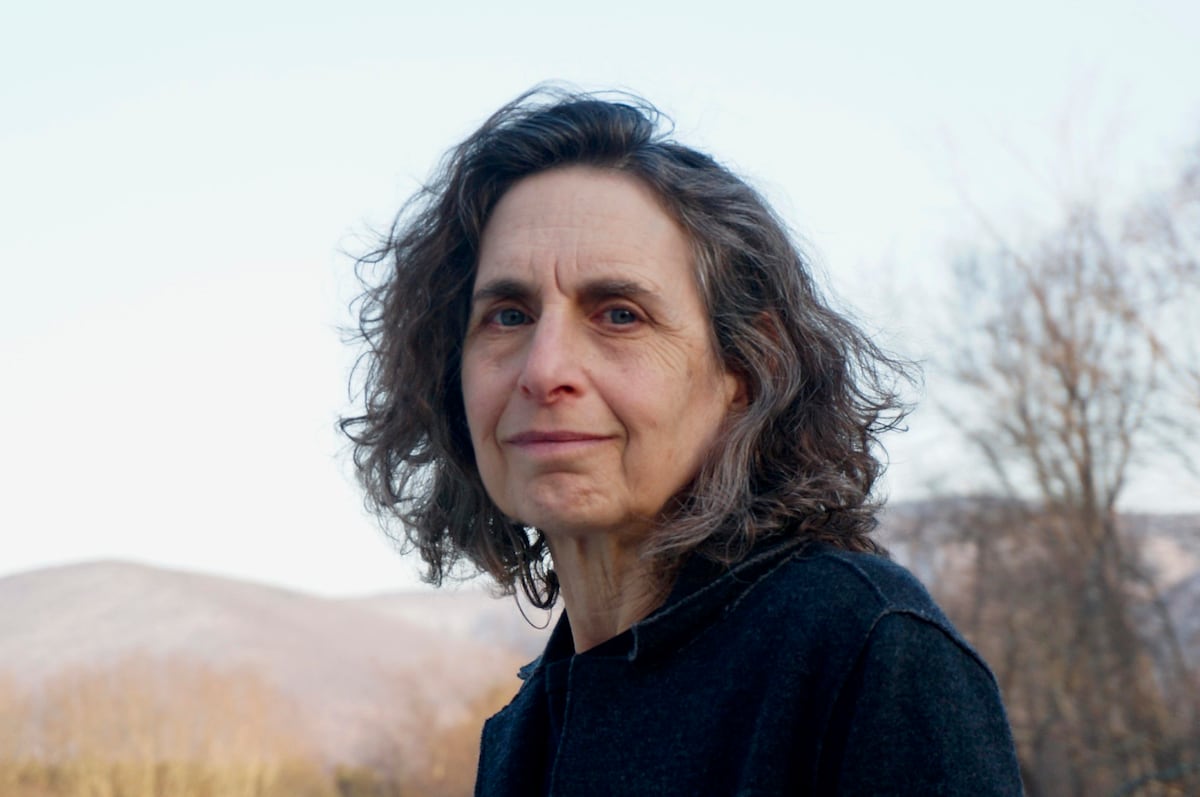
Elizabeth Kolbert, journalist: ‘It’s possible AI will allow us to communicate with whales, and the first thing I would like to say is that I’m sorry’
How artificial intelligence is being used to learn how to talk to whales, and why New Zealand — a country with 4,000 environmental groups — is full of nature lovers dedicated to exterminating animals are two of the impactful stories in the latest book by U.S. journalist Elizabeth Kolbert (New York, 64 years old), Life on a Little-Known Planet (Crown, 2025). The winner of the 2015 Pulitzer Prize for her book The Sixth Extinction shows, via the compilation of her pieces originally published by The New Yorker, the extreme complexity and paradox of everything to do with life on Earth. “You can kill animals and love animals, I think that’s entirely possible,” the writer says, via video call.
Question. Why do you say we are living in an extraordinary time?
Answer. I’m a reporter. I don’t rely on my gut instinct here. I rely on the work of many, many scientists who I think would corroborate that claim. We’re living in an extraordinary time because, if you look beyond the daily headlines — which are pretty extraordinary, just to start with — if you look very deep at what we’re doing, the way we’re changing the planet, and if you look back across the whole geological record of planet Earth since life emerged a few billion years ago, you are hard-pressed to find a time when change was occurring at the scale and at the speed at which it’s occurring right now.
Q. Does it affect you, having to deliver such bad news?
A. We have a phrase in English: being the fly in the ointment. You’re not welcome at parties and fun events when you are purveying so much bad news, but as a journalist, our goal is not really to make people feel good. In my view, at least. I guess I’m kind of an old-fashioned journalist. I believe that our responsibility is to tell the truth, and if the effects are that people don’t feel great, I’m sorry, but that’s the way the world is right now.
Q. But you enjoy your work, no?
A. Yes, absolutely. One of the ironies that I often point out, and it’s very apparent in this latest book, is that in the course of reporting a lot of bad news — although some of the stories in the book are actually pretty upbeat — I got to go to a lot of really amazing places.
Q. Could artificial intelligence make it possible for us to communicate with whales?
A. I think that’s possible. I’ve been following a project that tries to use AI and machine learning to decode these clicks that sperm whales make, that we are quite confident constitute some form of communication. I was just talking to those guys the other day, and I think it’s entirely possible that one day we’ll have — if not a dictionary for whale — a pretty good predictive sense of when they make this set of clicks, this is what they’re going to do.
Q. If you could communicate with a whale, what would you like to ask it?
A. The first thing I think I would like to say is “I’m sorry.” Sperm whales were very hunted for a long, long time for their spermaceti, this kind of oozy stuff that fills their enormous heads that was used for all sorts of things, like lighting in the 19th century, and then all the way into the 20th century it was used as a lubricant. So that’s the first thing I would say to it, and the first thing I would ask it is, “What’s life like underwater?” They’re mammals that went back into the ocean, after having evolved for many, many millions of years and they have very sophisticated social lives. I would be very interested to talk about that.
Q. What has happened with the human-driven sixth extinction since you published your book on the subject in 2014?
A. We’re now seeing a real serious decline in insect numbers. Insects as a group were thought to be very resistant to extinction; they reproduce very fast, they have a lot of babies, but it seems that even insects are now being affected by the sixth extension. So, I think the news is unfortunately that the sixth extension proceeds apace, that it’s very much unfolding as you would expect when you continue to keep up so much pressure on so many different fronts on the natural world.
Q. Can a trapper who kills animals still be a nature lover?
A. Oh sure, there are a lot of hunters and fishermen and women who are real lovers of the natural world. Our relationship to the natural world, going back to our deep ancestors, is obviously one of predator-omnivores. We kill a lot of animals to eat, and I think that’s a very deep part of our psyche. And you can kill animals and love animals. The problem here is that there are way, way more of us than there used to be. What used to have a negligible result on populations, when multiplied across eight billion people, can have very devastating results.
Q. Your chapter about species eradication in New Zealand is particularly striking.
A. New Zealand is the poster child for the effects of invasive species. It’s one of the last major land masses to which humans arrived, first the Maori and then the Europeans. Up until then, there were no land mammals there, but they had all these birds that nested on the ground. So once humans brought rats, there was a big wave of extinctions. I went to New Zealand when they were launching this effort called Predator Free New Zealand Trust, which continues to try to get rid of some of the most dangerous, damaging, imported animals. For example, weasels.
Q. It’s shocking that there are so many conservationists who have become trappers.
A. Some of the invasive species don’t get a lot of love, like rats, but some of them are quite cute, like these little furry possums. People have adopted the attitude that the payoff for New Zealand’s native fauna is worth it, but it’s a complicated calculation.
Q. Can President Trump’s strong interest in Greenland be explained without climate change?
A. Probably not. Trying to explain President Trump is like trying to explain why a two-year-old wants something. But it has become much easier to ship around Greenland, because a lot of the sea ice is gone. There used to be whole stretches of the wintertime when you couldn’t bring a boat very near many parts of Greenland. Now, you can bring ships in pretty much all the time. Now, I don’t know what exactly he wants. I have been several times, and it’s a very, very difficult place to do business because it has very little infrastructure, basically no roads. Mining is why they’re particularly interested in Greenland, but the question of whether it’s really economically viable or not has not really been answered yet.
Q. You argue that the delayed effect of climate change makes warnings about its impacts seem hysterical.
A. We have a hard time imagining dire futures. If you look out the window, it doesn’t seem like anything so terrible is happening, most of the time. Food continues to arrive, and you continue to watch TV and go work. But what we’re doing to the climate, it can’t be reversed, and we are pushing the climate into a regime that our species has never experienced. It’s not Elizabeth Kolbert speaking, it’s thousands and thousands of scientists speaking. What’s going to happen could be extremely traumatic and disruptive, and when you say that, you seem vaguely hysterical, but it’s unfortunately just a scientific fact.
Q. What do you think about the United States backing away from the fight against climate change?
A. It’s absolutely tragic.
Q. Do you think it’s possible to avoid climate disaster?
A. Just barely.
Q. Can climate change be communicated in a different way that motivates more people to act?
A. In theory, yes, some other way exists — but I haven’t found it yet.
Q. In your latest book, you talk about a Swiss initiative based on the belief that one can live comfortably on 2,000 watts of energy, the equivalent of 20 100-watt light bulbs (six times less than what the average American uses today). How many watts does Elizabeth Kolbert need to live?
A. I’ve never actually measured my own wattage. I think I lead a pretty low-watt life, except that I fly. I completely blow the budget by flying, I could not do the work that I do without flying. I think about whether the carbon I’m going to expend is justified by what’s going to come out of it. I guess I’ll have to leave that for my readers to be the judge.
Q. Among the many unknowns about life on this planet, what would you most like to explore?
A. I’m not a diver, I’m not someone who can do deep-sea diving, but I am really fascinated and have read a lot of books about the very deep ocean, which is becoming another sort of frontier that we’re thinking of mucking up through deep-sea mining. It’s not going to happen, but I would love to visit the bottom of the ocean.
Sign up for our weekly newsletter to get more English-language news coverage from EL PAÍS USA Edition

Related Posts