Key point: Last week, chatbot bills were signed into law in Oregon and Idaho while a health care related AI bill was signed into law in Tennessee. Below is the twelfth update on the status of proposed state AI legislation in 2026. These posts track state AI bills that can directly or indirectly affect private-sector
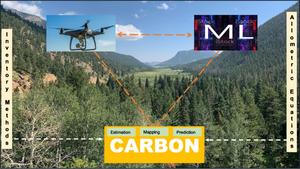
Eyes in the sky: Drones and AI set to revolutionize forest carbon accounting
A High-Tech Solution to a Global Problem
As atmospheric carbon dioxide levels continue to rise, accurately measuring the carbon stored in the world’s forests has become more critical than ever. Forests are vital carbon sinks, but traditional measurement methods are often slow, labor-intensive, and prone to error. A new perspective published in Carbon Research highlights a powerful, modern approach: combining drone technology with machine learning to rapidly and precisely estimate forest carbon storage, offering a transformative tool in the fight against climate change.
The Limits of Traditional Methods
For decades, scientists have relied on inventory-based methods, which involve physically measuring trees in sample plots, and allometric approaches, which use regression models based on tree characteristics like diameter. While valuable, these techniques can be costly, time-consuming, and provide limited coverage over vast, remote forest areas. The resulting data often suffers from sampling and estimation errors, hindering efforts to create accurate, large-scale carbon maps.
The Drone Advantage
Unmanned aerial vehicles (UAVs), or drones, equipped with advanced sensors like high-resolution RGB cameras or Light Detection and Ranging (LiDAR), are changing the game. Drones can fly over extensive forest areas on-demand, capturing detailed imagery that generates dense 3D point clouds. From this data, researchers can derive key forest structural parameters such as individual tree height, canopy area, and even trunk diameter, all without setting foot on the forest floor. This provides a low-cost, non-destructive alternative to traditional field surveys and lower-resolution satellite imagery.
The Power of Machine Learning
The massive datasets generated by drones are a perfect match for the capabilities of machine learning (ML) and deep learning. As outlined by the researchers, algorithms like Random Forest and Convolutional Neural Networks (CNNs) can be trained to analyze drone imagery and structural data to estimate above-ground biomass with remarkable accuracy. These AI models can identify patterns and relationships that are invisible to the human eye, learning to predict carbon content more effectively and efficiently than ever before.
A Powerful Synergy
The true innovation lies in the integration of these two technologies. By feeding high-resolution data from drones into sophisticated ML models, scientists can create a rapid, accurate, and cost-effective system for estimating and monitoring carbon stocks over large landscapes. This synergy not only improves precision but also facilitates long-term tracking of carbon capture, which is essential for effective forest management and verifying carbon credits.
Implications for Climate Action and Policy
This integrated approach has profound implications for global climate initiatives. It can help nations better report on their emissions reductions, inform sustainable forest management policies, and support the development of robust carbon markets. By providing more reliable data, this technology supports the achievement of key Sustainable Development Goals (SDGs), particularly those related to clean energy (SDG 7) and climate action (SDG 13). The researchers suggest that future models could be further refined by incorporating climatic variables like rainfall and temperature for even more accurate, site-specific predictions. While validation against traditional methods remains important, the potential for drones and AI to transform our understanding of forest carbon is immense.
Corresponding Author:
Bharat Sharma Acharya
Original Source:
https://doi.org/10.1007/s44246-022-00021-5
Contributions:
Sadikshya Sharma: Conceptualization, Writing – review & editing. Sambandh Dhal: Conceptualization, Writing – review & editing. Tapas Rout: Conceptualization, Writing – review & editing, Visualization. Bharat Sharma Acharya: Conceptualization, Original draft, Writing – review & editing, Visualization. All authors read and approved the final manuscript
Disclaimer: AAAS and EurekAlert! are not responsible for the accuracy of news releases posted to EurekAlert! by contributing institutions or for the use of any information through the EurekAlert system.

Related Posts