
⇓ More from ICTworks By Wayan Vota on July 20, 2026 Asia-Pacific is the most disaster-prone region in the world. The UN Economic and Social Commission for Asia and the Pacific projects that climate-induced disaster losses could near US$1 trillion annually, or 3 percent of regional GDP, under a 2°C warming scenario. Green technology is
Multimodal graph-based deep learning for predicting heat of combustion as a key hazard indicator under GHS/CLP standards – Scientific Reports
- Article
- Open access
- Published:
Scientific Reports (2026) Cite this article
We are providing an unedited version of this manuscript to give early access to its findings. Before final publication, the manuscript will undergo further editing. Please note there may be errors present which affect the content, and all legal disclaimers apply.
Subjects
Abstract
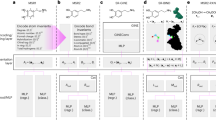
We report a multimodal graph-based deep learning framework that integrates molecular graph topology with physicochemical descriptors to predict the heat of combustion (HoC) directly from chemical structure. The model employs a neural network convolution (NNConv) to capture bonding and topological information, while molecular descriptors provide complementary global features. Trained on 4,516 experimental data points, the model achieved a mean absolute error (MAE) of 351.4 kJ/mol (1.89 kJ/g), corresponding to approximately 6.35% of the dataset mean (5529.65 kJ/mol), and a coefficient of determination (R²) of 0.942 on the test set. When benchmarked against linear regression, random forest, and graph-only GNN models, the corresponding MAE and R² values were 376.0 and 0.925, 381.7 and 0.914, and 1608.8 and 0.484, respectively, highlighting the benefit of integrating descriptors with graph-based learning using NNConv. The predicted HoC values enable reliable classification with respect to the 20 kJ/g GHS/CLP decision threshold, except for compounds within an ambiguity band of ± 1.89 kJ/g. Residual analysis showed low bias and an approximately normal error distribution. These results demonstrate that multimodal graph-based learning can provide decision-relevant HoC predictions, supporting chemical hazard screening while reducing reliance on experimental measurements.
Funding
This research Supported by Basic Science Research Program through the National Research Foundation of Korea (NRF) funded by the Ministry of Education (NRF- RS-2023-00237287)
Ethics declarations
Competing interests
The authors declare no competing interests.
Additional information
Publisher’s note
Springer Nature remains neutral with regard to jurisdictional claims in published maps and institutional affiliations.
Rights and permissions
Open Access This article is licensed under a Creative Commons Attribution-NonCommercial-NoDerivatives 4.0 International License, which permits any non-commercial use, sharing, distribution and reproduction in any medium or format, as long as you give appropriate credit to the original author(s) and the source, provide a link to the Creative Commons licence, and indicate if you modified the licensed material. You do not have permission under this licence to share adapted material derived from this article or parts of it. The images or other third party material in this article are included in the article’s Creative Commons licence, unless indicated otherwise in a credit line to the material. If material is not included in the article’s Creative Commons licence and your intended use is not permitted by statutory regulation or exceeds the permitted use, you will need to obtain permission directly from the copyright holder. To view a copy of this licence, visit http://creativecommons.org/licenses/by-nc-nd/4.0/.
Reprints and permissions
About this article

Cite this article
Nnyigide, O.S., Byeon, H. & Okpete, U.E. Multimodal graph-based deep learning for predicting heat of combustion as a key hazard indicator under GHS/CLP standards. Sci Rep (2026). https://doi.org/10.1038/s41598-026-60540-8
Download citation
-
Received:
-
Accepted:
-
Published:
-
DOI: https://doi.org/10.1038/s41598-026-60540-8
Keywords

Related Posts