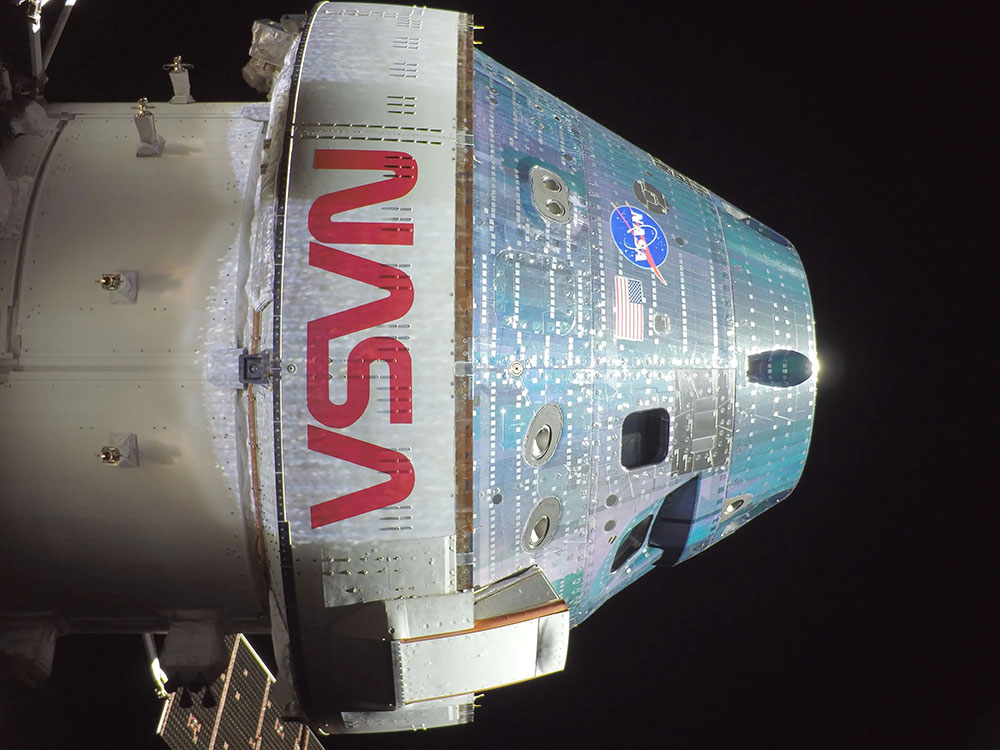
As NASA prepares for long-duration human missions beyond Earth’s protective atmosphere, a new generation of solar radiation forecasting tools is being deployed to safeguard astronauts aboard Artemis missions.
During the Artemis II mission, NASA is testing advanced forecasting systems developed by the University of Michigan Engineering that can predict hazardous solar radiation events up to 24 hours in advance. These tools are designed to provide early warnings of solar flares and eruptions that can release high-energy particles capable of damaging human cells and increasing long-term cancer risk.
At the core of the system is a machine learning model trained on satellite imagery of the sun and its outer atmosphere, or corona. By analyzing patterns that precede solar particle storms, the system estimates the likelihood of dangerous radiation, much like weather forecasts predict rain.
In parallel, researchers have developed a physics-based model that calculates the potential severity of radiation exposure. NASA is using high-performance computing to run these simulations in real time, enabling faster and more accurate responses to changing space weather conditions.
The stakes are particularly high for Artemis missions, which operate largely outside Earth’s magnetic field—the natural shield that protects against harmful solar and cosmic radiation. When energetic particles from solar eruptions travel near the speed of light, they can reach astronauts within minutes, making early detection critical.
To mitigate risks, NASA’s Space Radiation Analysis Group continuously monitors onboard sensors and coordinates with mission control. If radiation levels rise, astronauts are trained to reconfigure the spacecraft cabin by repositioning equipment to create additional shielding.

© NASA
The Artemis II mission is also taking place during a peak in the sun’s 11-year activity cycle, when solar eruptions are more frequent. This makes the deployment of predictive tools even more essential, as traditional monitoring methods often provide limited reaction time.
Ultimately, these forecasting advancements represent a shift from reactive to proactive space safety. By giving astronauts critical lead time to prepare for solar events, NASA is laying the groundwork for safer exploration of the Moon, Mars, and beyond.
As human spaceflight ventures deeper into the solar system, the ability to “forecast space weather” may become as vital as tracking conditions on Earth.