Insider Brief WiMi Hologram Cloud announced a multi-channel quantum convolutional neural network (MC-QCNN) designed to process complex, multi-channel data using hardware-adaptable quantum circuits. The architecture replaces deep, impractical quantum circuits with gate-efficient designs that emphasize noise resilience, learnability, and compatibility with near-term quantum hardware. WiMi reports experimental results showing improved multi-channel feature fusion and stability
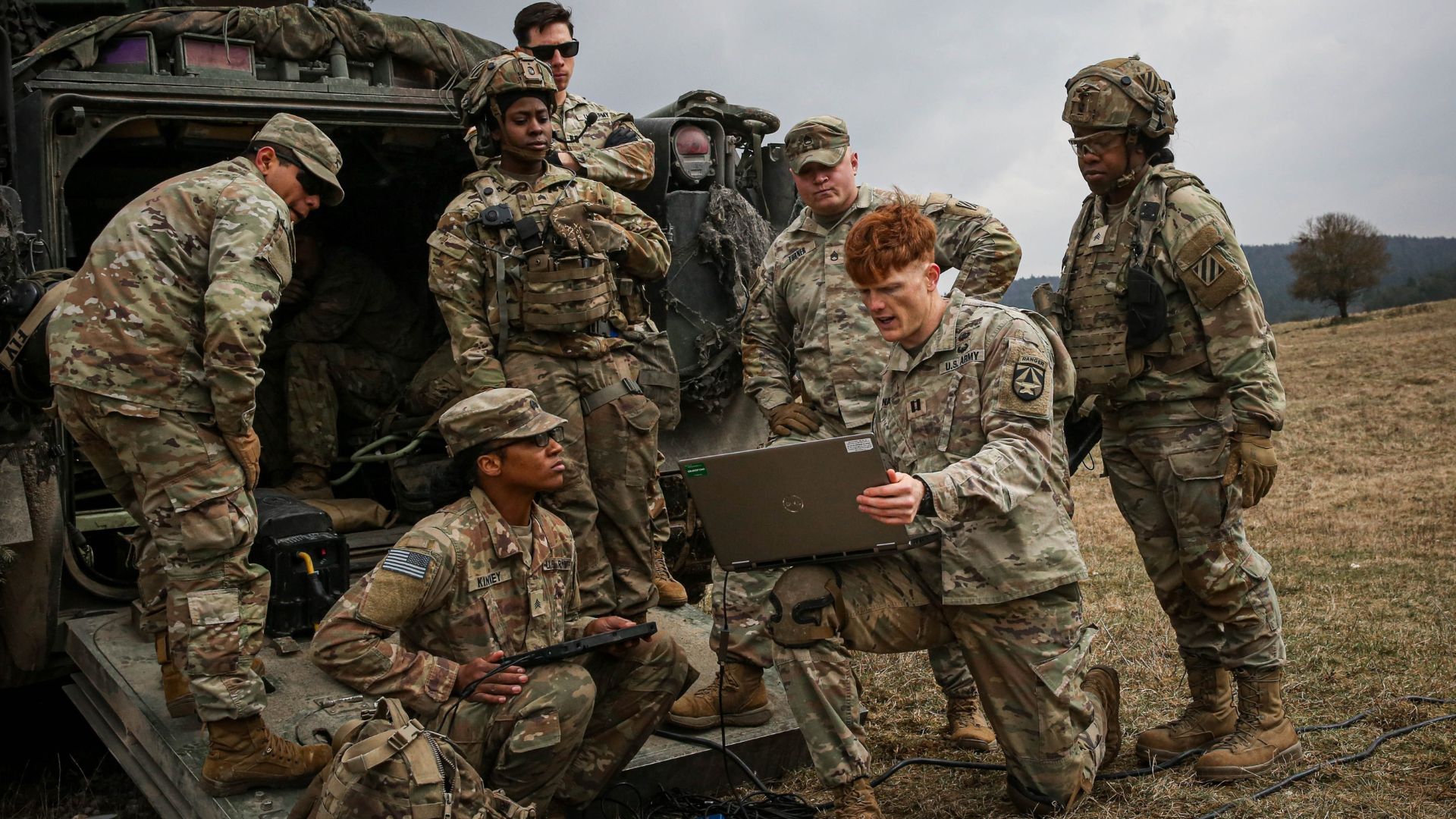
US Army launches new AI and machine learning officer specialty
The U.S. Army has formally created a new career pathway for officers to specialize in artificial intelligence and machine learning.
The service designated 49B Artificial Intelligence/Machine Learning Officer as an official area of concentration. The move signals a deeper shift toward a data-centric, AI-enabled force.
Army leaders say the new specialty will create uniformed experts focused on operationalizing AI across the battlefield.
The announcement comes as the military accelerates adoption of autonomous systems, data-driven decision tools, and AI-supported logistics.
“This is a deliberate and crucial step in keeping pace with present and future operational requirements,” said Lt. Col. Orlandon Howard, a U.S. Army spokesperson.
“We’re building a dedicated cadre of in-house experts who will be at the forefront of integrating AI and machine learning across our warfighting functions.”
How officers enter 49B
The Army opened the new area of concentration at the start of January.
Officers can apply through the Volunteer Transfer Incentive Program, or VTIP. The program allows officers to shift career fields mid-service.
The Army listed no strict prerequisites.
It said officers with academic or technical experience in AI and machine learning will stand out. The service did not disclose how many officers it plans to select in the first cohort.
The Army will phase in the program over time.
The first formal selection board will convene through VTIP in January 2026.
Selected officers will complete reclassification by the end of fiscal year 2026, which closes in September.
The Army also signaled possible expansion.
Officials said the service may later open the 49B pathway to warrant officers. That decision remains under evaluation.
Training and battlefield roles
Officers selected for 49B will undergo graduate-level training. The program emphasizes hands-on development, deployment, and maintenance of AI systems.
The Army wants these officers to translate technical capability into operational effect.
The new specialists will work across several mission areas.
Their responsibilities include accelerating battlefield decision-making, improving logistics efficiency, and supporting robotics and autonomous systems.
The Army has pushed heavily into autonomy over the past year.
It continues to expand drone operations and battlefield robotics. New 49B officers will help field and oversee these systems at scale.
“Establishing the 49B AI/ML career path is another key investment to maintain our decisive edge as an Army,” Howard said. “Ultimately, it’s about building a force that can outthink, outpace, and outmaneuver any adversary.”
The 49B rollout fits into a broader Defense Department strategy.
The Pentagon recently launched its own generative AI platform for service members and civilian employees.
The system begins with a government-approved version of Google’s Gemini model.
“The future of American warfare is here, and it’s spelled AI,” Secretary of Defense Pete Hegseth said in a video announcing the rollout.
Army leaders view the new specialty as a structural change, not a pilot effort.
By embedding AI expertise inside the officer corps, the service aims to move faster than relying solely on contractors or civilian analysts.
The Army expects the first group of 49B officers to complete reclassification by the end of the fiscal year.
Recommended Articles

Get the latest in engineering, tech, space & science – delivered daily to your inbox.
Aamir is a seasoned tech journalist with experience at Exhibit Magazine, Republic World, and PR Newswire. With a deep love for all things tech and science, he has spent years decoding the latest innovations and exploring how they shape industries, lifestyles, and the future of humanity.

Related Posts