
Data availability The WSIs, nephrographic CT scans, and annotation data used for both the training and validation sets are subject to institutional restrictions. Due to patient privacy obligations and Institutional Review Board (IRB) approvals, these data are not publicly available. However, they can be accessed upon reasonable request from the corresponding author, pending approval from
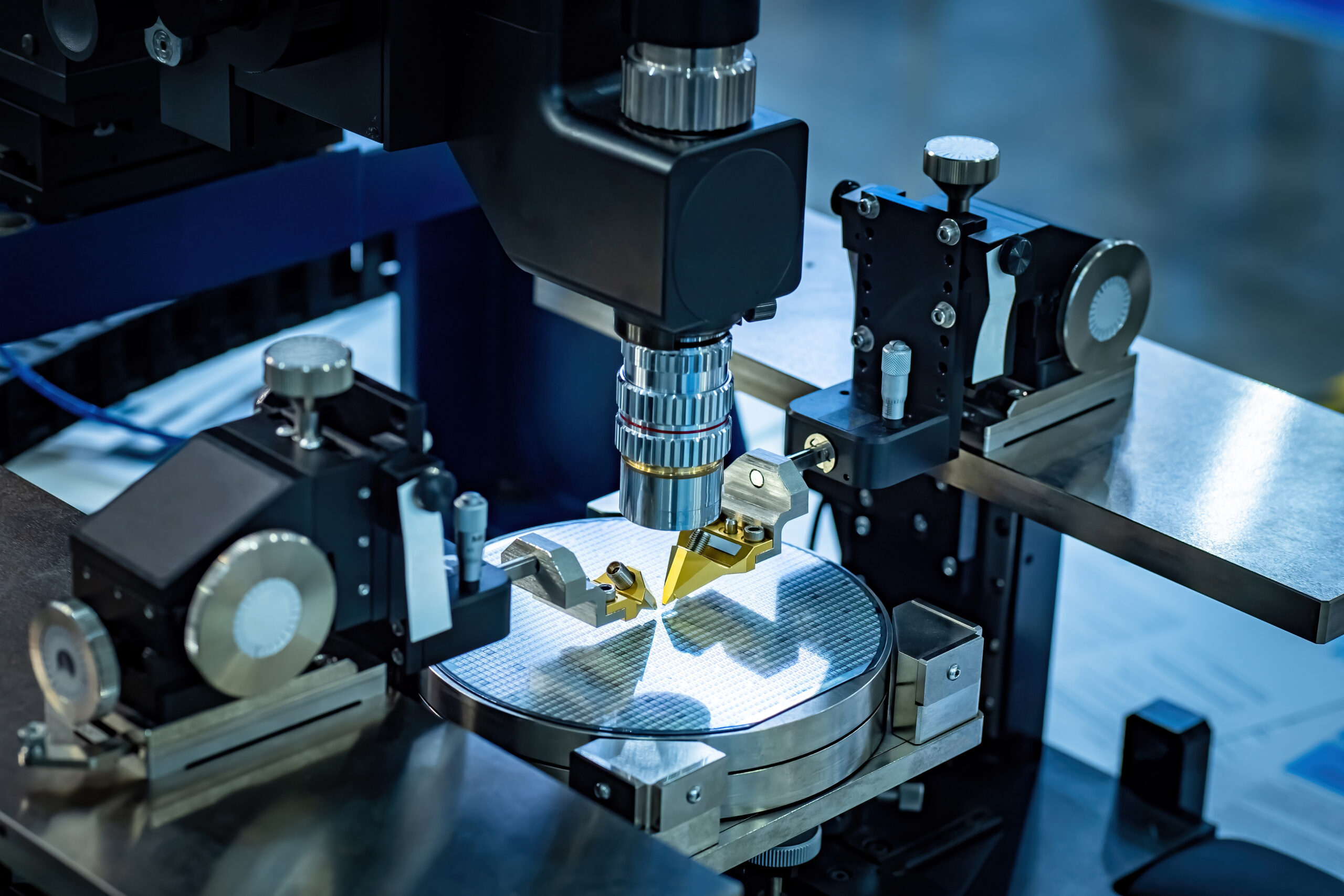
The Smart Advantage: How Artificial Intelligence Is Transforming Inspection And Metrology In Semiconductor Manufacturing
There is no doubt that the semiconductor industry is in an era of rapid and profound transformation, driven by an increasing demand for smaller, faster, and more powerful chips. As the speed of innovation continues to advance, so does the pressure on semiconductor manufacturers to detect and address defects and inconsistencies with near-perfect accuracy to keep pace with this demand.
Manual inspection methods, which have traditionally been relied upon throughout the field, struggle to evolve and scale in step with production volumes and complexity, limiting the ability to boost production speed and output. As a result, Artificial Intelligence (AI) is rapidly becoming an essential tool in inspection and metrology, offering ways to streamline operations, increase accuracy and therefore yield, and keep up with the scale and complexity of modern chip design.
Sharper standards: How AI is elevating defect detection
AI is transforming semiconductor inspection and metrology by introducing unprecedented automation, speed, and adaptability to defect detection processes. AI-driven systems tap into the power of Big Data to uncover patterns and anomalies that traditional methods often miss. Indeed, in most cases, AI can make better decisions than human operators, with fewer false rejections, and provide a more complex, enhanced analysis than traditional algorithms, which tend to rely on simple boundaries and a binary pass/fail system. As well as minimizing wastage of energy and materials, AI analysis can, in most cases, also run faster than standard algorithms, resulting in additional time savings – all adding up to a significant boost to the bottom line for semiconductor manufacturers.
While these benefits are considerable in their own right, interestingly it’s not necessarily the primary reason that we see businesses seeking out AI-integrated platforms. In my experience at Nordson, what truly drives interest is AI’s unique ability to solve challenges that were previously not addressable. When working with the most minute of parts, traditional methods typically struggle to detect certain microscopic flaws or anomalies, for example in corner fill inspection where conventional methods like blob analysis come up short. Through deep learning, however, AI-integrated systems like our SQ3000 Multi-Function System can detect and flag issues that could otherwise be misread or missed entirely – with unparallelled speed and efficiency, and without reliance on skilled labor.
What’s more, AI-powered systems grow smarter with each inspection cycle and – as the wealth of source data and input evolves over time – edge closer to the fully autonomous, self-optimizing inspection systems that we expect will define our industry’s future. This evolution is exemplified, for instance, in the inspection of TSVs, evaluated at a micron level. Whereas conventional methods require around an hour to complete this intricate process, generative AI unlocks almost a hundredfold improvement, enabling us to achieve the same level of accuracy in under a minute.
Another of the biggest game-changers in the field is AI’s capacity for real-time, in-line inspection. Where heavy data analysis would previously have slowed the production line, AI now enables rapid, high-volume data processing without compromising speed. As systems evolve, we’re also seeing huge leaps in how this data can be leveraged, with machine learning (ML) models that automatically adjust quickly to new production requirements without reprogramming. On a fast-paced production floor, this adaptability can be critical, allowing semiconductor manufacturers to reduce bottlenecks and boost productivity.
AI unplugged: The self-teaching systems transforming inspection
Critical to any discussion around AI is the advancement of ML, revolutionizing inspection by creating AI systems that become smarter and more adaptable with each interaction. Whereas supervised learning relies on pre-labeled data examples to train AI models to recognize specific types of defects, unsupervised learning is perhaps an even more exciting area to watch. This approach to ML doesn’t require labeled data input and simply analyzes the data to identify patterns, outliers, or anomalies without prior guidance, meaning it is able to detect unknown and novel defects that haven’t been seen before, or that customers may not even know exist. Here at Nordson, both supervised and unsupervised learning play pivotal roles in our AI ecosystem, Eagle AI, driving ML advancements from all angles – and we are also seeing advances in automatic labeling showing real future promise.
Advanced ML, however, comes hand in hand with its own set of challenges. Today, one of the foremost barriers to truly harnessing the power of AI arguably lies in managing customer data to train these intelligent systems. Security and confidentiality are top priorities for our customers, and many are understandably reluctant to provide direct access to their data. Whilst we’ve successfully developed advanced, secure solutions to address these concerns – including private cloud domains and protected remote access – access to usable, real-world data is critical to future ML. As such, as in any industry, it will continue to be a focus for us to expand these secure, scalable solutions and help build trust in AI and in smart solutions.
A bright future for AI-driven inspection
Within the inspection and metrology landscape, it’s evident that AI advancements are not just significant but completely transformative, addressing key challenges and delivering benefits from process optimization to cost savings. For our team here at Nordson, we believe so wholeheartedly in its groundbreaking potential for our industry that we dedicate a huge proportion of our resources to exploring emerging growth areas like predictive maintenance, generative AI, and automated ML. The other part is focused on deploying and refining our current solutions portfolio, including ongoing systems development and supervised learning. In doing so, we can continue to serve customer demand and deepen our data insights, while also shifting the dial of what AI can achieve in the long term for the industry. With the momentum of the AI evolution showing no signs of slowing down, its reach seems poised to expand exponentially, unlocking powerful new applications and enhancing our ability to serve our customers, delivering more intelligent solutions, superior service and a brighter, smarter era for semiconductor manufacturing.

Related Posts