CEO Amelia Linzey on Beca's 15-year AI journey, what we can learn from Singapore, and NZ's infrastructure deficit Singapore, at the New Zealand-Singapore 2026 Forum. Interest.co.nz is unpacking how AI will change your everyday life - the risks, the opportunities, and what to actually expect. Our new series brings you the policymakers, experts and industry
Deep learning for time-series segmentation of mechanical ventilator waveforms – Scientific Reports
- Article
- Open access
- Published:
- Preeti Gupta ORCID: orcid.org/0000-0001-9972-21231,2,
- Aditya Nemani2,
- Virginia R. de Sa2,
- Alex K. Pearce2,
- Shamim Nemati2,
- Atul Malhotra2 &
- …
- Jason Y. Adams3
Scientific Reports (2026) Cite this article
We are providing an unedited version of this manuscript to give early access to its findings. Before final publication, the manuscript will undergo further editing. Please note there may be errors present which affect the content, and all legal disclaimers apply.
Subjects
Abstract
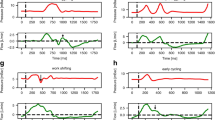
Accurate segmentation of ventilator waveforms is essential for detecting patient–ventilator asynchronies (PVAs), yet current heuristic methods can fail in noisy, real-world data. We developed and validated a deep learning model using a one-dimensional attention-gated U-Net architecture to identify inspiratory and expiratory onsets in mechanical ventilation waveforms. The model was trained and tested on 9719 breaths from 33 patients and outperformed published rule-based methods, achieving F1 scores of > 0.99 for both inspiratory and expiratory onset detection within a 0.1-s tolerance window. Performance remained robust in asynchronous breaths (F1 ≥ 0.98). When applied to quantify PVAs, the model reproduced reference standard asynchrony frequencies with no significant differences, whereas heuristic methods produced large deviations. Gradient-weighted class activation maps suggest that the model leveraged a diverse set of waveform features to inform segmentation. This computationally efficient model enables highly-accurate, clinically timely waveform analysis and provides a foundation for scalable, reproducible assessment of ventilator–patient interactions.
Acknowledgements
Research reported in this publication was supported by the National Center For Advancing Translational Sciences of the National Institutes of Health under Award Number K12TR004410. The content is solely the responsibility of the authors and does not necessarily represent the official views of the National Institutes of Health.
Funding
Dr. Gupta is supported by a K12 award from NCATS (K12TR004410).
Ethics declarations
Competing interests
Dr. Malhotra is funded by NIH and reports income from Eli Lilly, Zoll, Livanova, Powell Mansfield and Sunrise. Resmed provides a philanthropic donation to UCSD. He and Dr. Nemati are co-founders of Clairyon, a small startup focused on predictive analytics in sepsis. Dr. Nemati is also a consultant for Neural Point, a start-up focused on the diagnosis of sleep apnea. Dr. Adams is funded by NIH and is also co-inventor (Patent# US11839585B2) of technology related to the detection of patient-ventilator asynchrony and is a co-founder of Certus Critical Care Inc.
Additional information
Publisher’s note
Springer Nature remains neutral with regard to jurisdictional claims in published maps and institutional affiliations.
Supplementary Information
Rights and permissions
Open Access This article is licensed under a Creative Commons Attribution 4.0 International License, which permits use, sharing, adaptation, distribution and reproduction in any medium or format, as long as you give appropriate credit to the original author(s) and the source, provide a link to the Creative Commons licence, and indicate if changes were made. The images or other third party material in this article are included in the article’s Creative Commons licence, unless indicated otherwise in a credit line to the material. If material is not included in the article’s Creative Commons licence and your intended use is not permitted by statutory regulation or exceeds the permitted use, you will need to obtain permission directly from the copyright holder. To view a copy of this licence, visit http://creativecommons.org/licenses/by/4.0/.
Reprints and permissions
About this article

Cite this article
Gupta, P., Nemani, A., de Sa, V.R. et al. Deep learning for time-series segmentation of mechanical ventilator waveforms. Sci Rep (2026). https://doi.org/10.1038/s41598-026-58565-0
Download citation
-
Received:
-
Accepted:
-
Published:
-
DOI: https://doi.org/10.1038/s41598-026-58565-0

Related Posts