A documentary that traces artificial intelligence back to the ground it is built on arrives in Taipei today. According to Variety, The Technological Sublime, directed by Jannes Callens, follows AI’s physical supply chain from quartz mines in the Appalachians through Taiwan chip plants, Chilean lithium fields, undersea cables and Kenyan click-workers.
The film is part of Taiwan Creative Content Fest (TCCF), which the Taiwan Creative Content Agency (TAICCA) organizes at the Taipei Nangang Exhibition Center. Variety states the festival dates as Nov. 6 to 9, so today, November 6, 2026, is the opening day. For a film about the hidden costs of AI, the location carries weight, because Taiwan sits at the center of the chip story the documentary tells.
The timing also fits a broader argument that is moving from the margins to the mainstream. Questions about who pays for AI, in land, power, water, minerals and human labor, now show up in boardrooms and statehouses. We covered one slice of that fight in our look at the five levers states can pull on AI data centers. This film attacks the same problem from the opposite end, starting at the mine rather than the server rack.
This analysis sticks to what Variety reported and what the verified fact sheet for the film confirms. Where the report is silent, such as budget, runtime, release date or worker numbers, we say so plainly instead of guessing.
Google · Preferred Sources
Don’t miss new tech stories on Google
Add Tech Insider once in the Google app and our stories appear in your news suggestions.
Add Now
What Variety Reported About The Technological Sublime
Variety’s report frames the project as a documentary feature built around a single provocation. AI is usually discussed as something weightless, a service that lives in the cloud. The film argues that this picture hides a chain of physical places and human workers, and it sets out to visit them one by one.
The chain, as Variety describes it, runs through five named stops: quartz mines in the Appalachians, chip plants in Taiwan, lithium fields in Chile, undersea cables, and click-workers in Kenya. That list is the spine of the film and the spine of this article. Each stop stands for a different kind of cost. Quartz and lithium stand for extraction. Chip plants stand for industrial concentration. Undersea cables stand for the infrastructure that moves data between continents. Click-workers stand for the human labor that trains and cleans the systems the public meets as polished chatbots.
Callens is the named director, and Variety identifies Steven Dhoedt as executive producer and Hsu Chia-Hao as producer. The Belgian broadcaster VRT is attached to the project. Those credits matter because they show the film has institutional backing in Europe and a production partner in Taipei, not just a festival slot.
Film Facts at a Glance
The table below collects every detail the verified sheet confirms. We built it so readers can separate solid facts from the many details that remain unannounced.
Item
Confirmed detail
Title
The Technological Sublime
Format
Documentary film
Director
Jannes Callens
Production companies
Visualantics (Brussels), Cobra Films, Tag Film (Paris), Reel Asia Pictures (Taipei)
Confirmed co-production listing
Visualantics Productions and Reel Asia Pictures
Broadcaster attached
VRT (Belgium)
Executive producer
Steven Dhoedt
Producer
Hsu Chia-Hao
Event
Taiwan Creative Content Fest (TCCF), organized by TAICCA
Venue
Taipei Nangang Exhibition Center
Dates stated in the report
Nov. 6 to 9
Two points stand out. First, the production list spans three cities in two continents, which is unusual for a documentary and hints at a financing model built around co-production. Second, the confirmed co-production listing names only two of the four companies. That gap is typical in early festival coverage, where credits and listings do not always match, and we treat the two-company listing as the firmer fact.
Who Is Behind the Film and Why the Structure Matters
Documentaries that cross borders live or die on their partners. A Brussels-based company, a Paris-based company and a Taipei-based company together give the film access to European public broadcasting, French and Belgian film financing circles, and a local team that can open doors at Taiwanese sites. Variety does not detail the financing, and we will not invent a budget or a funding split.
The presence of VRT is a useful signal on its own. Public broadcasters in Europe have a long record of commissioning and airing documentaries on technology and society, and an attached broadcaster usually means a defined audience at home before the film ever plays abroad. It does not tell us a transmission date, and the sheet confirms no release date.
Dhoedt, the executive producer, spoke to Variety about why Taipei matters. In his words, “TCCF gives us a real chance to bring this film to audiences in Asia.” That sentence reads as a market statement more than an artistic one. It tells us the team sees Asia, and Taiwan in particular, as a core audience rather than a stop on the way elsewhere.
From Quartz to Click-Workers: The Five Stops
The structure of the film is its argument. By walking the chain in order, Callens turns an abstract industry into a route you can follow on a map. The table summarizes the stops named in Variety’s report and the kind of question each one raises. The questions are our framing, not claims from the film.
Stop
Place named in the report
Question it raises
1. Raw material
Quartz mines, Appalachians
Where does the feedstock for chip manufacturing come from, and who bears the local impact?
2. Fabrication
Chip plants, Taiwan
How concentrated is advanced manufacturing, and what does that mean for supply risk?
3. Battery materials
Lithium fields, Chile
What does the energy side of the digital economy ask of land and communities?
4. Connectivity
Undersea cables
Which physical routes carry the data that AI systems depend on?
5. Human labor
Click-workers, Kenya
Who labels, moderates and corrects the data behind the models, and under what conditions?
Stops one and two: the ground and the fab
Quartz is the humblest ingredient in the story, and that is the point. Semiconductor manufacturing starts with very pure silicon, and the film begins its journey at mines in the Appalachians. Variety does not name a specific mine or company, and the fact sheet marks any location beyond the Appalachians as unconfirmed, so we will not add one.
From the mine, the route leads to Taiwan chip plants. The world’s appetite for AI accelerators has made fabrication capacity one of the scarcest resources in technology, and the pressure shows up well beyond processors. Memory is a good example, and our report on the DDR5 chip price surge and the shortage outlook shows how a single component can stay tight for years once AI demand reshapes production priorities.
Stops three to five: lithium, cables and click-workers
The Chilean lithium fields link AI to the battery and energy economy. Data centers need reliable power, and the wider shift toward stored energy pulls on the same minerals. Undersea cables then move the data itself, a layer most users never consider. The fifth stop, Kenyan click-workers, shifts the lens from machines to people. Click-work covers the repetitive tasks, such as tagging images or reviewing outputs, that help make AI products usable.
Variety does not give a count of Kenyan workers or details of their pay, and the fact sheet lists those as unconfirmed. We keep to that line. The reported point is simply that the film puts these workers on screen next to mines and chip plants, which treats human labor as part of the infrastructure rather than an afterthought.
Why Taiwan Is the Right Room for This Film
Screening a film about AI’s material costs in Taipei puts it in front of an audience that lives next to the chip industry. Taiwan chip plants are one of the five named stops, so festival visitors will watch a film that describes their own economic backyard from the outside. That can sharpen the conversation, since local viewers know the industry’s benefits and its pressures firsthand.
A fest run by a content agency also gives a film a chance to meet partners and buyers. For a documentary with a Taipei-based co-producer in Reel Asia Pictures, the event looks like a natural launchpad into Asian distribution, though the report confirms no sales. Dhoedt’s own comment about reaching audiences in Asia points in the same direction.
There is a quieter angle too. Festivals reward films that arrive with a clear hook, and a quartz-to-click-worker route is easy to pitch in a sentence. That clarity helps a serious subject travel, which matters when the goal is to shift a public debate rather than to win a prize.
The Myth of “Green” AI, in the Director’s Words
Callens told Variety that his starting point was a mismatch between how AI is described and how it works. In his words: “People tend to talk about AI as if it were something very abstract and invisible, but after doing some research it became clear to me that there is a very tangible ecosystem behind the myth of ‘green’ AI.”
That sentence carries the film’s thesis. The word “myth” is deliberate. Marketing language around AI often leans on images of clouds, light and weightlessness, and those images quietly suggest a clean technology. Callens counters with a tangible ecosystem of mines, plants, fields, cables and workers.
He also describes the film as art first. He told Variety: “This film is first and foremost a work of art that gives me the opportunity to tackle an interesting subject in a truly audiovisual way.” That matters because it signals the approach. This is not framed as a data-heavy exposé or a policy brief. The director wants viewers to see and hear the supply chain, and to feel its scale.
Finally, he says he is not out to condemn the technology. He told Variety: “I hope to bring some nuance into the AI debate, showing the essence of technological miracles without being blind for the material, ecological and human costs.” The balance in that line is worth underlining. The film holds two ideas at once: AI is a real achievement, and it has real costs. That position is harder to sell than outrage, but it is likelier to persuade viewers who already use the tools every day.
What the Fact Sheet Does Not Confirm
Good reporting includes the gaps. Several details a reader might expect are not confirmed in the material we have, and we are leaving them out rather than filling them in.
No specific AI product names or chip models appear in the confirmed material.
No companies beyond the production and broadcast partners are named.
No worker counts, including the number of Kenyan click-workers, are given.
No mine locations beyond the Appalachians are confirmed.
No production budget, sale price, runtime or release date is confirmed.
This matters for readers who search for the film. Claims circulating online about specific tech brands in the documentary, or about measured energy and water figures, are not backed by the reporting we reviewed. Until the filmmakers or festival materials say more, treat any such claim as unverified.
How the Film Compares With Other Ways of Reporting AI’s Footprint
A documentary is one of several lenses on the same problem. Each has strengths and blind spots, and the comparison below is our editorial view of how they differ.
Format
Main strength
Main blind spot
Documentary film (this project)
Connects distant places and people into one visible chain
Limited room for audited numbers and long-term updates
Company sustainability reports
Structured, repeatable disclosures
Written by the company, often silent on upstream mining and labor
Local data center news
Concrete, place-based detail on power and water
Rarely follows the chain back to minerals and workers
Hardware and benchmark coverage
Precise performance and supply information
Treats cost as price, not as physical or human impact
Policy and election tracking
Shows how voters and lawmakers respond
Reacts to projects after they are proposed
The film’s edge is reach along the chain. Local reporting, such as our piece on why data center water use is hard to measure, digs deep into one point of the system but cannot easily follow it upstream. A documentary can do the opposite. It sacrifices depth at each stop to show how the stops connect. Used together, the two approaches cover more ground than either does alone.
Historical Context: The Sublime and the Machinery Behind It
The title borrows from an old idea. In 18th-century aesthetics, thinkers such as Edmund Burke and Immanuel Kant described the sublime as the awe people feel before something vast, powerful or beyond full comprehension. Later writers applied the phrase to industrial and technological achievements, from railways to dams to the early internet. That background is our own context, not a claim from the film’s reporting.
The pattern tends to repeat. Each major technology arrives wrapped in awe, and the awe can hide the machinery behind it. Railways needed rails, steel and labor. Electric grids needed mines and plants. The cloud, the metaphor that defined the previous decade of computing, needed warehouses of servers and fiber under oceans. AI now sits at the top of that stack, and the title suggests Callens wants viewers to hold the wonder and the machinery in the same frame.
That lens is useful for newsrooms too. When a technology is described in the language of magic, the first useful reporting question is almost always a physical one: what is it made of, where did that come from, and who did the work? The film answers those questions on screen, which is a different tool than a spreadsheet but aims at the same gap.
A festival documentary will not move a stock on its own, and we do not claim that it will. The more interesting question is whether the themes it surfaces feed into decisions that do move money. Several do. Companies planning large AI buildouts face questions about power, land, minerals and labor, and those questions shape cost, timing and political risk.
Consider the scale of ambition in the sector. Our coverage of OpenAI’s compute goal and the voter setbacks it ran into shows how quickly physical limits and public opinion collide with spending plans. A film that makes the upstream chain visible adds to that pressure from another direction, because it frames the costs as tied to specific places and people rather than to an abstract industry.
For investors and procurement teams, the practical effect is more likely to be gradual. Disclosure questions that once stopped at electricity use may start to include materials sourcing and data-labor conditions. That shift would reward suppliers who can document their chains and expose those who cannot. We see it as a slow-moving trend, not a single event, and the film is one input among many.
Hardware, Memory and Compute: Where the Film’s Themes Meet the Product Cycle
The five stops translate directly into the product world. Quartz and chip plants sit behind every accelerator and memory module. Lithium sits behind the power and backup systems that keep data centers running. Cables connect those sites to users. Each link shows up in prices, lead times and architecture choices.
Readers who follow the silicon race can see the same story in the competition between accelerator families. Our GPU versus TPU comparison covering Rubin, Ironwood and the MI355X lays out how the leading designs differ. The film adds a question that spec sheets skip: what did it take, in minerals, plants and labor, to bring each of those chips into existence?
That question is not a reason to stop building. It is a reason to count honestly. Engineers who understand the supply chain make better decisions about efficiency, reuse and sourcing, and buyers who ask about origin tend to get better answers over time.
Policy and Public Opinion: The Pressure From Below
Public attitudes toward AI infrastructure have hardened in many places, particularly around local data center proposals. Our report on polls showing American opposition to a local data center captures that mood. People are not rejecting AI so much as asking why they should host the physical burden of it.
A film like The Technological Sublime speaks to that instinct by widening the map. If a data center is only the last stop in a long chain, then every community along the chain has a stake, from mining towns to chip hubs to the workers who label data. That is a more global framing than most local debates allow, and it fits an audience in Taipei, Brussels or Nairobi as easily as one in the United States.
The Variety report does not describe any policy campaign attached to the film, and we are not suggesting one exists. Still, documentaries have a record of supplying the images and vocabulary that later policy debates borrow. Whether this one does will depend on distribution, which remains unannounced.
Five Predictions for AI’s Material Debate
These are our editorial forecasts, not facts from the film’s reporting.
More supply-chain films will reach festivals. A clear route from mine to model is an easy story to pitch, and TCCF-style markets give such projects a place to find partners.
The “green AI” label will face closer scrutiny. Callens targets that myth directly, and reporters in every beat can borrow the same method.
Data labor will join the sustainability conversation. Placing click-workers beside mines and plants treats their work as infrastructure, a framing we expect to spread.
Disclosure demands will widen. Buyers who now ask about electricity may begin asking about materials and labor conditions. Our AI and machine learning coverage will track how that plays out.
Distribution will decide the impact. Without a confirmed release date, the film’s reach depends on broadcaster and festival choices that have not been announced.
The Takeaway: A Film That Asks Where AI Comes From
The verified facts are modest and clear. Variety reports that The Technological Sublime, directed by Jannes Callens, follows AI from Appalachian quartz mines through Taiwan chip plants, Chilean lithium fields, undersea cables and Kenyan click-workers, and that it is part of TCCF at the Taipei Nangang Exhibition Center from Nov. 6 to 9. The film comes from a Brussels, Paris and Taipei production group with VRT attached.
What the film adds to the AI conversation is a method more than a statistic. It insists that a technology described as invisible has an address, and several of them. We will update this story if the filmmakers confirm a release date, a runtime or further screenings.
Frequently Asked Questions
What is The Technological Sublime?
It is a documentary directed by Jannes Callens. According to Variety, it follows AI’s physical supply chain from Appalachian quartz mines through Taiwan chip plants, Chilean lithium fields, undersea cables and Kenyan click-workers.
Where and when is the film showing?
Variety places it at Taiwan Creative Content Fest (TCCF), held at the Taipei Nangang Exhibition Center, with festival dates stated as Nov. 6 to 9. The report does not give individual screening times.
Who made the film?
The listed production companies are Brussels-based Visualantics, Cobra Films, Paris-based Tag Film and Taipei-based Reel Asia Pictures. A confirmed co-production listing names Visualantics Productions and Reel Asia Pictures. Steven Dhoedt is executive producer, Hsu Chia-Hao is producer, and Belgian broadcaster VRT is attached.
Does the film name specific AI companies or chips?
The confirmed material names none. Specific AI products, chip models and companies beyond the production partners are unconfirmed, so any claim about them should be treated as unverified.
What does the director mean by “green” AI?
Callens told Variety that AI is often discussed as abstract and invisible, and that his research revealed a tangible ecosystem behind the myth of “green” AI. He says he wants to add nuance to the debate without ignoring the material, ecological and human costs.
When will the film be released more widely?
No release date, runtime or sale price is confirmed. Dhoedt said TCCF gives the team a real chance to bring the film to audiences in Asia, but wider distribution plans have not been announced.
Marcus Chen
Gaming & Consumer Tech Editor
Marcus Chen is a senior editor at Tech Insider, where he leads coverage of the US online gaming market, including sweepstakes and social casinos, alongside consumer technology. He evaluates operators on their published terms, licensing and RNG certifications, stated redemption policies, and corroborating independent reporting, and writes plainly about what the evidence supports. Tech Insider does not run first-party money tests and does not gamble with reader funds. Marcus has reported on the technology and online-gaming industries for more than a decade.
NVIDIA AI Day Seoul opens at COEX, bringing together more than 2,000 developers, startups, enterprises and researchers together for sessions, hands-on NVIDIA Deep Learning Institute workshops and special events. The event celebrates Korea’s developer ecosystem and the latest advancements across open models and agents for sovereign AI, physical AI and industrial transformation, AI for science
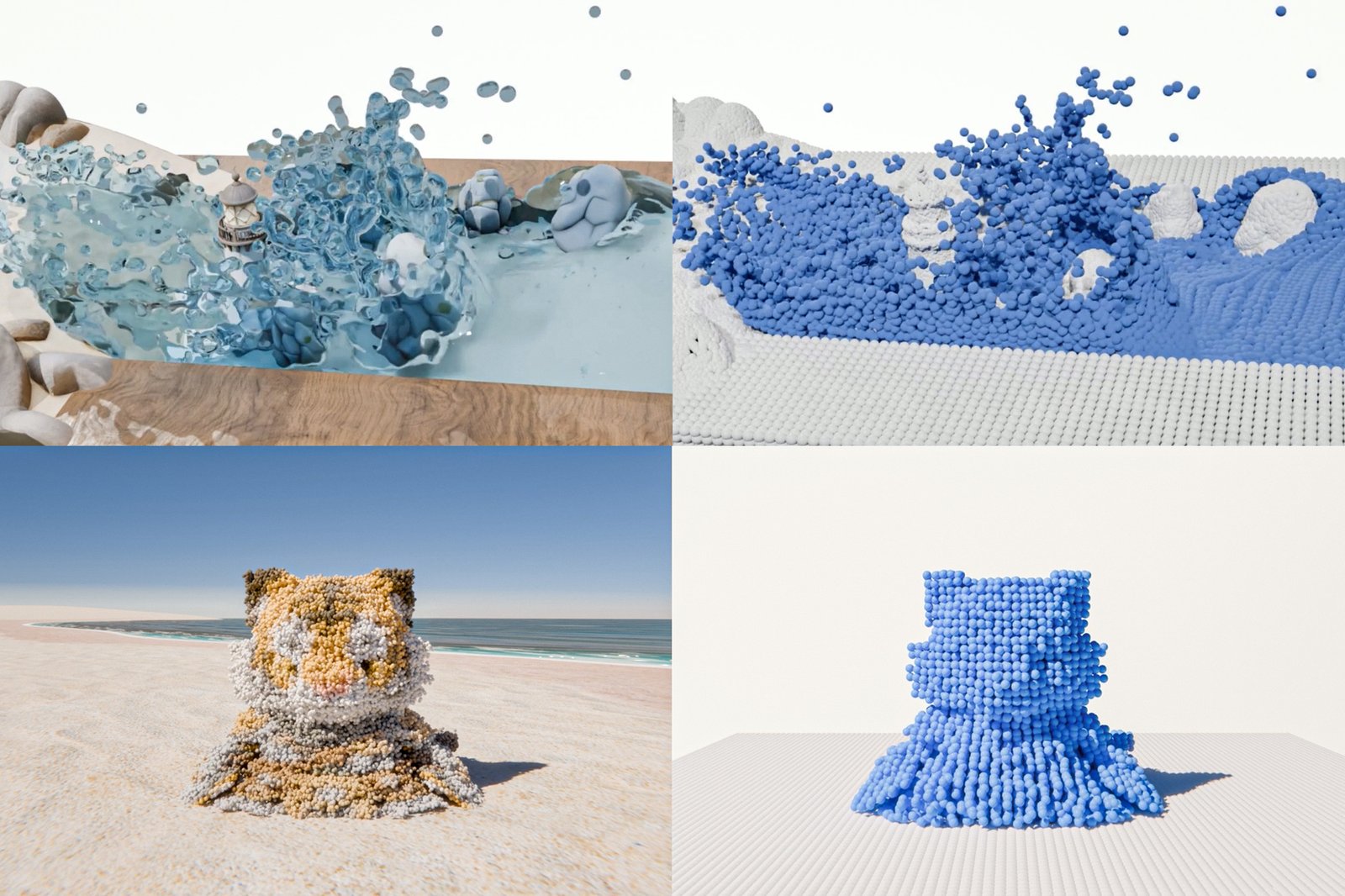
The system represents every material it simulates, from a dune of sand to a protein molecule, as tiny particles and predicts where those particles will move one step at a time. Because it learns the underlying dynamics rather than being programmed with an equation, the model can adapt to materials, forces, and environments it never
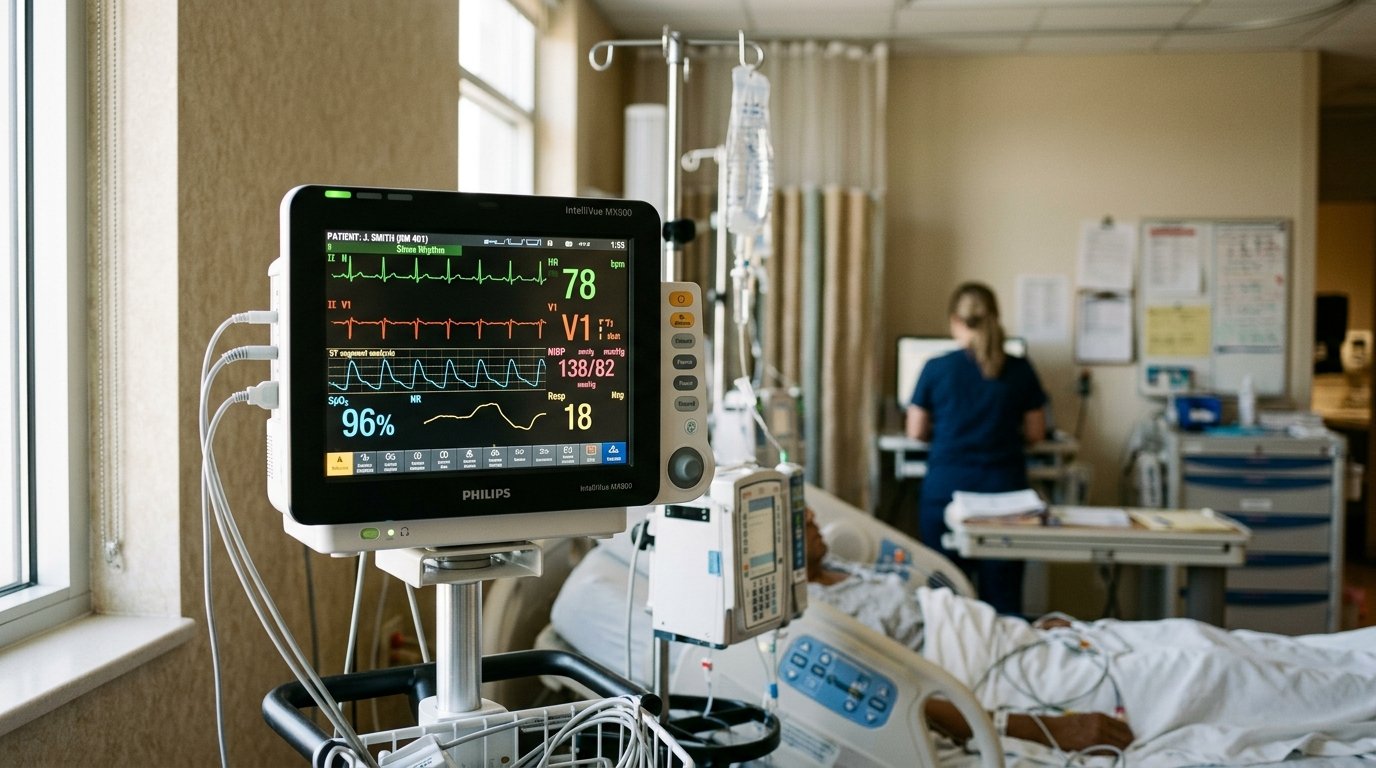
Researchers from a collaborative team including Hua Zhang, Jing Li, and Haiyan Wang have developed a deep learning algorithm that stratifies cardiac arrhythmias into three distinct risk levels: normal, not life-threatening, and life-threatening. Published in the journal BioData Mining in July 2026, the study introduces a model named PaliConvLSTM, which utilizes a palindromic structure of
We use cookies on our website to give you the most relevant experience by remembering your preferences and repeat visits. By clicking “Accept”, you consent to the use of ALL the cookies.
This website uses cookies to improve your experience while you navigate through the website. Out of these, the cookies that are categorized as necessary are stored on your browser as they are essential for the working of basic functionalities of the website. We also use third-party cookies that help us analyze and understand how you use this website. These cookies will be stored in your browser only with your consent. You also have the option to opt-out of these cookies. But opting out of some of these cookies may affect your browsing experience.
Necessary cookies are absolutely essential for the website to function properly. This category only includes cookies that ensures basic functionalities and security features of the website. These cookies do not store any personal information.
Any cookies that may not be particularly necessary for the website to function and is used specifically to collect user personal data via analytics, ads, other embedded contents are termed as non-necessary cookies. It is mandatory to procure user consent prior to running these cookies on your website.