A student finishes the problem, closes the tutor and faces a slightly different question. What happens next is the educational test. The earlier answer might reflect new understanding, or it might reflect a very capable system doing most of the thinking. AI tutoring in 2027 will have to become more interested in that second moment.
Deep Learning Matches Machine Learning for Cancer Biomarkers but Leads in
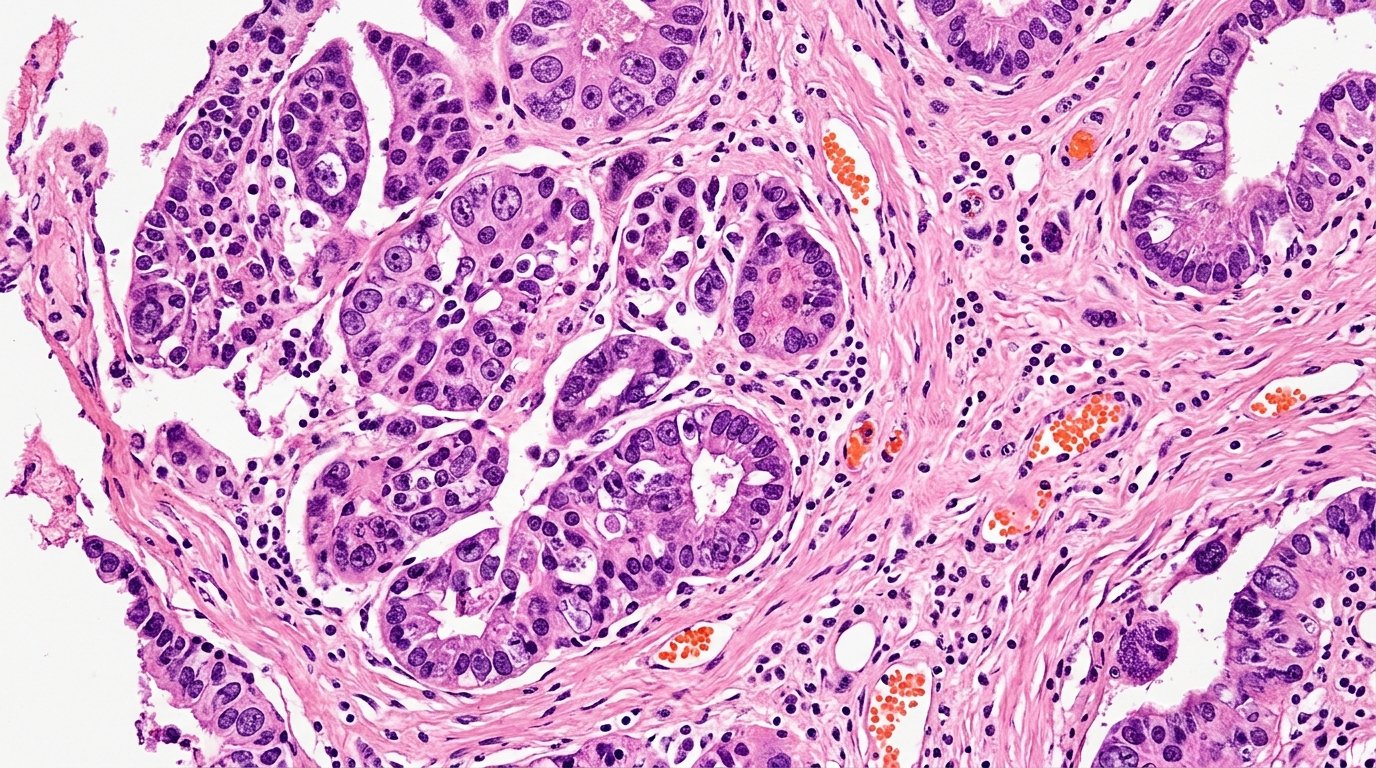
Deep learning architectures match established machine learning models when predicting oncological biomarkers from information-rich sequencing data but demonstrate distinct advantages in data-sparse settings, according to a comparative evaluation published in Genome Medicine. Researchers evaluated supervised and self-supervised deep learning encoders alongside classical machine learning baselines across varying sequencing depths and data modalities. Testing the models on tumor mutation data, the study revealed that predictive performance depended strongly on sequencing context, with deep learning maintaining an advantage when genomic inputs were restricted to targeted gene panels rather than whole-exome sequencing.
Accurate determination of genomic biomarkers from tumor sequencing is fundamental to precision oncology, yet clinical translation often encounters practical computational limits. Routine biomarker inference relies on pipelines that compress high-dimensional sequencing data into predefined summaries, which may not capture the full complexity of cancer genomes. End-to-end deep learning offers an alternative by learning features directly from raw genomic data without handcrafted summaries. However, clinical adoption has remained limited by insufficient validation and a lack of systematic comparisons with established machine learning baselines in real-world settings.
To derive practical modeling guidance, the authors analyzed 5,365 patient samples from the TCGA, CPTAC, GENIE, and GeneseeqPrime cohorts. They trained supervised and self-supervised deep learning encoders alongside machine learning models using single nucleotide variants, copy-number variants, and multimodal combinations. The evaluation addressed two key oncological tasks: microsatellite instability and homologous recombination deficiency prediction. Performance was assessed across whole-exome sequencing, pseudo-panels, and real panel datasets using confidence intervals, clinically motivated operating points, calibration testing, and explainability analyses.
When predicting microsatellite instability, deep learning and classical machine learning demonstrated identical generalization on whole-exome sequencing data, with each methodology achieving a precision-recall area under the curve of 1.00. Deep learning maintained comparatively high predictive performance under pseudo-panel and real panel settings, although cross-assay variability affected overall accuracy across datasets. These results indicate that when complete exome data is accessible, classical algorithms match deep neural networks, but deep learning remains resilient when input features are restricted.
For homologous recombination deficiency, multimodal integration combining single nucleotide variants with copy-number variants was the primary determinant of model performance. In external validation tests, deep learning and machine learning achieved similar results, posting precision-recall area under the curve scores of 0.83 and 0.84, respectively. However, in panel-based settings, deep learning retained a distinct advantage over machine learning, scoring 0.94 versus 0.89. Furthermore, panel-specific training improved discrimination performance across both computational strategies, demonstrating the value of tailoring models directly to targeted sequencing assays.
Benchmarking against established diagnostic tools revealed broad concordance with both machine learning and deep learning predictions. The researchers evaluated microsatellite instability models against MANTIS and MSIsensor, and homologous recombination deficiency predictors against HRProfiler and SigMA, finding that tool-specific scores captured related but distinct signals. In addition, model explainability analyses showed that both deep learning encoders and machine learning models relied on mutational patterns consistent with established biomarker biology, confirming that deep neural networks learn biologically grounded cancer features.
Overall, predictive accuracy depended heavily on input data availability and the sequencing context. Deep learning matched classical machine learning when given rich genomic inputs, but offered clear advantages in data-sparse and cross-assay environments. The best-performing deep learning models proved lightweight and interpretable. The authors concluded that with assay-specific calibration and independent clinical validation, these models could provide complementary computational readouts from routine sequencing data.
Subject of Research: Machine learning and deep learning for cancer genomic biomarker discovery
Article Title: End-to-end deep learning versus machine learning for biomarker discovery in cancer genomes
Article References: Unger, M., Loeffler, C. M. L., Vibert, J., igutyt, L., Sainath, S., Lenz, T., Mock, A., Frhling, S., Graham, T. A., Carrero, Z. I., & Kather, J. N. (2026). End-to-end deep learning versus machine learning for biomarker discovery in cancer genomes. Genome Medicine. https://doi.org/10.1186/s13073-026-01829-1
Image Credits: AI Generated
DOI: 10.1186/s13073-026-01829-1
Keywords: deep learning, machine learning, cancer genomics, precision oncology, biomarker discovery, microsatellite instability, homologous recombination deficiency, whole-exome sequencing, single nucleotide variants, copy-number variants, multimodal integration, targeted gene panels, MANTIS, MSIsensor, HRProfiler, SigMA, TCGA, CPTAC

Related Posts