
People in AI safety circles often talk about "warning shots:” events that indicate more severe threats are on the horizon. Depending on who you ask, there have already been many—Bing’s misanthropic alter-ego Sydney, research showing AIs would blackmail to preserve themselves, AI’s math breakthroughs, Anthropic’s superhuman hacker Mythos—but OpenAI just published something that feels like
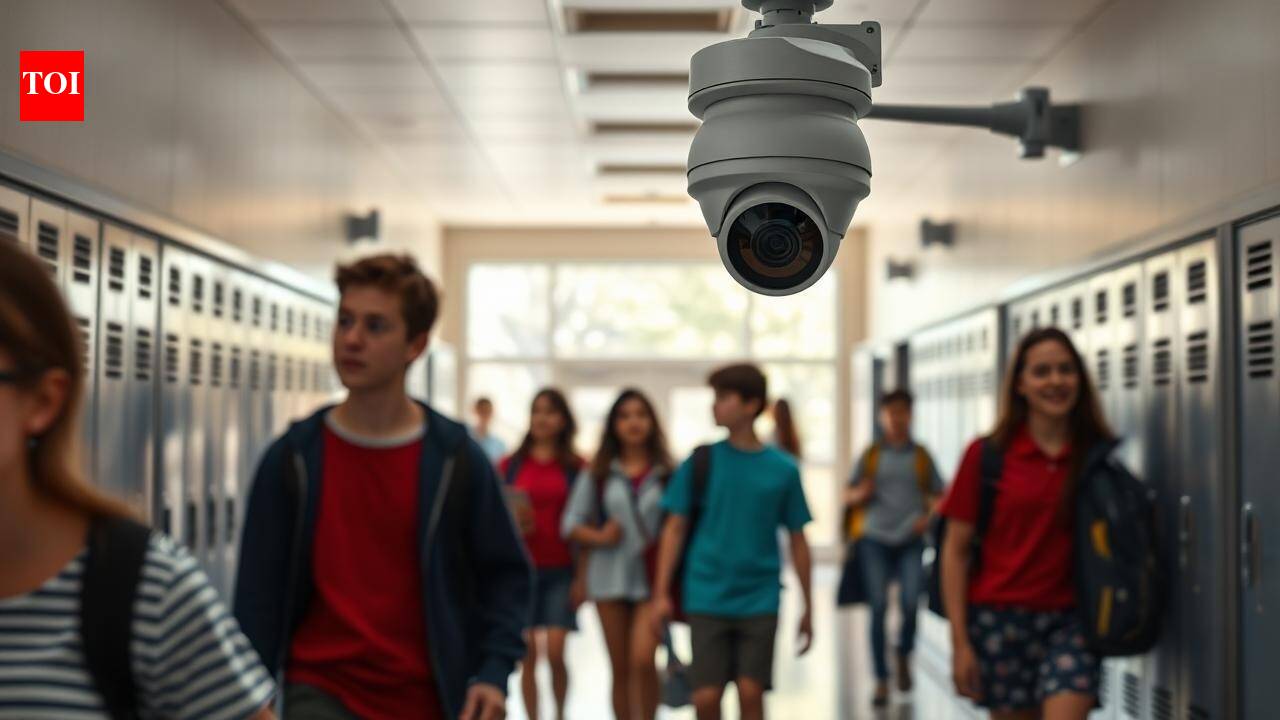
As MIT spends $3 million on 500 AI cameras, students question facial recognition and campus surveillance
AI-generated image for representation
Massachusetts Institute of Technology (MIT) is reportedly spending more than $3 million to install over 500 AI-powered surveillance cameras across its campus as part of a multi-phase security expansion.
While the university says the project is intended to improve campus safety, students have raised concerns over facial recognition capabilities, expanded surveillance and how the collected data could be used.According to MIT’s student newspaper, The Tech, these new cameras will be capable of real-time face and object classification, including detection of motion, crowds, face masks, and other attributes.
Defending the rollout, MIT spokesperson Kimberly Allen said the cameras are “part of regular efforts to promote campus security,” adding that the data collected is “retained up to 30 days” unless an exception is granted.
More than 500 AI cameras planned across campus
According to documents reviewed by The Tech, installation of the new surveillance system began in November 2025 and is expected to continue through September 2026.The project includes 521 AI-integrated cameras across academic buildings, residence halls and outdoor locations along Memorial Drive.
Of these, 501 are single-lens cameras, and 20 are quad-lens models capable of monitoring multiple directions simultaneously.The expansion will also add 67 exterior cameras and 13 new “Code Blue” emergency phone towers, each equipped with surveillance cameras, public address systems, emergency lighting and pan-tilt-zoom cameras.Most of the project’s nearly $2 million camera contract has been awarded to Siemens, while telecommunications contractors LCN and Picardi Electric are handling installation, wiring and related infrastructure work.
Cameras use AI for real-time detection
The primary camera supplier is Hanwha Vision, whose Wisenet AI cameras use deep learning algorithms to identify and classify people, vehicles, and other objects in real time.According to technical specifications cited by The Tech, the cameras can detect facial features, licence plates, motion, loitering, crowds, camera tampering and objects such as bags and vehicles. They can also classify individuals based on clothing colour, gender and estimated age from distances of up to 35 feet (11 metres).Nearly all cameras will support pan, tilt, rotate, and zoom functions and will be continuously monitored using AI-RGUS, an AI-powered surveillance monitoring platform.Allen said the cameras’ audio recording functions have been disabled, noting that state law prohibits audio surveillance.
Students raise privacy concerns
Some MIT students questioned whether the expanded surveillance could be used beyond campus security. Evan Lofink ’27 expressed concern that the system could be used to monitor student demonstrations.“History has shown us that surveillance states exist not to protect innocent people from criminals, but to make criminals of innocent people,” Lofink said. “We have seen this phenomenon play out at MIT, where the ratcheting up of tracking systems and police presence over the past years have done little other for the community than assist in witch hunts against student protestors.”Jayna Ekelmann ’27 said she understood the reasons behind the project but questioned its effectiveness.“I understand the motivation behind [the new cameras], but I am not convinced that many more cameras in the hallway is useful in preventing anything. Seeing cameras everywhere I go makes me uncomfortable,” Ekelmann said.
Expansion comes during budget cuts
The surveillance project comes as MIT continues to implement budget reductions triggered by federal funding changes, including hiring freezes, salary freezes and the closure of multiple campus libraries.According to The Tech, the camera rollout reflects a broader trend among US universities expanding surveillance infrastructure. The University of Pennsylvania has increased its outdoor camera network over the past five years, while Brown University has also announced plans to expand campus surveillance following a fatal shooting in December.Allen said MIT’s surveillance expansion was already underway before the December 2025 shooting of Professor Nuno Loureiro and was not initiated in response to that incident or the shooting at Brown University.MIT said the AI camera project is the first phase of a broader campus surveillance expansion, although details of future phases have not yet been disclosed.

Related Posts