
Summary: Researchers demonstrated that natural language processing (NLP) models analyzing speech patterns in children aged 9 to 13 can predict the onset of mental health disorders six years later more accurately than panels of human clinical experts. The study evaluated audio-recorded clinical interviews from over 200 children discussing stressful life events. Across four distinct NLP
Can one screening strategy find many cancers? Artificial Intelligence is bringing the idea closer
What if cancer screening no longer had to look for one cancer at a time? Cancer screening has long followed a one-organ-at-a-time model: mammography for breast cancer, colonoscopy for colorectal cancer, low-dose CT for lung cancer, and cervical testing for cervical cancer. These programs save lives, but they also leave gaps. Many cancers still lack routine screening, while patients often face multiple appointments, tests, and follow-up procedures.
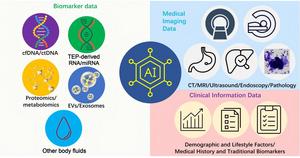
A review recently published in Intelligent Medicine argues that artificial intelligence is bringing a different model closer: multi-cancer screening built from many faint but complementary signals. Instead of relying on a single test or data source, AI systems may learn from biomarker data such as circulating tumor DNA, methylation patterns, platelet-derived RNA, proteomic and metabolomic signatures, and exosomal markers; medical imaging data from CT, MRI, endoscopy, ultrasound, and digital pathology; and clinical information such as demographics, lifestyle, medical history, and routine laboratory results. The key advance is multi-modal fusion, where AI brings these heterogeneous data streams together into a unified risk model and allows one type of evidence to offset the limitations of another.
After screening 7,831 records, the authors included 398 studies covering liquid biopsy, medical imaging, multi-omics, multi-modal fusion, machine learning, deep learning, natural language processing, explainable AI, and data preprocessing. Their conclusion is cautiously optimistic: AI-driven multi-cancer screening is advancing quickly, but its success will depend less on headline accuracy than on whether it can be prospectively validated, safely integrated into care, made affordable, and implemented equitably across health systems.
The evidence: Progress and limits
Liquid biopsy is currently the most developed direction. Early case-control studies such as CCGA and THUNDER reported sensitivities of approximately 65%-70% for multi-cancer detection. In prospective studies, SYMPLIFY reported 66.3% sensitivity in symptomatic patients, while PATHFINDER reported 38% sensitivity in asymptomatic adults and 97% accuracy in predicting cancer origin.
These studies should not be directly compared because their populations and designs differ. Together, they highlight the field’s central tension: identifying the likely origin of a cancer signal can be highly accurate, while detecting very early cancers in asymptomatic people remains more difficult.
Medical imaging is also gaining momentum. In the MASAI mammography trial, AI-supported screening increased invasive cancer detection by 29% while reducing workload by 44%. Other systems show promise in tumor-origin prediction, gastrointestinal lesion classification, and radiological-pathological integration.
From signal detection to clinical pathway
The review emphasizes that AI-driven multi-cancer screening is not simply an algorithmic challenge. A positive screening result may trigger imaging, endoscopy, biopsy, surgery, anxiety, and cost. Clinical value therefore depends on whether an integrated pathway can detect dangerous cancers earlier without causing excessive harm or unnecessary procedures.
Several barriers remain. Early cancers and rare cancers are difficult to represent in large, well-labeled datasets. Differences in sample collection, sequencing, imaging devices, clinical workflows, and population characteristics can weaken model generalizability. Fairness is closely tied to data quality: if some populations are underrepresented, AI systems may perform less accurately for them and widen existing disparities. Cost will also shape real-world adoption, because sequencing, laboratory infrastructure, confirmatory imaging, specialist interpretation, and follow-up all add burden.
The authors point to several solutions under investigation, including transfer learning, federated learning, domain adaptation, Bayesian optimization, and explainable AI. However, they stress that technical refinement must be matched by prospective clinical validation, regulatory evaluation, real-world evidence, and transparent assessment of patient benefit.
What comes next: Personalized, dynamic, and accessible screening
Looking ahead, the review envisions a shift from fixed, one-size-fits-all screening schedules toward personalized and dynamic risk assessment. Future systems may integrate multi-omics data, imaging, clinical records, lifestyle factors, and wearable signals to build continuously updated individual risk profiles and provide more actionable decision support for clinicians.
For China and other developing regions, the review argues that implementation should reflect local resource realities. Advanced cancer centers may evaluate multi-cancer platforms first, while AI-assisted ultrasound, chest imaging, and lightweight offline systems could strengthen primary-care and rural screening, especially where access to specialists and sequencing infrastructure is limited.
AI-driven multi-cancer screening could eventually make early detection broader, more personalized, and more efficient, especially for cancers without established population-wide tests. But the review’s central message is clear: the real breakthrough will not be an algorithm that detects more signals in a study setting. It will be a validated, affordable, and equitable system that can connect an early cancer signal to accurate diagnosis, timely treatment, and measurable patient benefit in routine care.
Reference
Title of original paper: Artificial intelligence-driven multi-cancer screening: Achievements, challenges, and future prospects
Journal: Intelligent Medicine
DOI: https://doi.org/10.1016/j.imed.2026.02.001
About the Journal
Intelligent Medicine is a peer-reviewed, open-access journal focusing on the integration of artificial intelligence, data science, and digital technology in clinical medicine and public health. The journal has a latest JCR Impact Factor of 7.8 and an Elsevier CiteScore of 16.5, reflecting its growing international influence. It is published by the Chinese Medical Association in partnership with Elsevier. To learn more about Intelligent Medicine, please visit: https://www.sciencedirect.com/journal/intelligent-medicine
Funding information
This work was supported by the National Science and Technology Major Project (Grant No. 2024ZD0524300; Grant No. 2024ZD0524301), National Key Research and Development Program of China (Grant No. 2021YFC2500400), National Natural Science Foundation of China Key Program (Grant No. 82430107), Tianjin Science and Technology Committee Foundation (Grant No. 25JCLMJC00470), and Tianjin Key Medical Discipline (Specialty) Construction Project (Grant No. TYXZDXK-009A).
Disclaimer: AAAS and EurekAlert! are not responsible for the accuracy of news releases posted to EurekAlert! by contributing institutions or for the use of any information through the EurekAlert system.

Related Posts