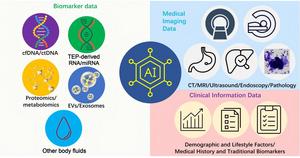
What if cancer screening no longer had to look for one cancer at a time? Cancer screening has long followed a one-organ-at-a-time model: mammography for breast cancer, colonoscopy for colorectal cancer, low-dose CT for lung cancer, and cervical testing for cervical cancer. These programs save lives, but they also leave gaps. Many cancers still lack

AI is revolutionising healthcare: this is how medical liability is changing
Hi-Tech Healthcare
From data management to defensive medicine: the implications of artificial intelligence for patient relations and the use of technology

Artificial intelligence (AI) is revolutionising the healthcare sector, driving innovation and transforming the way medical services are delivered. However, the introduction of AI-based systems also raises important issues, particularly regarding medical liability in the event of errors. Artificial intelligence (AI) in healthcare refers primarily to the application of advanced systems and algorithms capable of processing complex information to support diagnosis, treatment and patient management. To this end, AI utilises technologies such as machine learning and deep learning, which are based on neural networks that learn from data. AI algorithms are trained on large amounts of data.
Data management
The management of healthcare data using AI requires rigorous security measures. Artificial intelligence systems collect and analyse sensitive data, and a security breach could expose patients’ private information. Furthermore, it should be noted that the use of AI in healthcare may carry the risk of doctors becoming overly reliant on automated systems, with the danger of relying on assessments that are not always entirely transparent. With the increasingly rapid integration of artificial intelligence into healthcare, it is therefore becoming ever more urgent to address the question: who is responsible when AI is used to make decisions in a healthcare context?
Doctor-patient relationship
One of the main concerns is interference in the relationship between healthcare professionals and patients. This has obvious implications for professional conduct and ethics. The WHO, which had already addressed this issue in June 2021, reaffirms the importance of protecting human autonomy, confidentiality and privacy; ensuring transparency, explainability and intelligibility; and promoting responsibility and accountability.
Corporate Responsibility
One aspect that is often overlooked concerns the company’s liability when it is an individual employee — rather than the employer — who introduces artificial intelligence tools into the workplace. The prevailing legal view is that a company may be held liable for the use of AI by its employees even when it has not deliberately decided to adopt such tools.
The operator’s liability
Healthcare professionals are not exempt from liability. Their role is to verify the results generated by AI, and they are required to interpret them critically. The main legal issues concern the matter of civil liability. The use of Artificial Intelligence involves the processing of healthcare data in a complex, automated and profiling manner, which, in accordance with the GDPR, requires a solid legal basis and a broader informed consent, also aimed at permitting the use of AI in healthcare. Therefore, it is not just a question of clinical expertise, but also the ability to understand, manage and monitor the technological tools employed.

Related Posts