
A three-day conference on AI at 70: What Must Remain Human? began on Oct. 29, drawing industry leaders, tech experts, policymakers, critics, and researchers to Dartmouth, and bringing a sharp focus on human judgment to the equation. Marking 70 years since Dartmouth hosted the summer workshop that launched artificial intelligence as a field of research, day one
Deep learning model to precisely detect lung infections | Research Matters
A new low-cost, scalable AI deep learning model to detect lung infections using CT scans.
By Research Matters Staff Writer(s) · October 29, 2026 ·Bhubaneswar · 2 min read EN
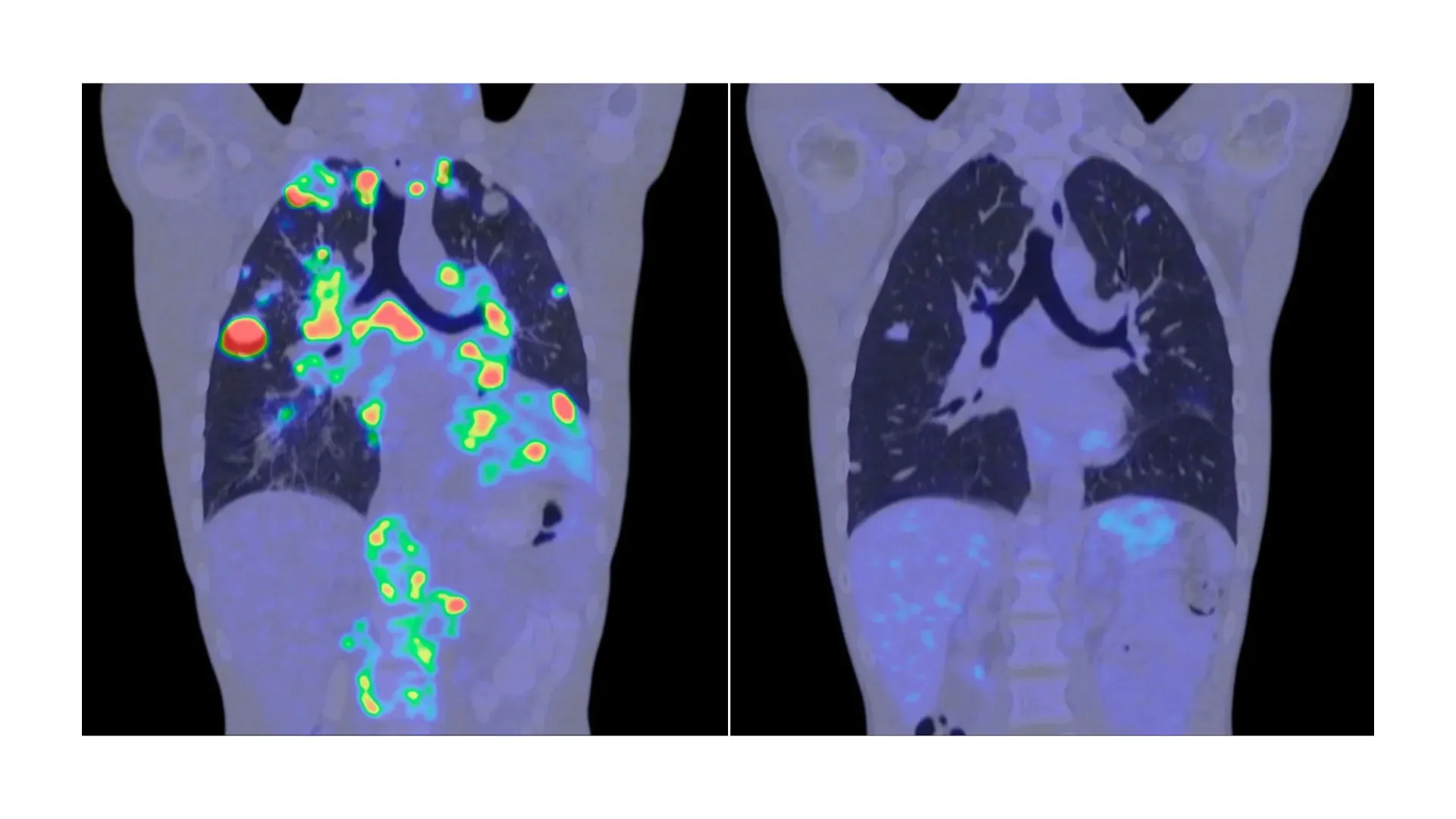
Understanding lung infections such as pneumonia and tuberculosis requires expert analysis of chest CT scans. Catching these infections early is crucial to ensure proper treatment. Remote areas of the country often lack such facilities, leading to devastating infections and untimely deaths. To tackle this problem, Mihir Narayan Mohanty of Siksha ‘O’ Anusandhan University in Bhubaneswar developed an AI deep learning model that can sort CT images and identify infected individuals. The model reached about 98.33% accuracy on the test images used in the study.
The model is called VGG19. It is a type of convolutional neural network that recognises patterns in images. It consists of 16 convolutional layers, which form the deep neural network for the model. To train the model, a transfer learning approach was used. In this approach, a preexisting model is used that has learnt to identify patterns. Using transfer learning with limited publicly available patient data (364 CT images), Mihir Mohanty generated a model with 98.33% accuracy.
Of the 60 images shown, the model accurately labelled 59. During development, the project aimed to create scalable, low-cost detection methods for remote, resource-limited environments. To achieve this, an IoT module was developed to receive CT images that are processed by the model, and the outputs would display either “infected” or “normal”. The web application was run on a Raspberry Pi, a small, inexpensive computer, to upload and view images.
The web application lets users view CT scan data and the detection results after logging in. Additionally, users can enlarge parts of the lung images and compare scans taken at different times. Although the training dataset is small, deploying the model would further improve the system’s accuracy. Furthermore, the model is not 100% accurate, and an expert doctor’s knowledge is essential to confirm the disorder.
VGG19 lung infection detection model is an adapted model that would highly benefit the second- and third-tier cities of the country. While super-speciality hospitals are mostly unavailable in towns and villages, deploying a low-cost, accurate deep learning model would help patients save time in detection and start treatment faster.

Related Posts