Nemotron 3.5 Transcribe: 17 GB, 5.33% WER [2026] The Shattered Newsletter: the week's biggest stories in tech, gaming and security. ×
Google DeepMind’s Alexandre Moufarek on AI and Gaming
In 1997, IBM’s Deep Blue did something that no machine had ever done before. It became the first computer system to defeat a reigning world chess champion in a match under standard tournament controls.
Although IBM’s supercomputer isn’t much like modern AI systems, its victory in the six-game marathon against Garry Kasparov marked a turning point in our history.
For chess enthusiasts and computer junkies, this was a revolutionary moment. Many in the business world looked on, viewing it as a high-stakes vanity project.
A second turning point came when Google DeepMind’s AlphaGo, which learned to master the ancient Chinese game of Go – a complex board game of strategy, creativity and ingenuity – defeated human Go world champion Lee Sedol, a decade before experts thought possible.
Google DeepMind highlights that AlphaGo’s victory inspired a new era of AI systems.
It was conclusive proof that the underlying neural networks could be applied to complex domains, while the use of reinforcement learning showed how machines can learn to solve incredibly hard problems for themselves, simply through trial-and-error.
Rollercoaster tycoons
Many in the Google DeepMind team are former game developers, including former CEO and current Alphabet Chief Scientist Demis Hassabis, who (at age 17) co-designed a 1994 hit game called Theme Park where players create and operate amusement parks.
He is also a Nobel laureate and towering figure in the world of AI, who has been at the forefront of shaping the technology for many years.
Since Google DeepMind’s foundation in 2010, the constrained yet rich worlds of games have played a critical role in understanding intelligence, Google DeepMind’s
Senior Director, Strategy and Special Projects, Adrian Bolton, and the lab’s Director of the Inception Team, Alexandre Moufarek, demonstrate in a blog they recently co-published on Google DeepMind’s website.
“[Games] have driven some of our biggest AI breakthroughs, from mastering Atari to helping solve protein structure prediction – and they are still at the heart of what we do,” the pair outline.
Gaming is very much at the forefront of gen AI applications – but its reach extends far beyond game developers.
“Our goal at Google DeepMind is to build general systems: AI agents that can safely adapt to the worlds they navigate, the characters and players they interact with and generalise to situations they haven’t seen before,” Alexandre explains to AI Magazine.
Barking up the decision tree
With Rockstar Games’ upcoming Grand Theft Auto 6 on the horizon, many players are wondering about the impact that AI systems could have on NPCs and unscripted actions in expansive open-world games.
“As a game developer before joining DeepMind, I’ve spent my years using scripted behaviours and decision trees for a reason: they are deterministic, controllable and reliable,” Alexandre tells AI Magazine.
“The limitation is that the game only knows how to respond to states explicitly hard-coded ahead of time. Once a player steps outside those anticipated branches, the NPC or Quest Manager can’t infer what the player is trying to do.”
We want to empower game developers to create flying cars, not just make cheaper SUVs
Alexandre Moufarek, Director of the Inception Team at Google DeepMind
Alexandre explains that AI systems that can understand the game and player context in real time, and adapt to emergent situations, could unlock levels of player agency and creativity that wouldn’t be possible without AI.
He gives examples from helping with new player onboarding with tailored recommendations and personalised tutorials, to adaptive difficulty and immersive accessibility for players with disabilities, to AI Game Masters that can adapt the gameplay and story to how the player plays.
“The shift isn’t about replacing authored stories with endless, unguided AI slop,” Alexandre says. “No one wants an AI hallucinating lore or derailing a carefully paced narrative.
“The unlock for game designers is bounded improvisation: the team still authors the world rules, character motivations and story beats while the AI enables unscripted player choices in a way that feels grounded in the game world.”
SIMA 2
The first version of SIMA learned to perform over 600 language-following skills, like “turn left,” “climb the ladder,” and “open the map,” across a diverse set of commercial video games.
It operated in these environments as a person might, by “looking” at the screen and using a virtual keyboard and mouse to navigate, without access to the underlying game mechanics.
With SIMA 2, Google DeepMind moved beyond instruction-following. By embedding a Gemini model as the agent’s core, SIMA 2 can do more than just respond to instructions; it can think and reason about them.
Ready player, none?
Google DeepMind’s gaming journey began when a small team trained a deep neural network to play Atari 2600 games directly from raw pixels. The Deep Q-Network learned to play 49 different games – from Pong to Breakout to Space Invaders – without any game-specific engineering.
Alexandre and Adrian highlight that the company’s earlier work (such as on AlphaGo) demonstrated that AI could master any game given a clear objective and enough training.
“But the real world doesn’t come with scores and rule books,” they write. “Which led us to ask a fundamentally different question: can AI understand and interact with any game world the way a person would?” This is the challenge behind Google DeepMind’s Scalable Instructable Multiworld Agent (SIMA).
Rather than optimising for a high score, SIMA is a generalist agent that ‘sees’ what a player would see on screen, understands natural language instructions and acts through ordinary keyboard and mouse controls – requiring no APIs or source code access.
Not only can its latest SIMA 2 follow human-language instructions in virtual worlds, it can also think about its goals, converse with users and improve itself over time.

Key Stats
-
Google DeepMind was founded in London by Demis Hassabis, Shane Legg and Mustafa Suleyman.
-
4–1: Score of AlphaGo’s historic 2016 victory over 18-time world Go champion Lee Sedol.
-
49: Atari 2600 games mastered by Deep Q-Network (DQN) directly from pixels, without game-specific code.
-
600+: Language-following virtual skills (e.g., “climb ladder”, “turn left”) mastered by SIMA 1 across 9 commercial 3D video games.
In 2025, the firm called it a “significant step” towards AGI. Alexandre explains to AI Magazine what most excites him about SIMA:
“Early on with SIMA 2, our Gemini-based embodied research agent, we were evaluating basic actions in 3D games (e.g., ‘pick up some wood’) to verify it could reliably execute simple tasks. When we tested open-ended instructions, like ‘build a house around there’, SIMA 2 was able to bridge the gap between a vague human instruction and successful execution. Operating strictly from the pixels on the screen and standard keyboard and mouse controls (no access to game code or internal APIs), it broke that goal down into a coherent, multi-step plan: explore the forest, gather the right amount of wood, pick a flat location near where the player indicated and start constructing walls.”
Alexandre explains it showed an understanding of game context, spatial awareness and player intent: “Real-time control and out-of-distribution generalisation are still hard research and engineering challenges.” He says that agents still make mistakes and struggle in unfamiliar fast-twitch scenarios.
“But seeing a generalist agent infer contextual intent and execute a multi-step plan from just plain English instructions was the moment it clicked for us: entirely new player-companion dynamics were now on the table,” he says.
Deep learning in deep space
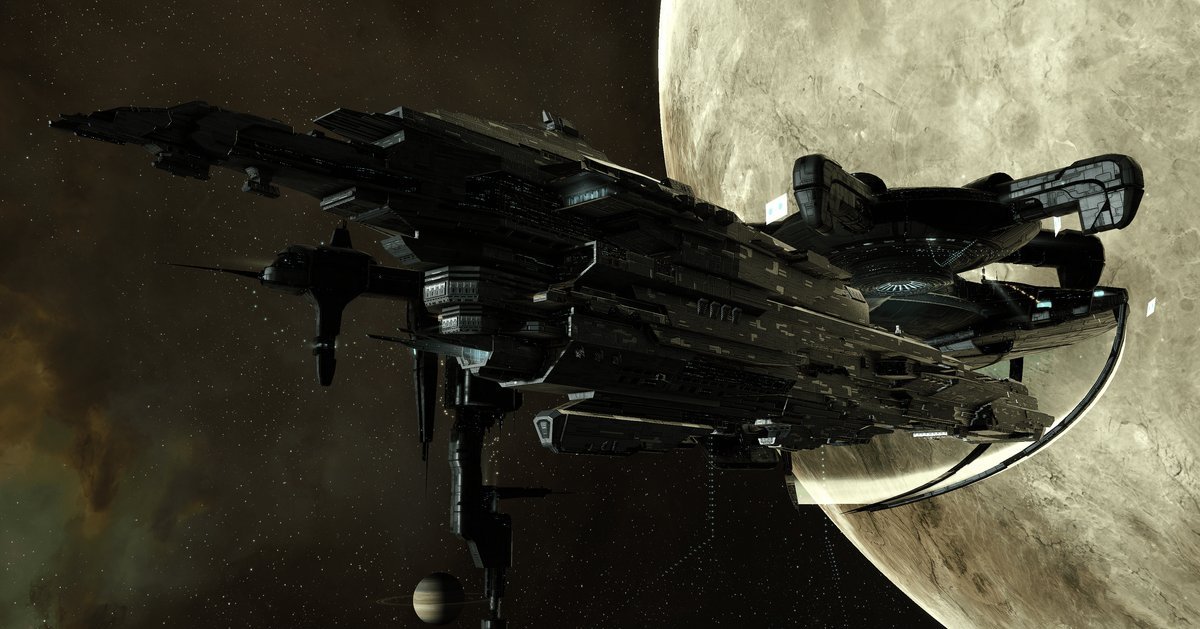
Google DeepMind partnered with Fenris Creations to bring AI into its massive open-world space.
“We are at the early stage of our research in EVE Online,” Alexandre tells AI Magazine. “Fenris Creations, the independent studio behind the EVE Universe, has spent more than 20 years building one of the most complex, persistent worlds in gaming.
“Its large universe features thousands of star systems shaped by player-driven alliances, conflicts, diplomacy and economy. It’s a living, evolving world that demands capabilities we believe are essential for frontier AI: continual learning, memory, long-horizon planning and multi-agent coordination.”
He explains that working with Fenris Creations lets the AI lab take a pragmatic, staged research and engineering approach.
“We aren’t recklessly dropping autonomous agents into a live EVE Online server,” he highlights. “We’ve started by running our embodied agent research in offline sandbox instances of EVE Online. We want to prove what works safely before ever bringing it into live multiplayer play.”
No one wants an AI hallucinating lore or derailing a carefully paced narrative.
Alexandre Moufarek, Director of the Inception Team at Google DeepMind
In a recent fireside chat with Fenris Creations, Adrian outlined the broader implications.
“With AI, virtual environments and games are the perfect high-safety, low-complexity scenarios and we have used them throughout our work.”
He explains these scenarios are very good for training and testing with AI research, without impacting the real world, for example with self-driving cars, where a lot of the initial work was done with simulated realities.
“We use them a lot for scalable challenges,” he said. He explains they use AI systems in the firm’s work with Atari. “On the face of it, it looks like we’re teaching an AI to play an Atari game, but actually what we’re doing is building an AI brain to learn a general system.”
To ROI – and beyond!
Beyond the transformative impact gen AI is having in game design and narrative, the gen AI in gaming market size is expected to see exponential growth going forward.
The market is expected to grow from US$1.79bn in 2025 – through to US$2.21bn in 2026 – all the way up to US$5.09bn in 2030, at a compound annual growth rate of 23.2%, according to data from Research And Markets. But the way AI intersects with gaming can have far larger impacts than ROI on gaming firms – they can be used as a launchpad for revolutions across scientific discovery or even healthcare.
“Our goal is not to just optimise existing, proven game development workflows, but to enable breakthrough developer and player experiences that wouldn’t be possible without AI,” Alexandre tells AI Magazine.
“We want to empower game developers to create flying cars, not just make cheaper SUVs. Faster iterations, the ability to explore more ideas, and taking risks are critical to innovation.”
The shift isn’t about replacing authored stories with endless, unguided AI slop.
Alexandre Moufarek, Director of the Inception Team at Google DeepMind
Alexandre explains that AI can help with that but without the unique expertise, taste and creativity of game developers, AI is just a tool.
“At the end of the day,” Alexandre says. “It’s the game developers who experiment with AI that will figure out what it is good for, influence the research direction and pioneer this technology, as they always have, from 3D, to GPUs, to VR, to raytracing and more.”
Alexandre adds that with SIMA, Google DeepMind believes that building general AI agents that are capable of adapting in real time are critical to augmenting designers, engineers and QA testers in development (because AI agents can manage the game-changing with every commit), post-launch (when new content is introduced) and in response to players’ creativity.
AlphaFord
Proteins control and drive all the chemical reactions that together are the basis of life. Proteins generally consist of 20 different amino acids, notes the Nobel Prize organisation.
These are linked together in long strings that fold up to make a three-dimensional structure. In 2020, Demis Hassabis and John Jumper presented an AI model called AlphaFold2.
With its help, they have been able to predict the structure of virtually all known proteins. AlphaFold2 has been widely used in many areas, including research into pharmaceuticals and environmental technology.
Game theory
As Alexandre and Adrian outline in their blog: “We are aiming for the same ultimate goal we always have: AI as a catalyst, not a replacement. Our long-term ambition is to unlock breakthrough gameplay experiences, make games more accessible and more personalised, and — as we’ve seen from AlphaGo to AlphaFold – apply what we learn in games to problems in the real-world and to advance scientific discovery.”
As the pair outline, the spirit of exploration that succeeded in games had profound impacts for other AI systems: AlphaFold, which emerged from Google DeepMind’s system for the board game Go, AlphaGo, applied these foundations to help solve the 50-year grand challenge of protein structure prediction, a breakthrough which was recognised with the 2024 Nobel Prize in Chemistry for John Jumper and Demis Hassabis.
So, what began as a machine learning to master pixels and board games has evolved into an engine of modern scientific discovery, showing that virtual worlds may well provide a blueprint for mapping our own reality. Can the business world really afford to look on this time?

Related Posts