The 2026 US Talent Report: Benchmarking America’s STEM Pipeline Amid the Great Talent Competition | Stanford HAI

NN Asks: How can the nuclear industry ensure trust in AI-driven decisions?
AVANTech delivers expert design, NQA-1 fabrication, and innovative solid and liquid waste treatment technologies, plus specialty packaging Solutions and precision glovebox systems – engineered to meet the most demanding nuclear and environmental requirements. Explore our new website at avantechllc.com.
Learn More
September 28, 2026, 9:31AMNuclear NewsJamie Coble

Jamie Coble
This is a really interesting question that we’re already grappling with both in research and industry. A lot of the discussion around the practicality of implementing AI in nuclear includes concepts of trustworthiness, transparency, and explainability. Conceptually, these are all intertwined: An AI that generates explainable results through a transparent process is inherently easier to trust through careful verification, validation, and guardrails. Developing this trust goes beyond simple measures of the accuracy, precision, or recall of the final result. Even when results are incorrect, as human experts we must be able to inspect the “thought process,” judge the evidence that was relied on, and draw conclusions about the validity of the AI tool overall. This allows us to develop trust in the process without requiring everyone to be an expert in AI algorithms and structures.
Beyond that, however, we should reframe the problem as AI-assisted decisions instead of AI-driven. Just like we can use measures of risk to inform design, regulation, or operations, AI can provide useful insights that assist in decision-making—but it should not be the primary driver of any decisions. If we consider AI as an assistant to a qualified human expert, then we can evaluate AI output as one input in the decision-making process.
When we still rely on a human subject-matter expert to make final decisions, the question shifts to “How can we trust humans to evaluate AI recommendations in the context of all other inputs?” We already trust humans to weigh evidence and make decisions, often in the face of incomplete data or contradictory indications. With proper training to interpret AI recommendations and understand the limitations, human experts can consider AI-generated results (along with explanations and measures of performance) as one more input for review. The true trust comes not from replacing human judgment and accountability but from using AI as one part of a holistic, human-driven decision-making system.
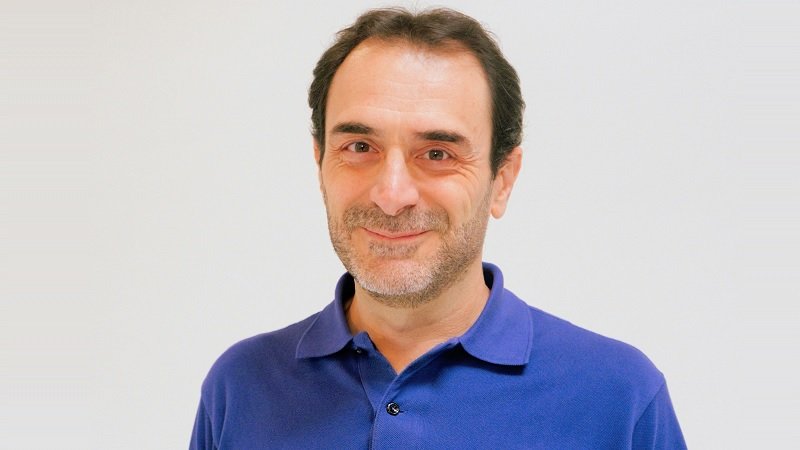
Jamie Coble ([email protected]) is a professor in the Department of Nuclear Engineering and Engineering Physics at the University of Wisconsin–Madison. Her expertise is in applications of data analytics, machine learning, and artificial intelligence to support robust decision-making and operations and maintenance planning in nuclear power plants and other nuclear facilities.

A message from Goodway Technologies Corporation
Goodway® ScaleBreak®-000: Redefining Industrial Descaling for Power Generation
Learn More
Related Articles
The Waymo effect
The focus of the September issue of Nuclear News issue is on new technology, and the stories within are reflective of the broader wave of innovation sweeping the industry—a wave driven in no…


We’ve crossed the nuclear tipping point
Demand, government, and capital have finally aligned. All that’s left is to deliver.
September 16, 2026, 7:08AMNuclear NewsRian Bahran
Twenty years ago, I walked across a graduation stage with a nuclear engineering degree and a promise that the nuclear renaissance was coming. It never came. The hard part was not the physics….

ANS Annual Conference session focuses on AI
The final executive session of the American Nuclear Society’s 2026 Annual Conference was titled “With Great Processing Power Comes Great Responsibility: Ethics and Opportunities for AI and…

Related Posts