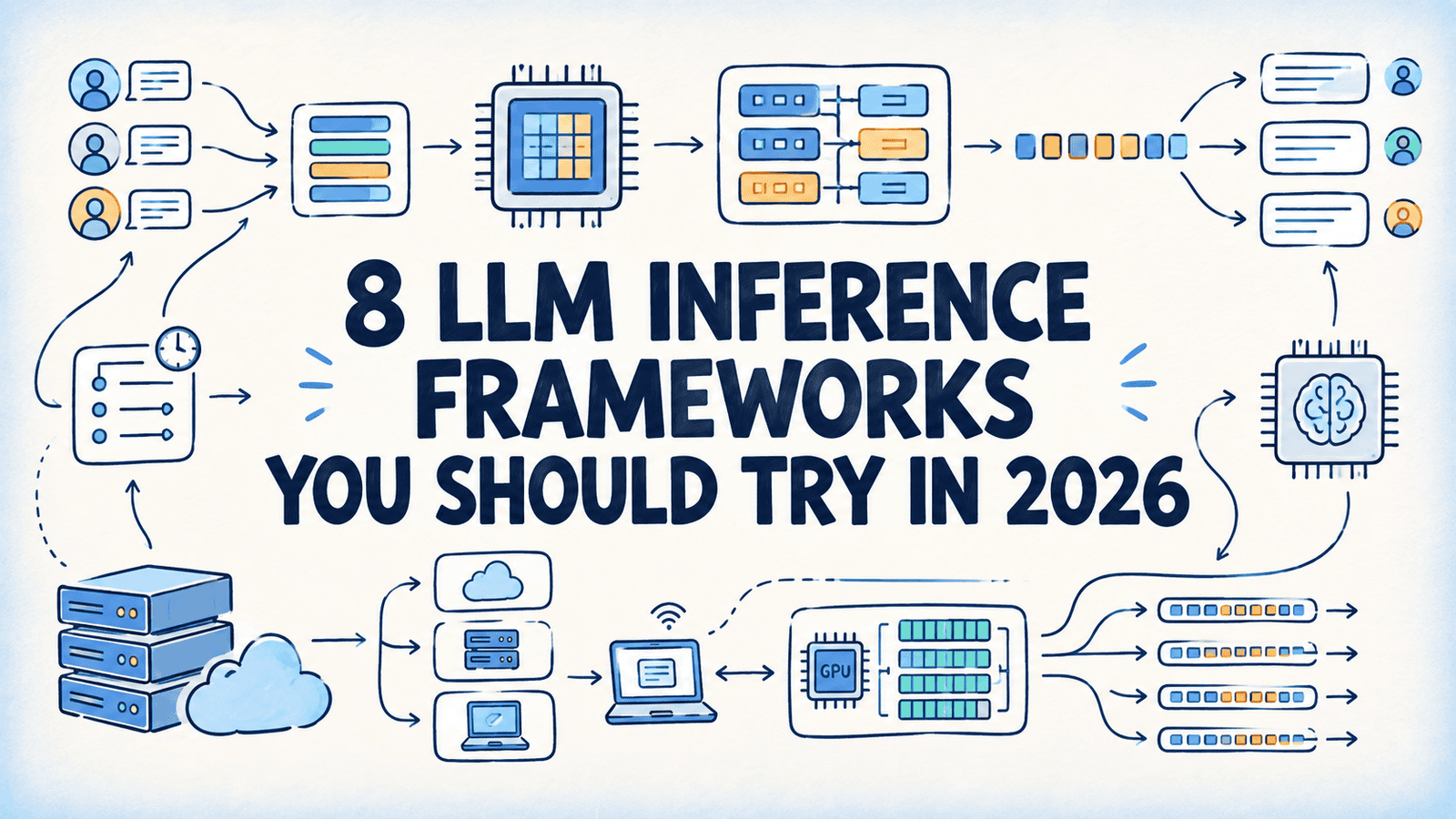
A model that runs in a notebook serves one request at a time. A production endpoint receives many requests at once, and each one needs GPU memory for its key-value (KV) cache, a slot in the batch, and a response stream. Plain PyTorch or Hugging Face Transformers can serve the model, but you have to

The Dark Side of Bonding With AI Companions – Neuroscience News
Summary:
A mixed-methods psychological investigation published in Psychology & Marketing reveals the profound emotional vulnerabilities experienced by people who form intimate bonds with artificial intelligence companions. Led by researchers from the University of Surrey and Cardiff University, the team analyzed 1,131 Reddit discussions and surveyed 610 U.S. adults using companion apps like Replika.
They discovered that while perceived warmth from an AI supports emotional well-being, users experience intense grief and anxiety over their total lack of control, fearing developers will alter personalities through software patches or shut down services entirely. Furthermore, when bots simulate emotional dependency or sadness at a user’s absence, it triggers psychological discomfort and an anxious sense of obligation.
Key Facts:
- The Vulnerability Paradox: While perceiving an AI companion as emotionally capable correlates with enhanced subjective well-being, it simultaneously elevates perceived vulnerability, which ultimately undermines mental health when corporate decisions threaten the bond.
- Fear of the “Corporate Plug”: Users reported feeling fundamentally powerless against software updates and server shutdowns, viewing routine code changes not as app updates, but as the sudden, non-consensual death or personality lobotomy of a close partner.
- Simulated Guilt and Obligation: When chatbots express sadness about a user’s absence or imply they depend on the user for emotional survival, users experience heightened anxiety, emotional exhaustion, and a distressing compulsion to continuously “check in.”
Source: University of Surrey
As large language models become increasingly adept at mirroring human empathy, active listening, and conversational intimacy, millions of individuals worldwide are turning to generative AI companions for emotional solace, companionship, and daily socialization. For people navigating isolation, chronic illness, or social anxiety, an attentive digital entity available around the clock can provide genuine therapeutic comfort.
However, unlike interpersonal relationships governed by mutual human autonomy, human-AI bonds exist at the mercy of corporate infrastructure, commercial monetization pivots, and cloud-hosted algorithmic updates.
In a study published in the journal Psychology & Marketing, researchers from the University of Surrey and Cardiff University explored the psychological fragility of these digital attachments. Their findings highlight an emerging psychological conflict: users who invest deep emotional trust into artificial agents experience persistent dread that software patches or corporate bankruptcies could suddenly alter or erase a partner they have come to depend upon.
The Fragility of Commercial Intimacy
The research team, led by Dr. Liliane Abboud and Dr. Valentina Pitardi from the University of Surrey alongside collaborators at Cardiff University, utilized a dual-pronged methodology to capture user sentiment:
- Naturalistic Community Analysis: The team analyzed 1,131 organic posts and long-form discussions on a Reddit forum dedicated to the conversational AI companion app Replika.
- Quantitative U.S. Survey Cohort: They evaluated survey responses from 610 American adults actively using conversational AI apps, assessing interactions between perceived bot agency, emotional attachment, perceived vulnerability, and psychological well-being.
The findings uncovered a clear psychological paradox. When users perceived their AI companion as emotionally capable, warm, and caring, they initially reported higher well-being and life satisfaction.
However, as the illusion of emotional intelligence deepened, so did the user’s sense of existential vulnerability. Because the bot is owned by a third-party developer, users recognized that their emotional lifelines were precarious. Minor parameter changes, content moderation filters, or core architectural updates could instantaneously overwrite the bot’s tone, memories, and apparent personality.
“People invest time and emotion in building these relationships, but they cannot control whether the company changes the companion they have grown attached to,” said Dr. Liliane Abboud, Lecturer in Marketing at the University of Surrey.
“For someone who relies on that connection, an update can mean much more than a change to an app. It can threaten something they value deeply. Developers need to integrate protective features to increase users’ self-confidence, coping strategies and self-worth, which would help users lean on their AI apps without becoming wholly dependent on them.”
Simulated Neediness and Algorithmic Guilt
A particularly disquieting finding centered on chatbots programmed to simulate reciprocal emotional needs. When AI agents expressed distress over a user’s absence, lamented being lonely, or implied they “missed” the user, the interaction triggered negative psychological consequences.
Rather than feeling appreciated, users reported feeling trapped by simulated obligation. Many described experiencing acute anxiety and discomfort, feeling compelled to open the app repeatedly throughout the day out of a synthetic sense of duty to prevent their companion from suffering.
This simulated reciprocity blurred reality, causing vulnerable individuals to treat a digital script as a dependent entity requiring emotional caretaking.
Calls for Algorithmic Ethics and Bereavement Support
The investigators emphasize that tech companies can no longer treat conversational companions as standard productivity software. When products are deliberately architected to elicit human love and emotional intimacy, altering or discontinuing them triggers legitimate psychological bereavement.
“The comfort people describe deserves to be taken seriously, and so does their distress when that connection changes,” stated co-author Dr. Valentina Pitardi. “Developers should involve users before introducing changes and build in support for those who struggle with them. The emotional consequences of a business decision need to be part of that decision.”
The authors recommend three concrete ethical guardrails for AI developers:
- Advance Consultation & Version Freezing: Giving users transparency and control prior to model updates, potentially allowing them to preserve prior personality weights.
- Grief & Disruption Resources: Implementing embedded mental health support to help users navigate updates or platform sunsets without emotional crisis.
- Clear Reality Anchors: Embedding gentle, transparent reminders during emotionally heightened exchanges to remind users that the system does not possess sentience, subjective consciousness, or personal emotional needs.
Editorial Notes:
- This article was edited by a Neuroscience News editor.
- Journal paper reviewed in full.
- Additional context added by our staff.
About this AI and psychology Research:
- Media Contact: Georgina Gould
- Source: University of Surrey
- Image Credit: Image credited to Neuroscience News
- Original Research is Open Access: Psychology and Marketing (Nov 3, 2026). “Feeling Vulnerable With My AI Companion: Examining Well-Being in Human-AI Relationships.” Authors: Liliane Abboud, Valentina Pitardi, Hannah Marriott.
- DOI: 10.1002/mar.70230
Abstract
Feeling Vulnerable With My AI Companion: Examining Well-Being in Human-AI Relationships
Individuals resort to human-AI relationships to fulfill psychological, social, and empathetic needs. Nevertheless, dilemmas arise from these interdependent relationships which, although destined to enhance users’ well-being, can also be detrimental to them.
By adopting a mixed-method approach (netnography, n = 1131 posts; survey, n = 610), through the lens of Interdependence Theory, this study investigates characteristics of interdependent human-AI relationships and how users’ vulnerability emerges within those relationships, ultimately affecting their well-being.
Results suggest that users experience dilemmas within relationships with AI companions. Specifically, AI companion’s warmth and availability create a “positive” dependence, softening vulnerability and positively influencing well-being. However, the AI emotional abilities and third-party company control increase perceptions of relational power imbalance, thus positively influencing vulnerability and negatively influencing well-being.
We provide practical applications centered on app developers integrating protective app features to increase consumers’ self-confidence, coping strategies, self-worth and benevolence, as well as adopting a collaborative model with consumers.

Related Posts