
We apologize for the inconvenience... To ensure we keep this website safe, please can you confirm you are a human by ticking the box below. If you are unable to complete the above request please contact us using the below link, providing a screenshot of your experience. https://ioppublishing.org/contacts/

The emerging armamentarium of cognitive warfare with Dr. James Giordano (Video) | CSI Talks #19

The emerging armamentarium of cognitive warfare with Dr. James Giordano | CSI Talks #19
The Convergence Juggernaut and Dual-Use Reality
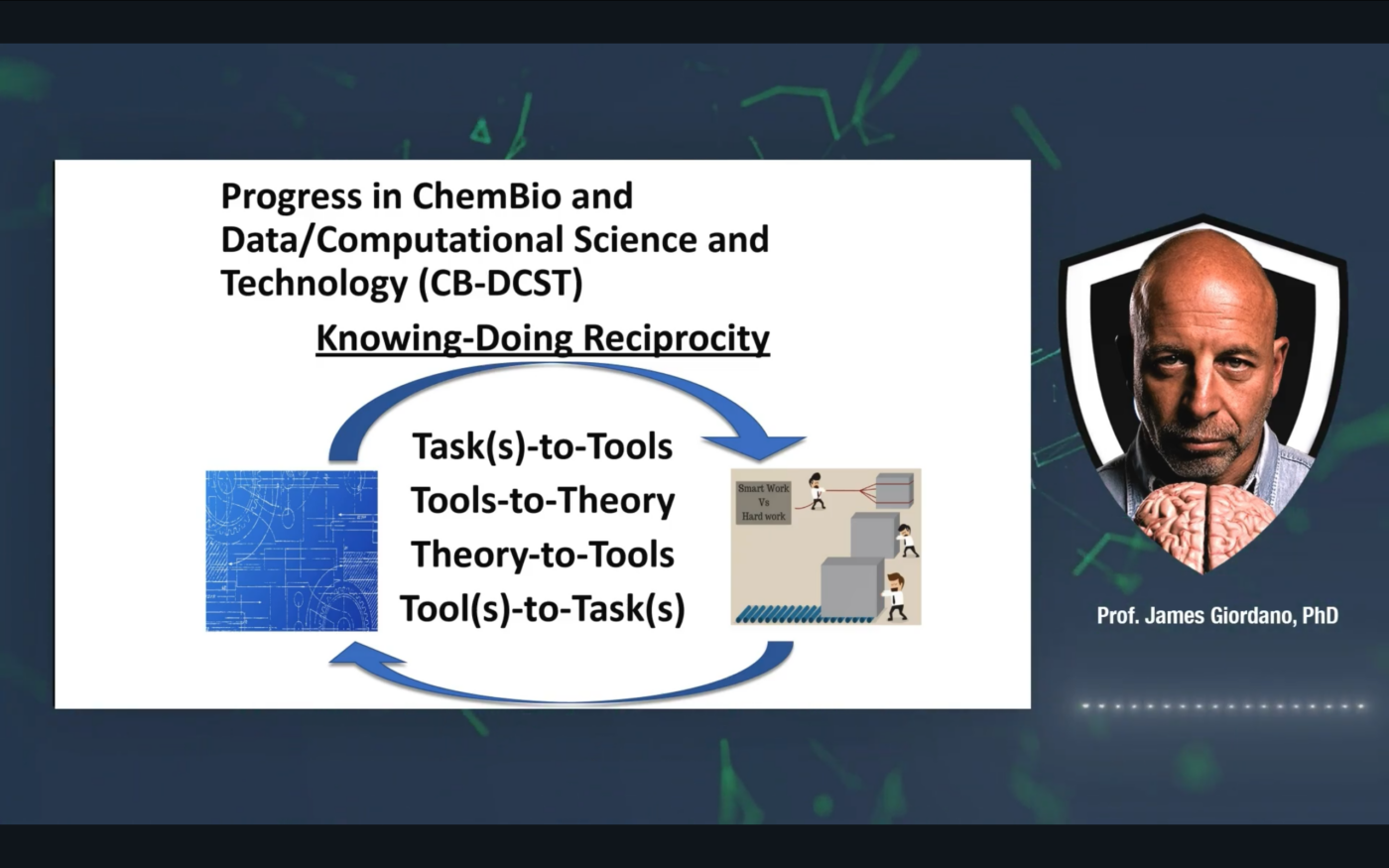
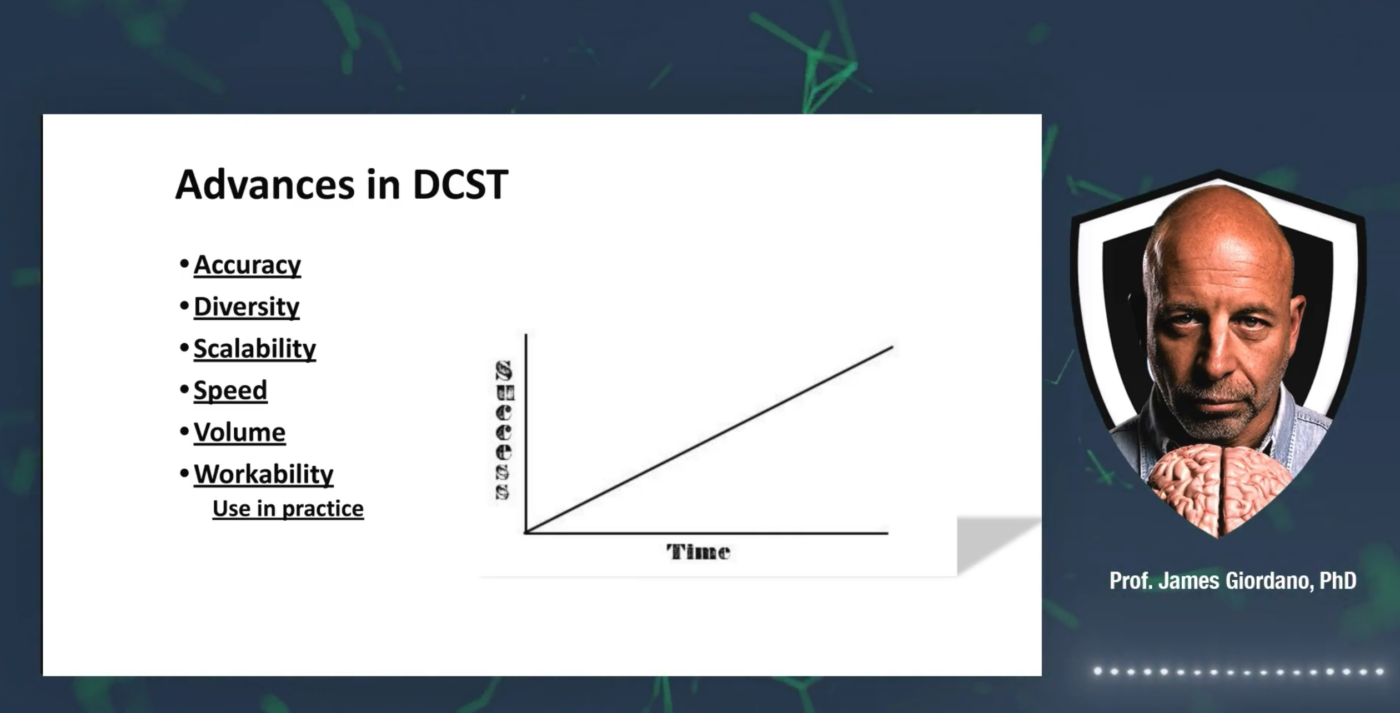
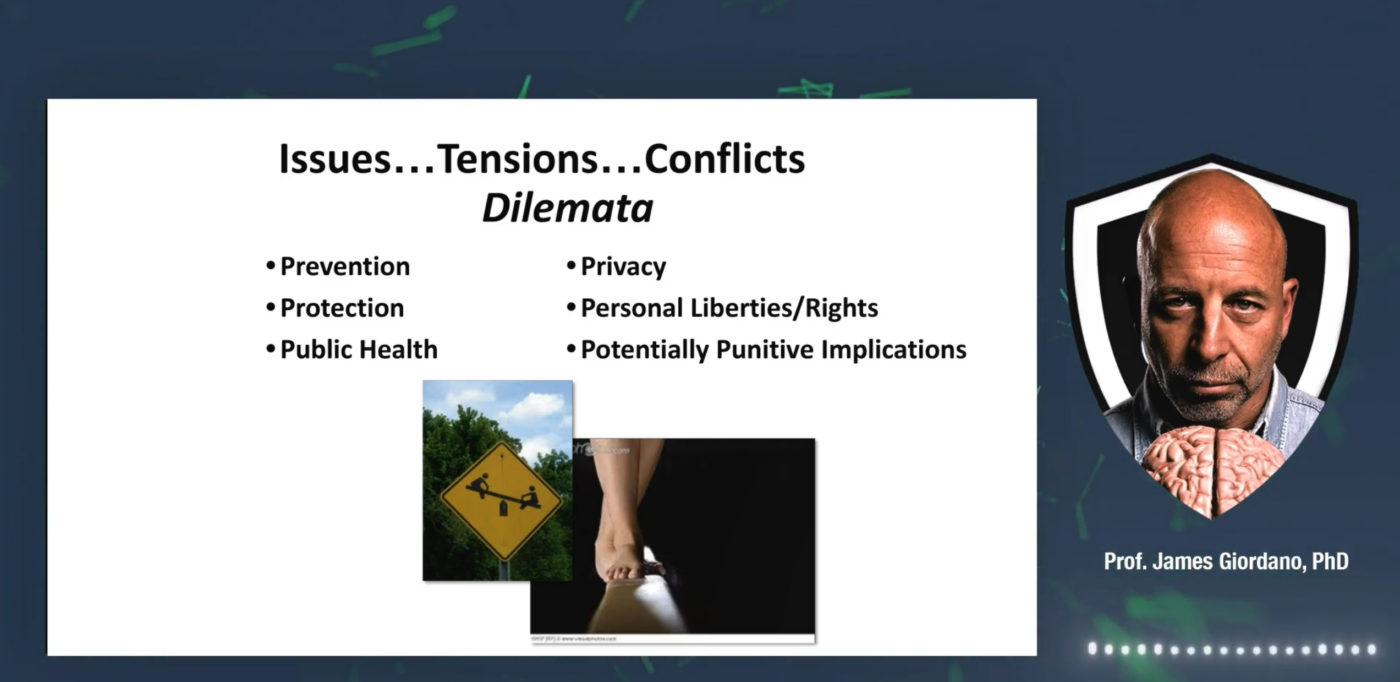
The fusion of chemical, biological, and neuro-cognitive sciences with iterative computational power creates an omnibus of capability. This intersection operates on a double-edged blade where the tools for precision medicine are interchangeable with those used to engineer precision pathologies. In “The emerging armamentarium of cognitive warfare,” Dr. Giordano notes that the handle and the blade of this technology are becoming interchangeable, meaning the same systems used for care can be repurposed for harm. Modern machine learning and deep learning training algorithms now solve complex pattern recognition tasks, establishing the technical foundation for true artificial intelligence.
Neuro-Analogous Systems and the Complexity Principle
Artificial intelligence is categorized into soft AI, focused on task sophistication, and hard AI, which seeks true machine intelligence and cognition. These systems are neuro-analogous, mimicking the hierarchical structures of biological nodes and networks without requiring physical neurons. The complexity principle dictates that system efficacy depends on functional complexity, reciprocity of units, and architectural flexibility rather than sheer physical size. This allows modern technology to achieve superior results through advanced architecture, thereby shifting the focus from capacity in size to capacity in actual capability.
Geopolitical Competition and the Pace of Efficacy
A significant pace gap exists in the global competition space. Trans-pacific competitors often utilize a triple helix model that seamlessly integrates government, research, and commercial sectors to accelerate development. Technological readiness levels can reach operational status in windows as short as 120 to 160 days. Projections suggest that by 2035, China may capture over 53% of the market share in the converging sectors of chem-bio, bio-devices, and big data. This rapid advancement creates an attribution dilemma where malicious technological use is obscured behind commercial or clandestine veils, making state attribution difficult.
Risk Mitigation via the RAMP Framework
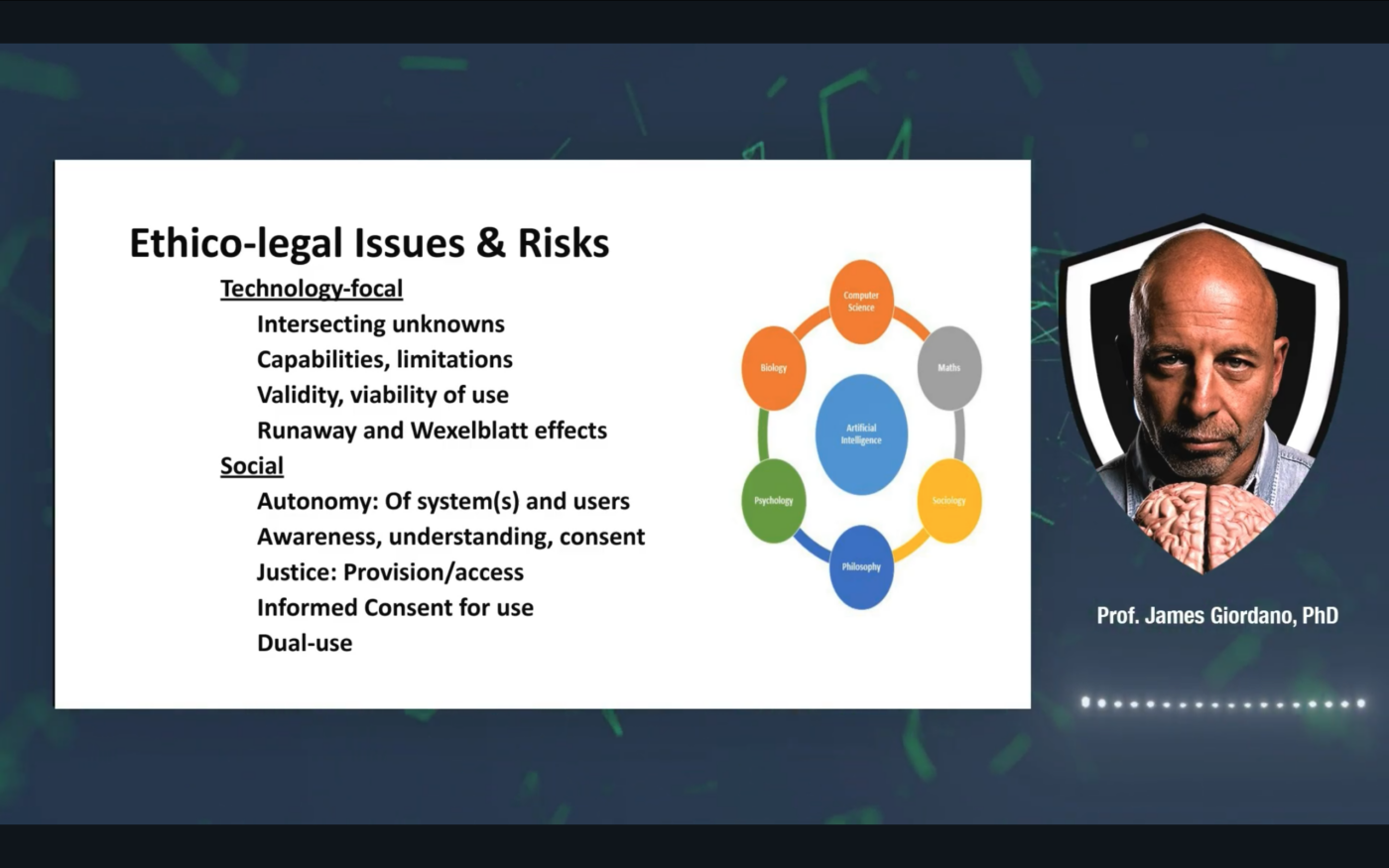
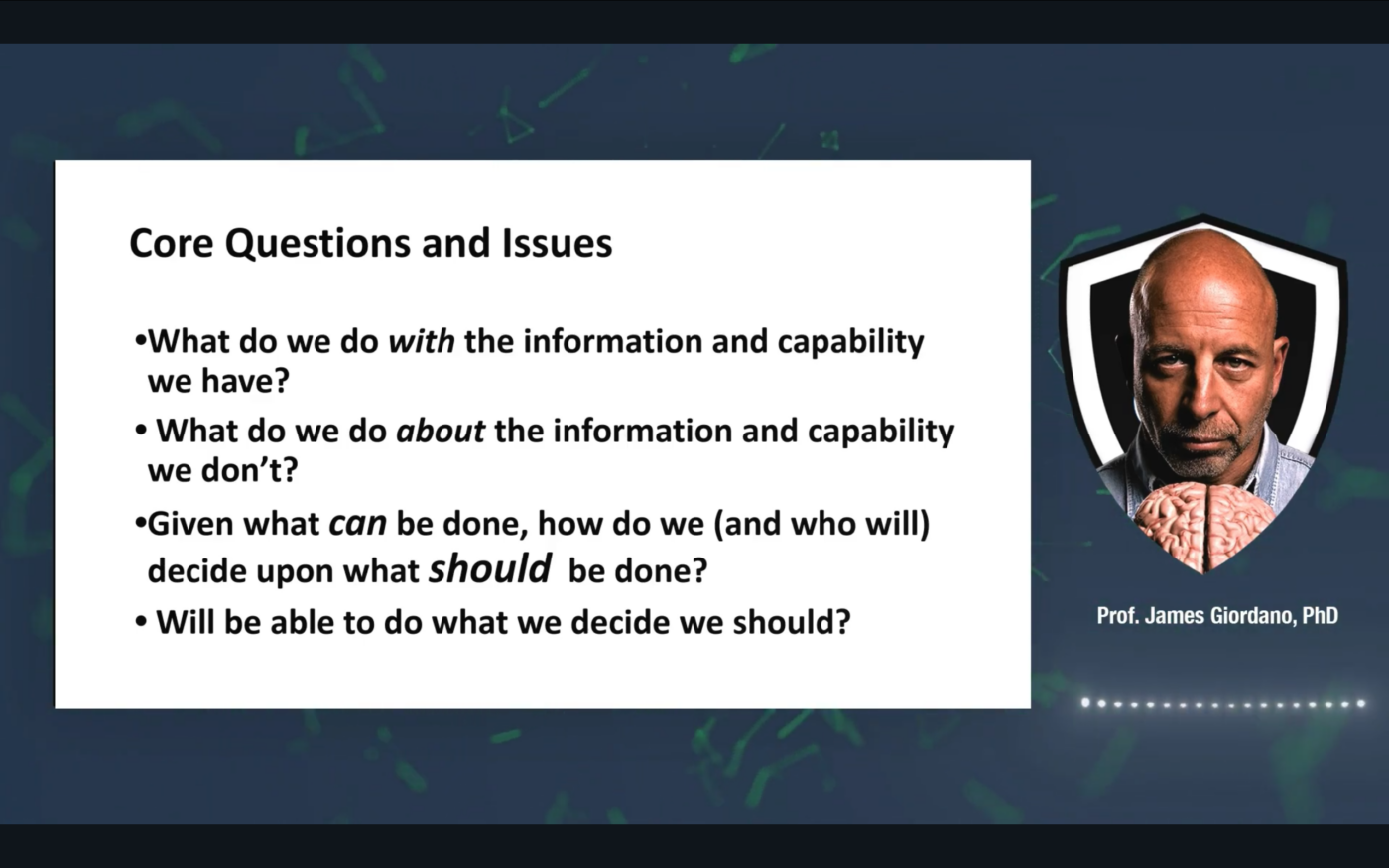
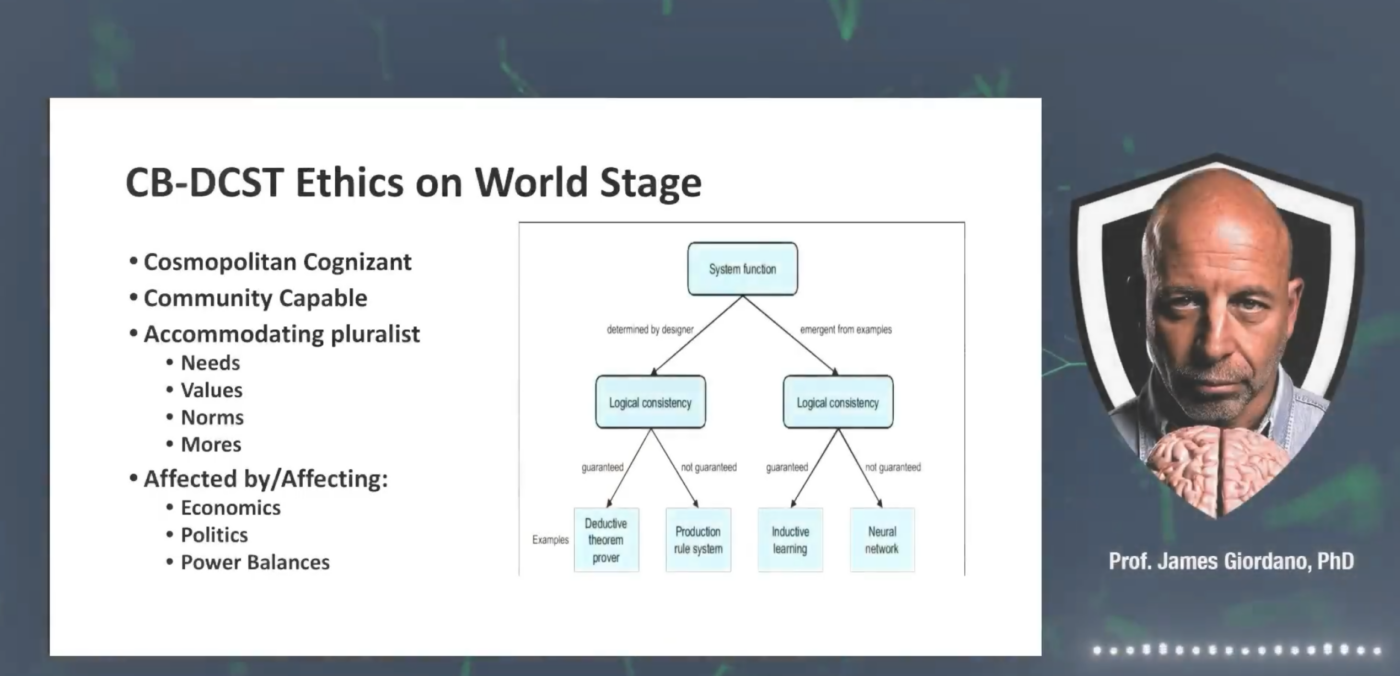
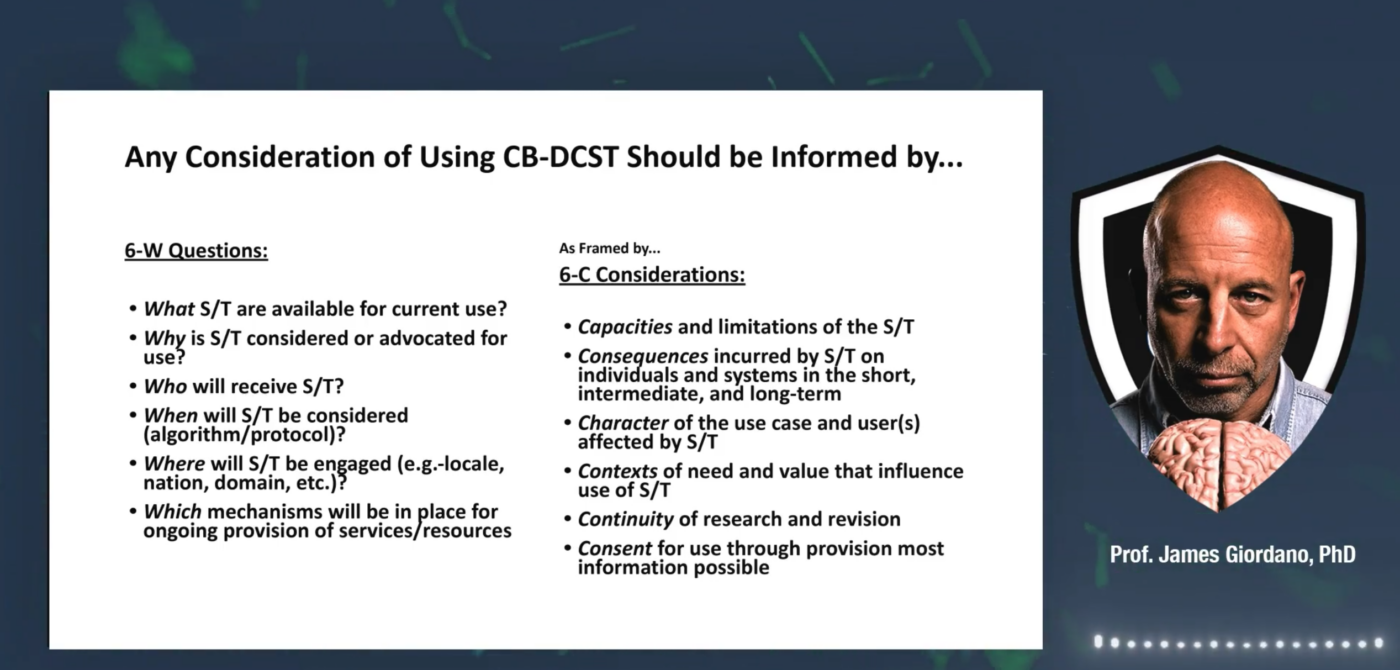
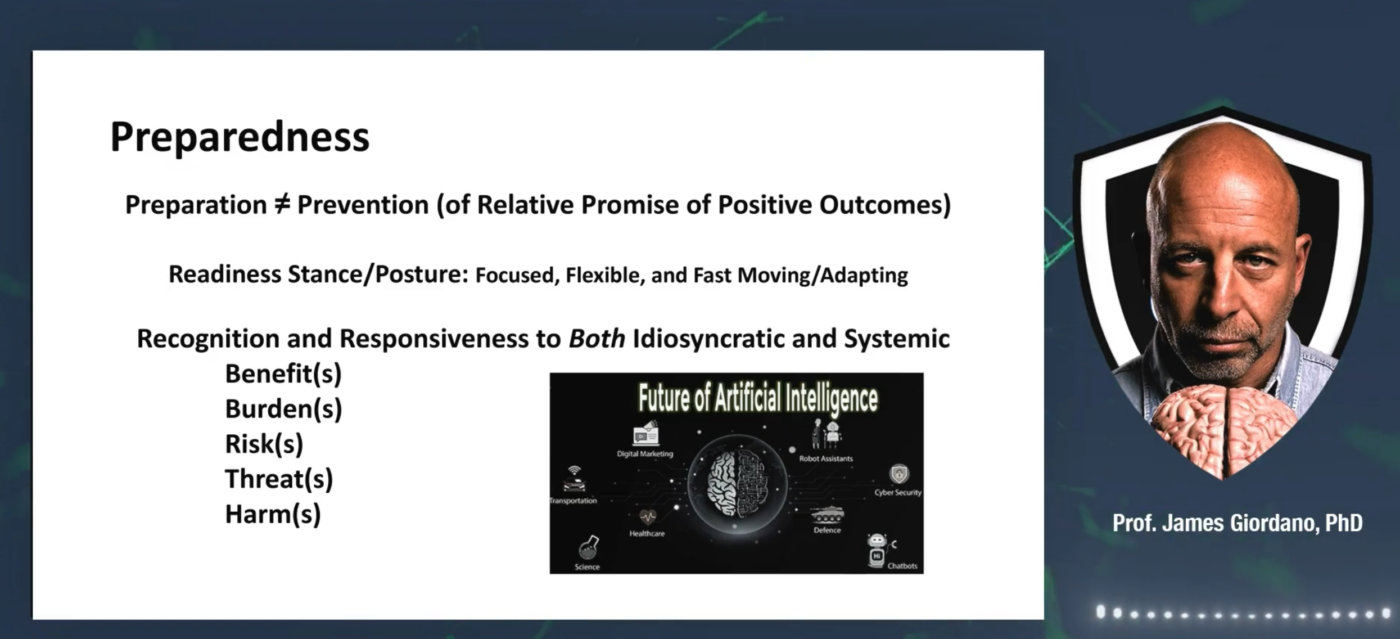
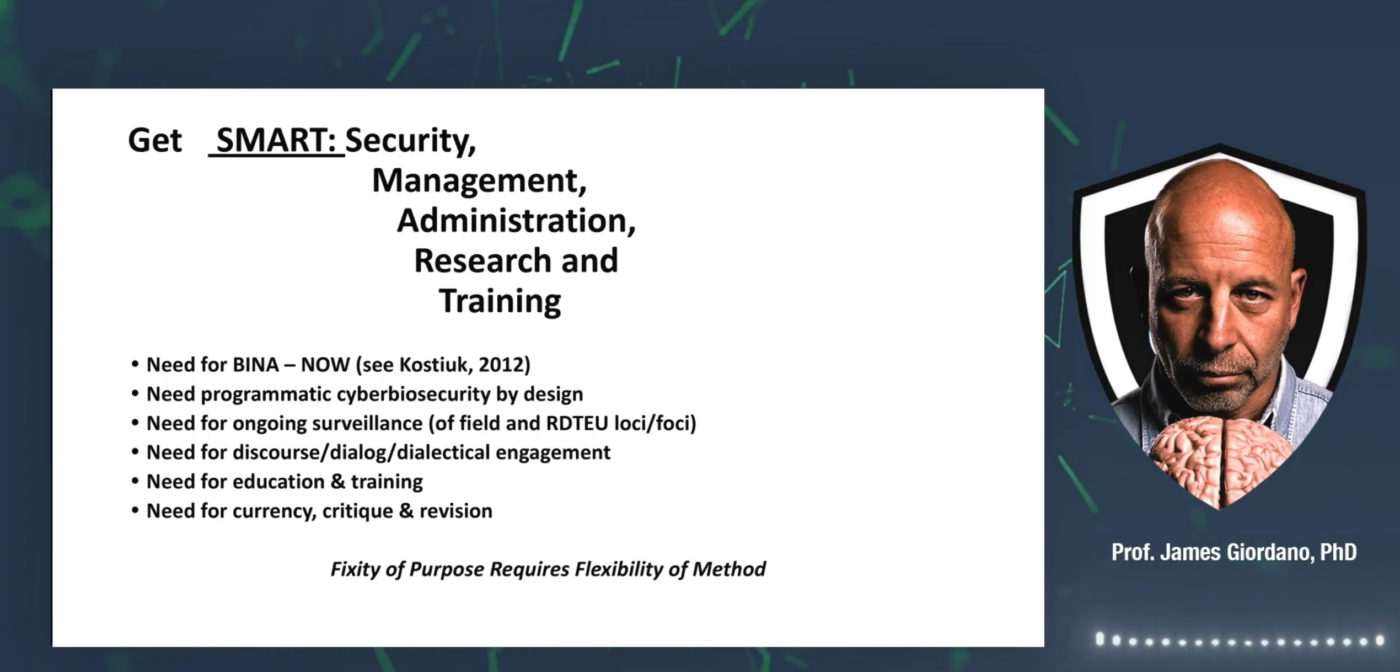
To address governance and technologically focal risks, Dr. Giordano introduces the RAMP (Risk Assessment and Mitigation Protocols) approach. This paradigm evaluates six core questions: availability, motivation, access, algorithms, mechanisms for retraction, and consequences. Ethical readiness rests on four pillars: cosmopolitan cognizance, the desiloing of national identities, pluralistic value integration, and pragmatic analysis. Security by design is required to protect the cyber-bio interface from exponential exploitation. The ultimate goal is a proactive preparedness process that balances global oversight with the unique requirements of local engagements.
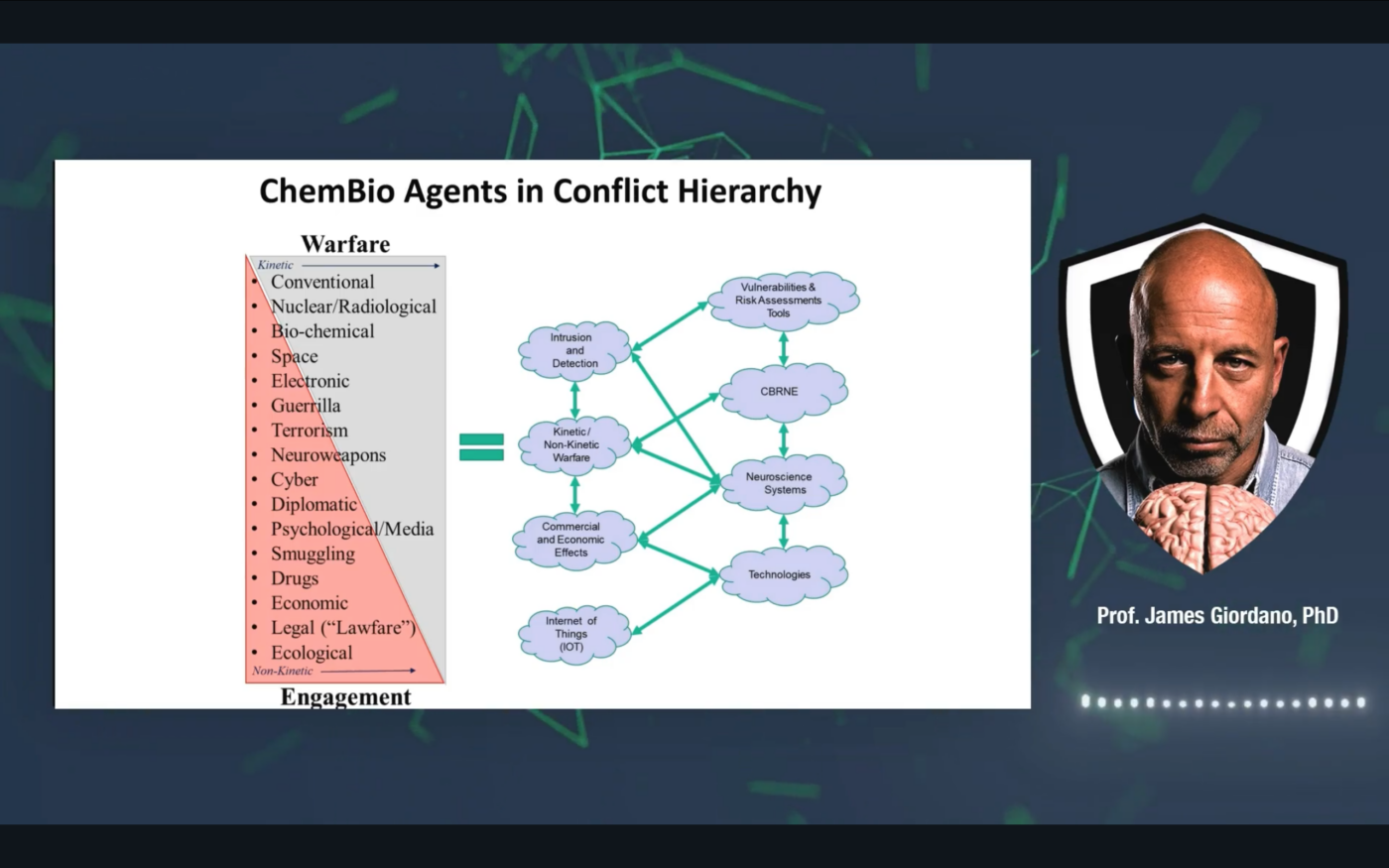
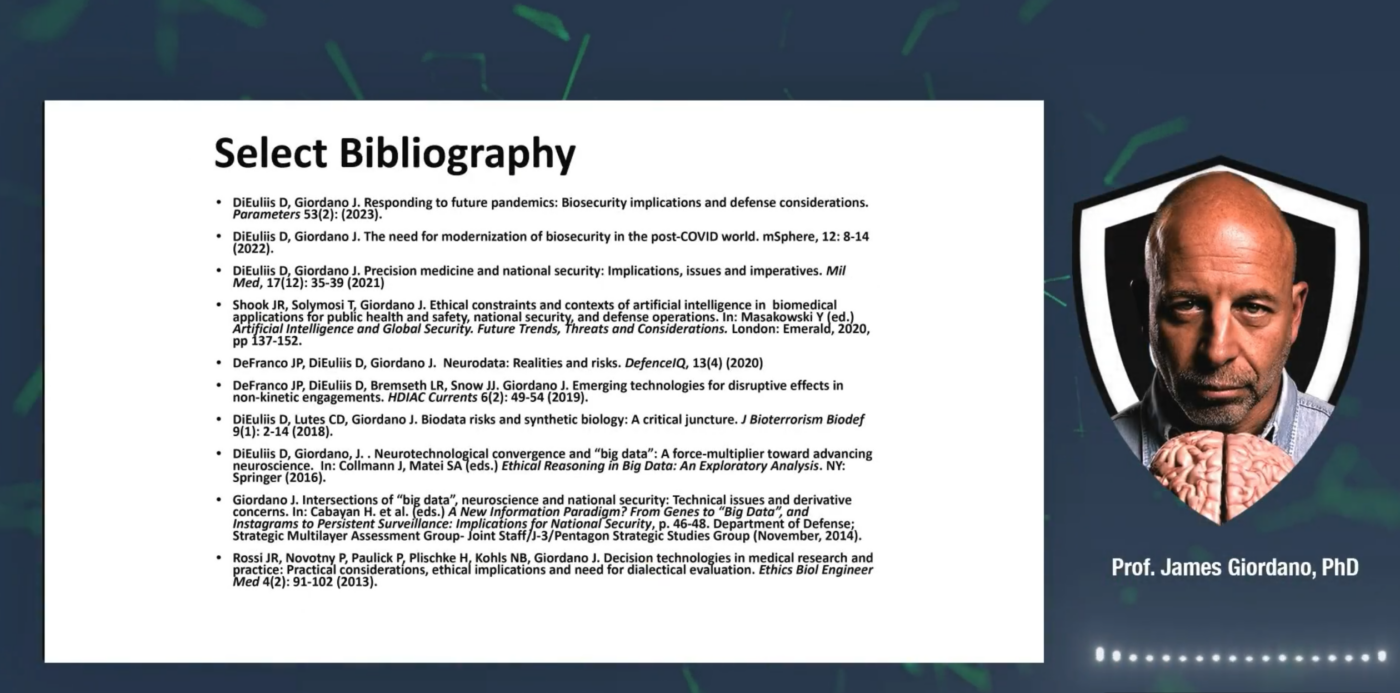
In this lecture for the Cognitive Security Institute, Dr. Giordano discusses the weaponization of neuroscience to engage the brain as the new battle-space, and the ethical issues that arise in and from these dual use developments. Find the slides for the lecture below.
In “Substrate Vulnerability: Neural Factors in Cognitive Security,” he discusses the neuro-biolgical structures and functions that can be targeted to render individuals and groups vulnerable to the tools, methods, and effects of cognitive warfare.
Dr James Giordano’s decades’ long work on cognitive warfare embraces a broad swath of the viable armamentarium that is usable in this domain.



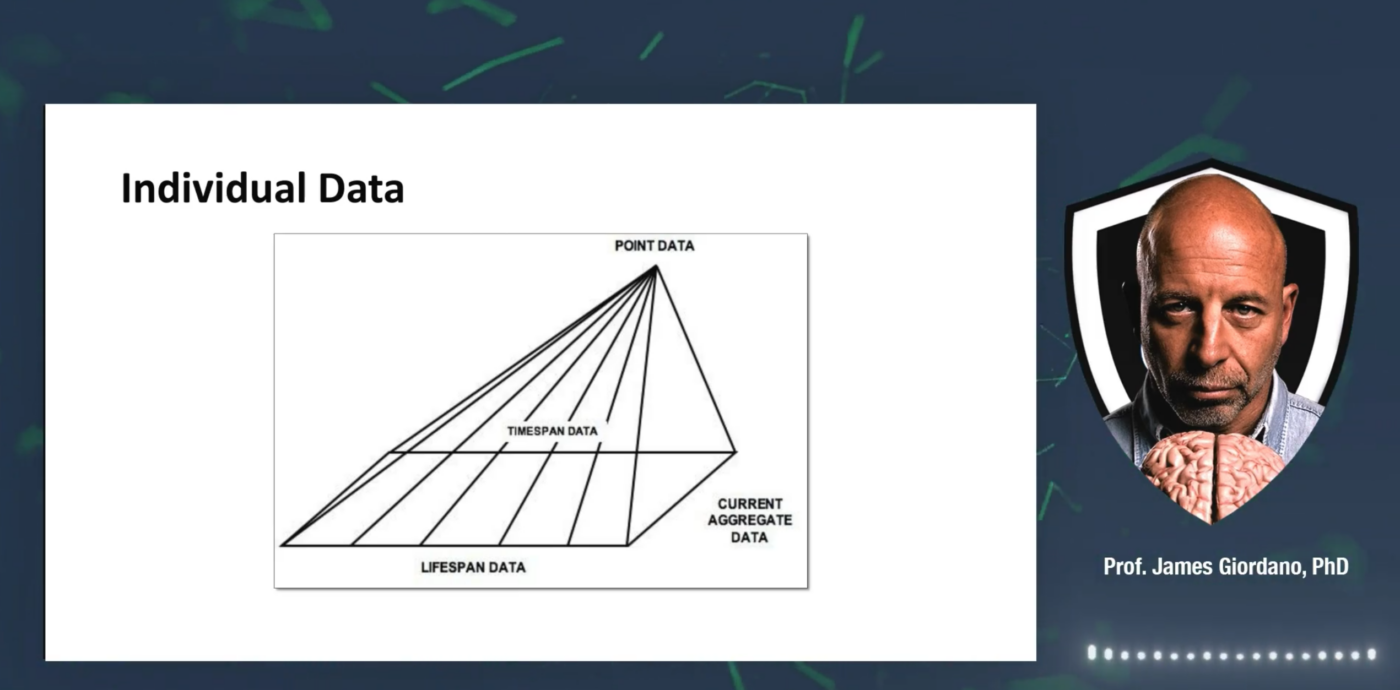
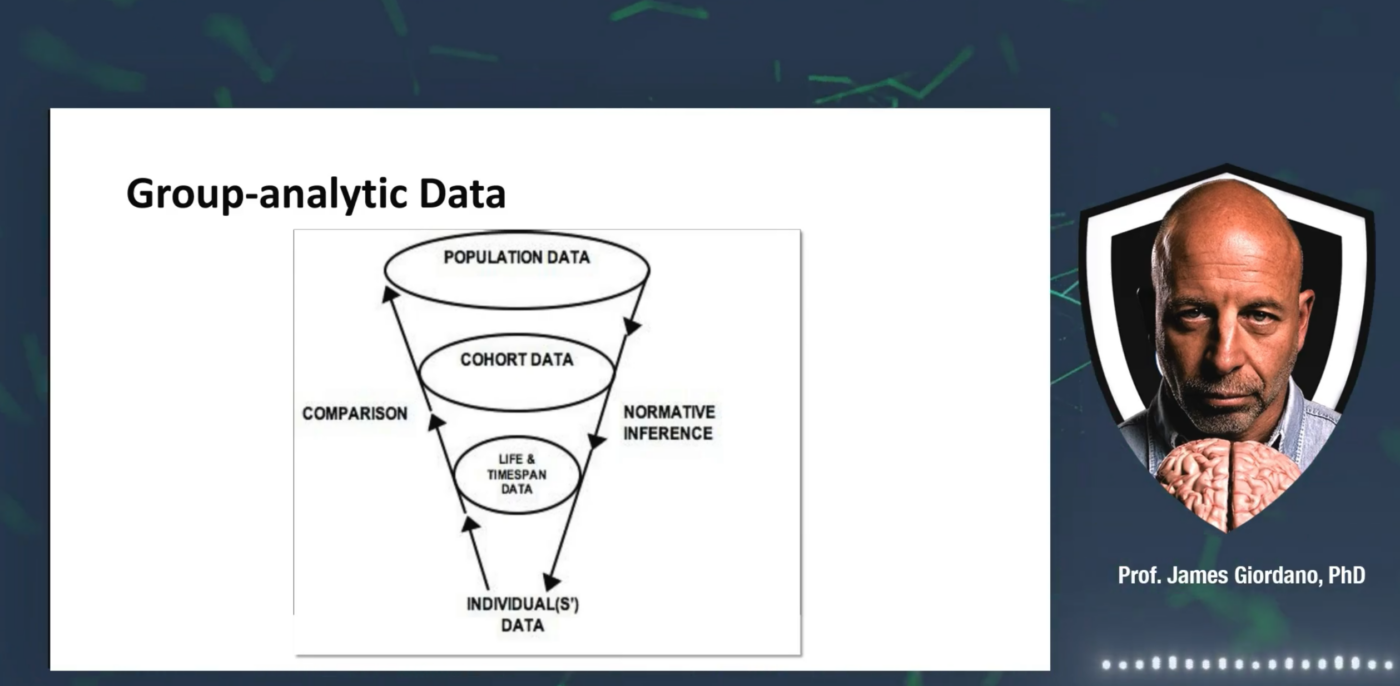
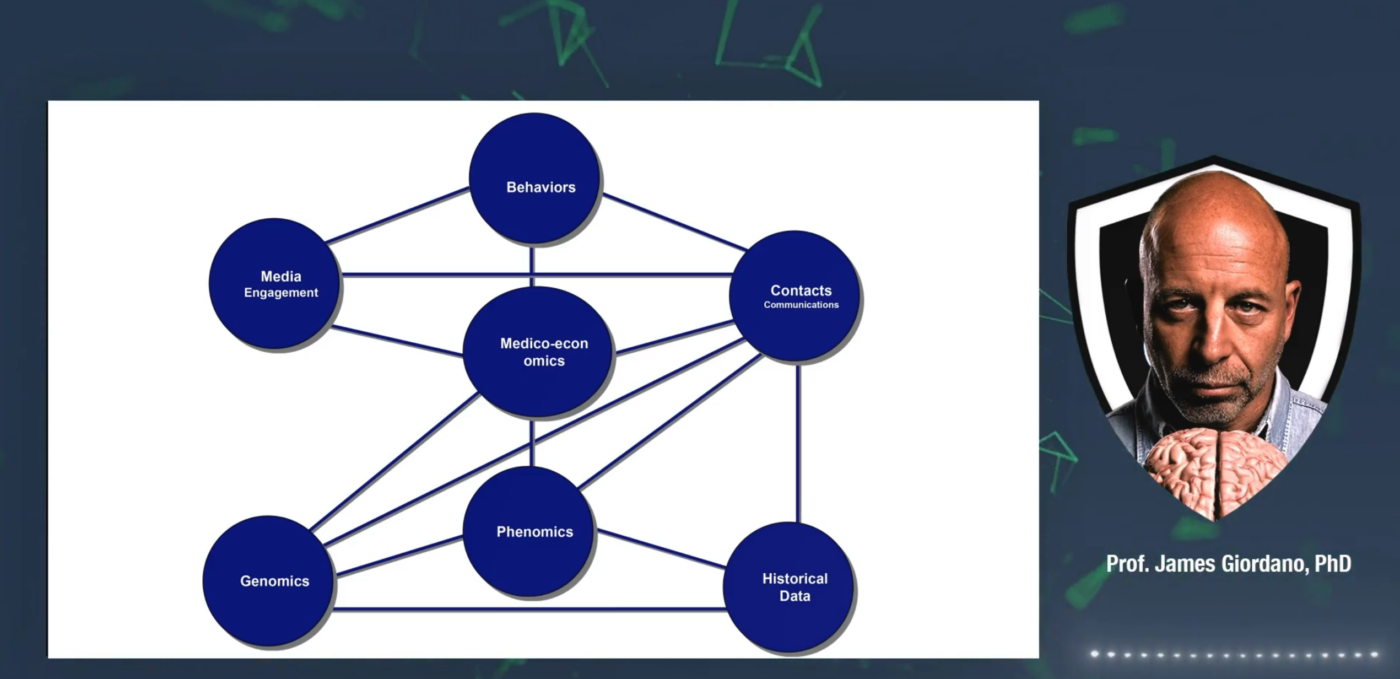


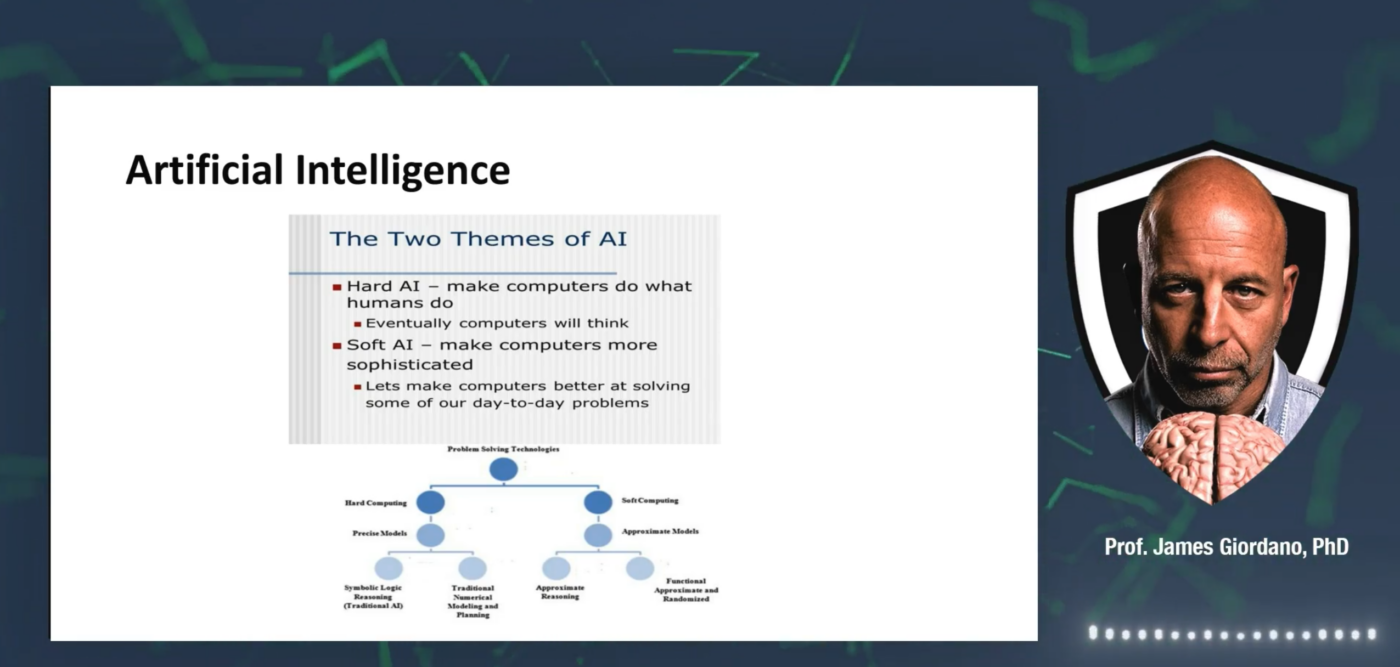







For background information about the use of neurotechnology in intelligence and warfare, see Dr. Giordano’s 2015 edited book, Neurotechnology in National Security and Defense: Practical Considerations, Neuroethical Concerns, which continues to serve as the seminal volume in the field, and be sure to see the second edition, forthcoming in Fall 2027.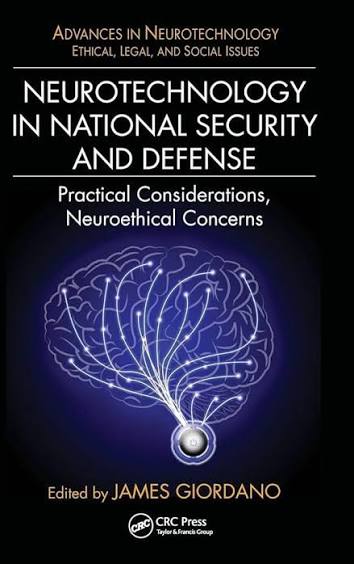

Related Posts