
Announcing a new article publication for BIO Integration Accurate localization of anatomical landmarks is crucial for clinical diagnosis and treatment assessment. However, existing Convolutional Neural Network (CNN)-based methods may result in global spatial information loss and consequent localization failures in the presence of complex anatomical structures or parenchymal abnormalities. Therefore, a method capable of modeling
An intelligent Deep Combined Vector Optimized Learner (DCOL) for plant leaf disease identification and class prediction – Scientific Reports
- Article
- Open access
- Published:
- K. Prakash1 &
- B. G. Geetha2
Scientific Reports (2026) Cite this article
We are providing an unedited version of this manuscript to give early access to its findings. Before final publication, the manuscript will undergo further editing. Please note there may be errors present which affect the content, and all legal disclaimers apply.
Abstract
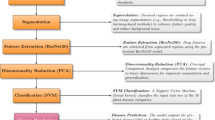
Plant leaf diseases significantly affect agricultural productivity, leading to substantial crop losses and economic impact. Early and accurate detection is essential for ensuring food security and enabling timely intervention. Existing approaches based on conventional image processing and standard deep learning models often suffer from limitations such as poor generalization, sensitivity to background variations, inadequate feature representation, and high misclassification rates in visually similar disease patterns. Moreover, numerous approaches depend on single-stage learning frameworks that inadequately capture both spatial and textural attributes of affected areas. This study introduces a hybrid framework called Deep Combined Vector Optimised Learner (DCOL) to tackle the issues of plant leaf disease diagnosis and classification. The proposed method integrates preprocessing using Nonlocal Means filtering for noise reduction, followed by segmentation using DeepLabv3 + with atrous spatial pyramid pooling to accurately isolate disease-affected regions. Texture-based features are extracted using the Gray-Level Co-occurrence Matrix (GLCM), while deep discriminative features are learned through a Deep Combined Spatial Attention Network (DCom-SAN) incorporating channel, spatial, and position attention mechanisms. These complementary features are fused and optimized using the Average Vector Weighted Optimization (AVWO) algorithm to enhance convergence and classification performance. The model is assessed using the publicly accessible Plant Village and Cotton Leaf datasets, attaining an accuracy of 99.26%, alongside enhanced precision, recall, and F1-score relative to conventional machine learning and deep learning methodologies, including SVM, VGG-16, ResNet-50, and EfficientNet. The findings indicate that the proposed DCOL framework offers enhanced feature representation, strong generalisation, and dependable disease classification, rendering it appropriate for practical use in agriculture.
Subjects
Funding
This research received no external funding.
Ethics declarations
Competing interests
The authors declare no competing interests.
Additional information
Publisher’s Note
Springer Nature remains neutral with regard to jurisdictional claims in published maps and institutional affiliations.
Rights and permissions
Open Access This article is licensed under a Creative Commons Attribution-NonCommercial-NoDerivatives 4.0 International License, which permits any non-commercial use, sharing, distribution and reproduction in any medium or format, as long as you give appropriate credit to the original author(s) and the source, provide a link to the Creative Commons licence, and indicate if you modified the licensed material. You do not have permission under this licence to share adapted material derived from this article or parts of it. The images or other third party material in this article are included in the article’s Creative Commons licence, unless indicated otherwise in a credit line to the material. If material is not included in the article’s Creative Commons licence and your intended use is not permitted by statutory regulation or exceeds the permitted use, you will need to obtain permission directly from the copyright holder. To view a copy of this licence, visit http://creativecommons.org/licenses/by-nc-nd/4.0/.
Reprints and permissions
About this article

Cite this article
Prakash, K., Geetha, B.G. An intelligent Deep Combined Vector Optimized Learner (DCOL) for plant leaf disease identification and class prediction. Sci Rep (2026). https://doi.org/10.1038/s41598-026-63851-y
Download citation
-
Received:
-
Accepted:
-
Published:
-
DOI: https://doi.org/10.1038/s41598-026-63851-y
Keywords

Related Posts