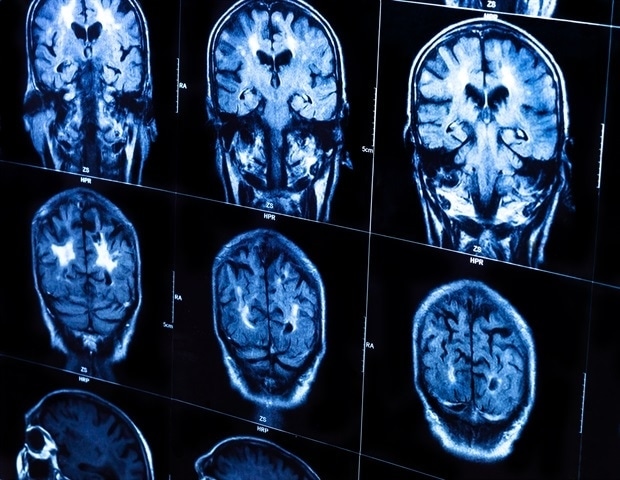
Announcing a new article publication for BIO Integration Accurate localization of anatomical landmarks is crucial for clinical diagnosis and treatment assessment. However, existing Convolutional Neural Network (CNN)-based methods may result in global spatial information loss and consequent localization failures in the presence of complex anatomical structures or parenchymal abnormalities. Therefore, a method capable of modeling
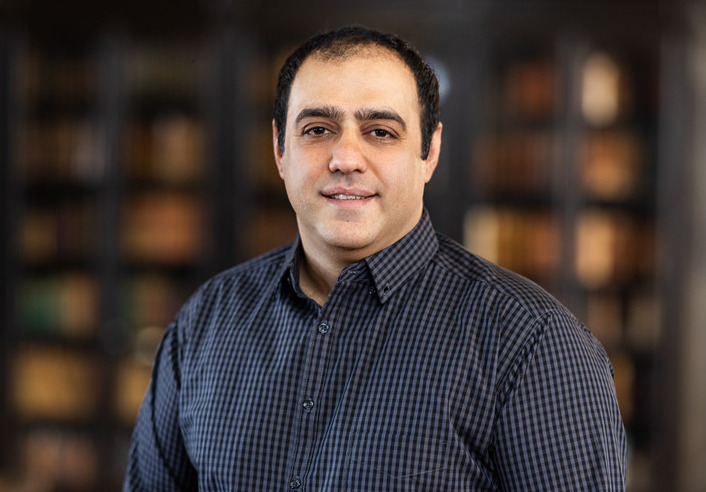
Mohammed Meysami: Using mathematics to build more trustworthy AI
New UTulsa faculty member Mohammed Meysami uses mathematics to make artificial intelligence more trustworthy and reliable. While AI can analyze data and answer questions quickly, it often does not explain how it reaches its conclusions or how confident it is in its answers. Meysami is creating mathematical frameworks that allow AI to estimate and report its level of confidence, helping users understand when results are solid and when caution is needed. This approach could improve decision-making in medicine, public health, environmental management and more.
Artificial intelligence is rapidly transforming how we work, make decisions and learn. A technology of endless possibilities, AI can create content, answer complex questions, write software and analyze vast amounts of data in seconds. But as its capabilities continue to advance, one challenge remains: trust. How can users be confident that AI outputs are accurate, unbiased and secure?
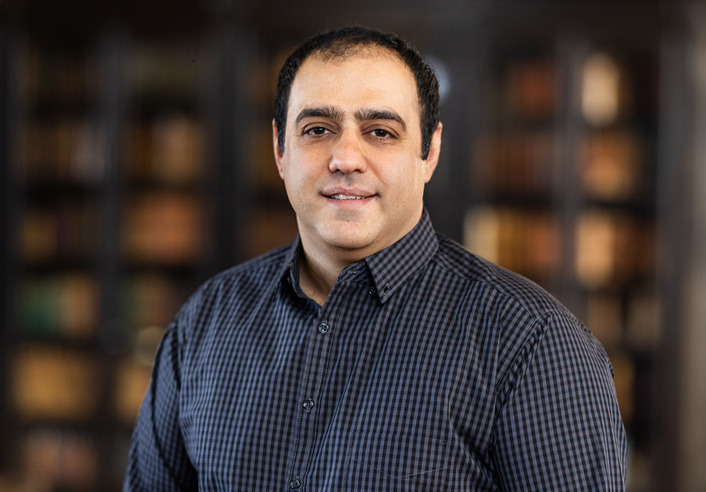
At The University of Tulsa, researchers are working to answer that question. For one of UTulsa’s newest faculty members, building more trustworthy artificial intelligence is about understanding the math behind it. As an associate professor of mathematics with a joint appointment in computer science, Mohammed Meysami brings a research program that bridges pure mathematical theory and cutting-edge applications in AI, machine learning and data science. He says math is not only the foundation of AI, but also the key to understanding why it works, why it fails and when it can be trusted.
“My research focuses on developing mathematical tools that help us make sense of complex data,” said Meysami. “These data often have structure in space, time and networks, and the challenge is determining whether the patterns we observe are meaningful or simply random.”
His work spans a wide range of applications. From identifying statistically significant disease clusters to interpreting satellite imagery that reveals the presence of invasive species, Meysami develops mathematical methods that can detect patterns as well as explain why the resulting models take the forms they do.
“Crucially, the methods themselves have ties to pure mathematics,” he explained. “Those connections allow us to address complicated real-world problems while simultaneously advancing mathematical theory.”
The heart of AI
As artificial intelligence becomes increasingly integrated into daily life, Meysami believes mathematics will play a vital role in answering important questions.
“Without mathematics, we can observe that AI works, but we cannot fully explain why,” he said. “Questions about when an AI system will generalize, when it will fail and when we should trust its answers are fundamentally mathematical questions.”
Many of those answers, he notes, may come from branches of mathematics developed decades or even centuries before modern AI emerged. Fields such as topology, measure theory and spectral graph theory are already providing new insights into machine learning and artificial intelligence.
“Pure mathematics is not just a tool for building AI,” Meysami said. “It is the language through which some of the deepest questions in AI can be answered.”
An interdisciplinary home
Meysami completed his Ph.D. in applied mathematics at the University of Colorado Denver. Before joining the faculty at UTulsa, he was an assistant professor in the Department of Mathematics at Clarkson University in New York. He says the opportunity to work in both mathematics and computer science made UTulsa an ideal fit.
“The rigor and theoretical foundations of mathematics, combined with the computational and applied perspective of computer science, have greatly benefited my research,” Meysami said. “I believe I do my best work in environments where different fields come together.”
That interdisciplinary mindset creates opportunities for collaboration throughout the College of Engineering & Computer Science. Meysami sees applications for mathematics and computer science across areas such as chemical, petroleum, mechanical and electrical engineering as well as cybersecurity.
“Some of the most exciting projects occur when engineering identifies a real-world problem, computer science develops methods for modeling and solving it, and mathematics establishes that those methods are theoretically sound,” he said. “That process often opens entirely new directions for improving and optimizing those solutions.”
Building trustworthy AI
Looking ahead, Meysami hopes his research will help address one of AI’s most pressing challenges: uncertainty. He points out that AI systems will often provide confident answers with relatively limited data. Meysami’s research aims to help AI systems better convey the uncertainty of their predictions.
“Even powerful AI models often struggle to distinguish between what they know and what they do not know,” he said. “In fields such as medicine, climate forecasting, public health and environmental policy, that uncertainty matters.”
Meysami is working to develop mathematical frameworks that allow AI systems to provide reliable estimates of confidence alongside their predictions. For example, this could be particularly useful in the case of satellite images that reveal the presence of invasive plant species, being able to convey to land managers that the AI is uncertain about specific areas can allow those managers to focus their removal efforts more effectively. Similarly, being able to convey uncertainty in the number of cases of an illness in a particular neighborhood can help public health officials determine whether they must respond to that “outbreak” or not.
“If we can create methods that quantify uncertainty and provide mathematical guarantees of their correctness, AI can be applied more responsibly to important societal problems,” he said.
As a new school year approaches, Meysami has ambitious goals to acquire additional funding for his research. He recently submitted a proposal titled “Statistical Framework for Uncertainty Quantification in Spatio-Temporal Graph Learning” to the National Science Foundation under the Methodology, Measurement and Statistics (MMS) program. Furthermore, he’s working to complete another proposal titled “Trajectory-Localized Compactness and Directional Stability for Generalizable, Calibrated, and Interpretable Deep Learning.”
The next generation of thinkers
In the classroom, Meysami hopes students learn more than skills and equations.
“I want students to become critical thinkers rather than simply users of existing technology,” he said. “There is a danger in AI research of treating systems as black boxes. Unless you understand why something works and where it fails, you cannot improve it.”
He encourages students to develop deep mathematical literacy and an appreciation for theory and application, giving them the flexibility to move between the two. That commitment to student success has already made an impression on campus.
“Dr. Meysami is an excellent addition to the math faculty,” said Amy Schachle, instructional associate professor and interim department head of mathematics. “Students have expressed that he is enthusiastic in the classroom and inspires them to enjoy learning statistics. His contributions and expertise in statistics and machine learning not only fill a need within the department but also offer new and essential research areas in modern applied mathematics at UTulsa.”
As AI continues to reshape industries and society, Meysami’s work highlights the enduring importance of mathematical thinking. By uncovering the principles that govern intelligent systems and helping students understand them, he is contributing to a future where AI is not only more powerful, but also more transparent and trustworthy.

Related Posts