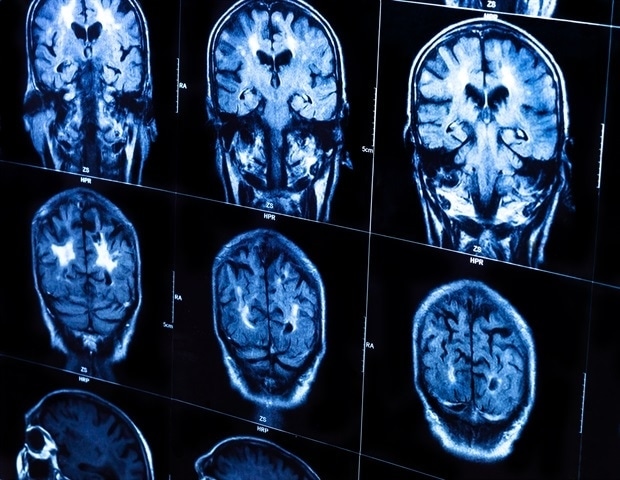
Announcing a new article publication for BIO Integration Accurate localization of anatomical landmarks is crucial for clinical diagnosis and treatment assessment. However, existing Convolutional Neural Network (CNN)-based methods may result in global spatial information loss and consequent localization failures in the presence of complex anatomical structures or parenchymal abnormalities. Therefore, a method capable of modeling global context while preserving local information is needed.
Leveraging the Transformer’s ability to capture long-range dependencies, the authors of this article propose a novel landmark localization framework, Res-SwinFusion, which integrates a Swin Transformer and a classical CNN backbone in parallel. To effectively merge their complementary features, a feature interactive aggregation module was designed that fuses semantic representations from both branches. Additionally, a discrimination feature guidance module was introduced to provide pixel-level cues and disambiguate landmark locations. The effects of various Gaussian heatmap settings on convergence were further analyzed.
Res-SwinFusion achieved strong performance across three anatomical landmark localization datasets. The mean radial errors were 1.04 mm and 1.37 mm on two public cephalogram test sets, 0.63 mm on a public hand X-ray dataset, and 1.44 mm on an internal pelvic X-ray dataset. Ablation studies indicated that Transformer-based global modeling, feature interactive aggregation, and discrimination feature guidance each contributed to improved localization accuracy.
The proposed Res-SwinFusion framework offers a solution for anatomical landmark localization with enhanced robustness and precision by combining global contextual modeling and local feature preservation.
Source:
Journal reference:
Zhang, H., et al. (2026) A Deep Learning System for Automatic Localization of Anatomical Landmarks in X-rays to Assist in Diagnosis and Surgical Planning. BIO Integration. DOI: 10.15212/bioi-2026-0075. https://www.scienceopen.com/hosted-document?doi=10.15212/bioi-2026-0075