
It dawned on me in early March this year, on the Caribbean island of Barbados, of all places. Konrad Kording, in swimming trunks, stood in front of about 30 PIs with backgrounds mostly in neuroscience and machine learning and live-demoed Claude Code, using a projector hardly visible in the broad daylight. He asked Claude to

AI Inference Market
Report Overview
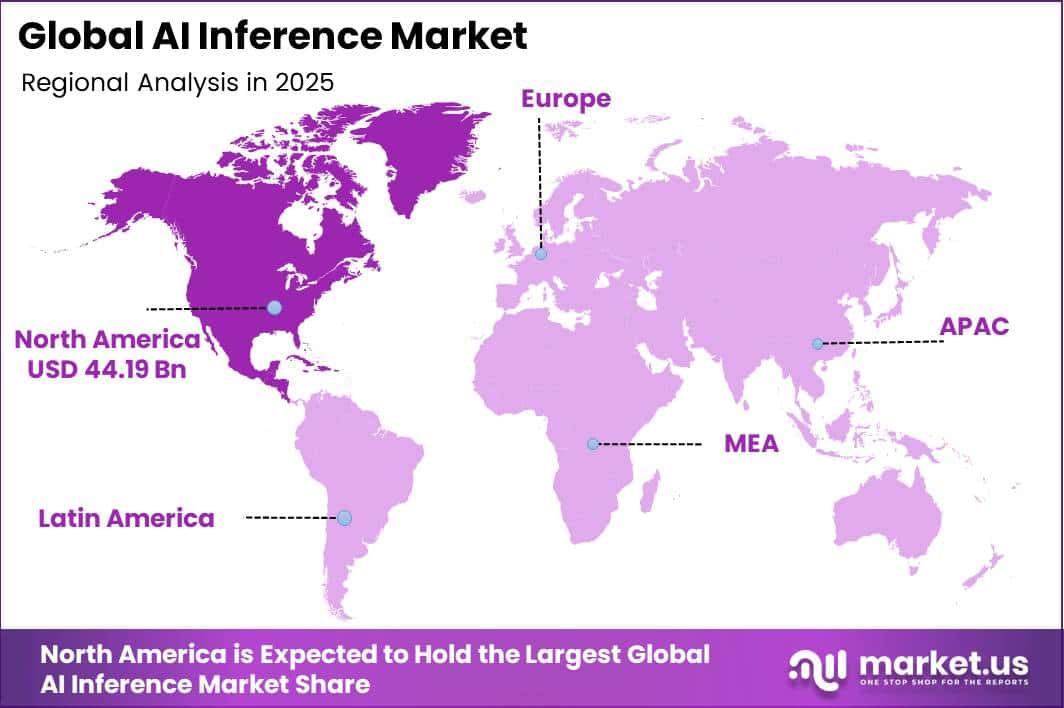
In 2025, the Global AI Inference Market was valued at USD 108.05 billion. The market is projected to grow at a CAGR of 16.6% during 2026–2035, reaching approximately USD 513.1 billion by 2035. North America dominated the global market in 2025, accounting for more than 40.9% of the total market share and generating approximately USD 44.1 billion in revenue.
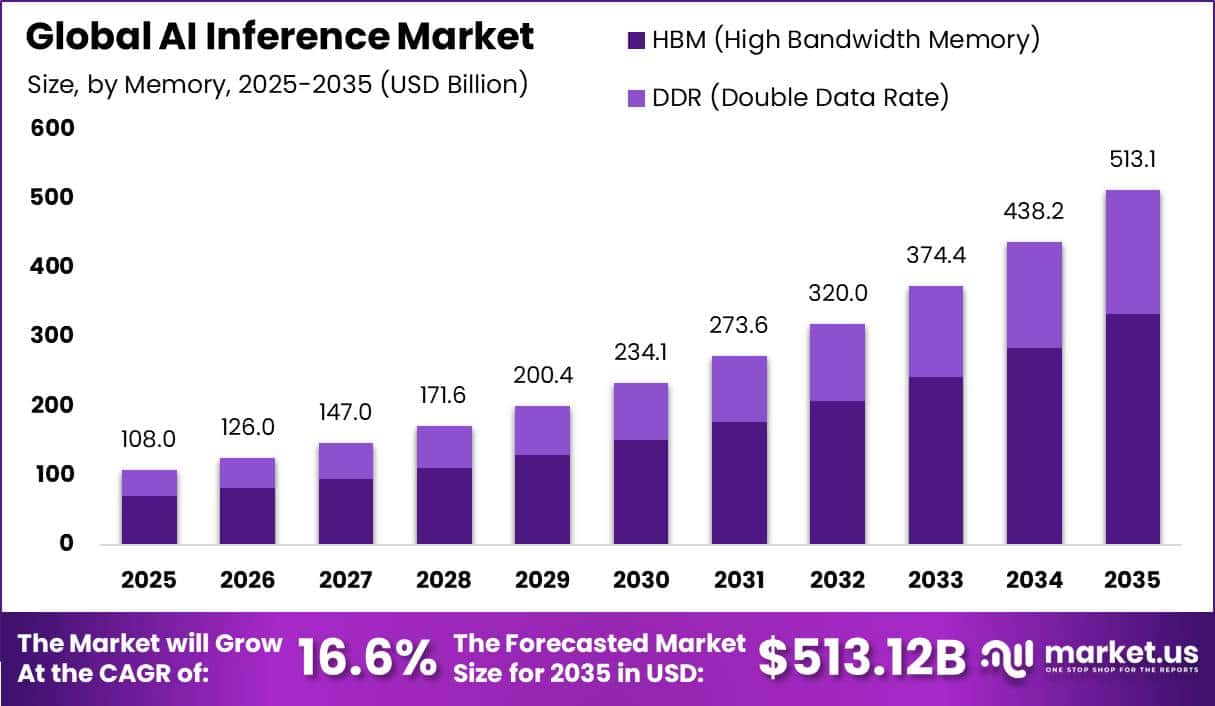
Growth is being driven by companies moving AI from pilot projects into everyday business operations. AI inference lets trained models answer questions, analyse images, detect fraud, support customer service, recommend products, and support business decisions. As these applications scale, demand rises for AI chips, cloud computing, model-hosting platforms, servers, and energy-efficient infrastructure.
Stanford University reported that global private investment in generative AI reached USD 33.9 billion in 2024, increasing 18.7% year over year. At the same time, the cost of processing 1 million tokens at GPT-3.5-level performance dropped from USD 20 in November 2022 to just USD 0.07 by October 2024, representing a decline of more than 280-fold.
U.S. private AI investment reached USD 109.1 billion in 2024, nearly 12 times China’s USD 9.3 billion and 24 times the United Kingdom’s USD 4.5 billion. The United States also represented 45% of global data-centre electricity consumption in 2024. Worldwide data centres consumed about 415 TWh of electricity in 2024, with demand expected to reach around 945 TWh by 2030, supporting continued investment in AI inference infrastructure.
Key Takeaway
- The AI Inference Market was valued at USD 108.05 billion in 2025 and is projected to reach USD 513.12 billion by 2035, growing at a 16.6% CAGR.
- By compute, GPUs dominated with a 51.55% share, while Other ASICs were the fastest-growing device segment.
- By memory, HBM led with a 65.0% share, while DDR was the fastest-growing memory segment.
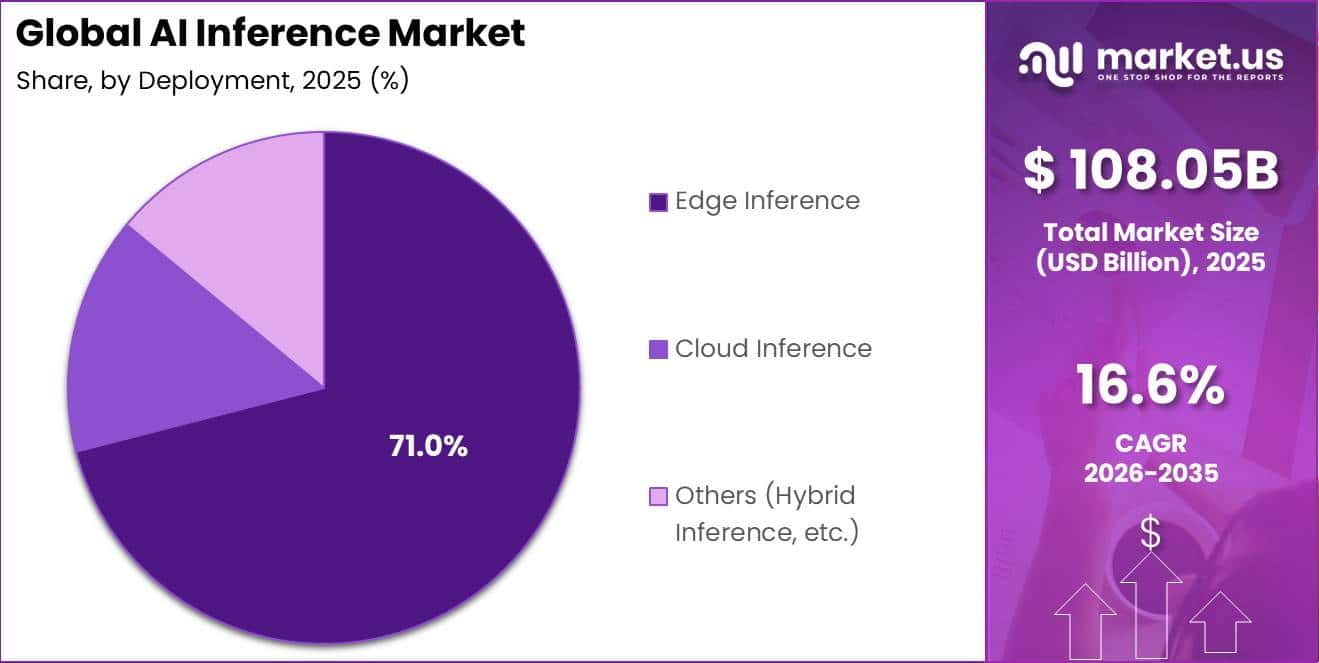
- By deployment, Edge Inference dominated with a 71% share and was also the fastest-growing deployment model.
- By application, Machine Learning led with a 36.85% share, while Generative AI was the fastest-growing application.
- By end user, IT and Telecommunications led with a 26.10% share, while Manufacturing was the fastest-growing end-user segment.
- North America led the market in 2025 with a 40.9% share and USD 44.19 billion in revenue.
Market Statistics and Data Insights
- In 2025, 20.0% of EU enterprises with at least 10 employees used AI, up 6.5 percentage points from 13.5% in 2024. Adoption reached 55.03% among large enterprises, 30.36% among medium enterprises, and 17% among small enterprises. This shows that inference workloads are becoming increasingly embedded in normal business operations.
- Among EU companies already using AI in 2025, 34.70% used it for marketing or sales, while 31.05% used it for administration or management. Among large AI-using enterprises, 47.51% used AI for ICT security and 33.46% for production processes. These are recurring inference-heavy business functions.
- A 2026 U.S. Census Bureau study found that 18% of firms used AI in a business function, rising to 32% on an employment-weighted basis. Among AI-using firms, 52% used it in sales and marketing, 45% in strategy and business development, and 41% in IT.
- The same Census study found that 23% of firms had workers using AI for work-related tasks, increasing to 41% on an employment-weighted basis. About 66% of users relied on AI only to augment existing tasks, while AI-related employment decreases were reported by just 2% of firms.
- Eurostat reported that 32.7% of people aged 16–74 in the EU used generative AI tools in 2025. Around 25.1% used them for personal purposes, 15.1% for work, and 9.4% for formal education. Every prompt or generated output represents an inference event.
- Generative AI adoption was much higher among younger consumers. In 2025, 63.8% of EU residents aged 16–24 used generative AI, compared with 32.7% among the overall 16–74 population. Among young people, 44.2% used AI for private purposes and 39.3% for education.
- Microsoft telemetry showed global generative-AI adoption reaching 16.3% of the population in the second half of 2025, up from 15.1% in the first half. Adoption reached 24.7% in the Global North compared with 14.1% in the Global South.
- At the end of 2025, generative-AI adoption among the working-age population reached 64.0% in the UAE, 60.9% in Singapore, 46.4% in Norway, 44.6% in Ireland, 44.0% in France, and 28.3% in the United States.
- MLPerf Inference v5.0 introduced the Llama 3.1 405B benchmark with 405 billion parameters and context lengths of up to 128,000 tokens, compared with 4,096 tokens for the Llama 2 70B benchmark. Submissions for Llama 2 70B increased 2.5 times in one year, while the best benchmark result became 3.3 times faster.
- ITU reported 5.5 billion internet users in 2024, representing 68% of the global population, with 227 million additional users compared with revised 2023 estimates. Around 79% of people aged 15–24 were online.
- The IEA reported that data centres consumed around 1.5% of global electricity in 2024. A conventional data centre typically uses around 10–25 MW, while an AI-focused hyperscale facility can require 100 MW or more, approximately equal to the annual electricity use of 100,000 households.
By Compute
GPUs dominated the AI inference market with a 51.5% share, supported by their strong parallel-processing capability and broad software ecosystem. They can efficiently handle language, vision, speech, recommendation, scientific AI, and other workloads while allowing companies to adjust systems as models and data requirements change.
This flexibility makes GPUs suitable for cloud providers and enterprises running different AI applications on the same infrastructure. MLCommons’ MLPerf Inference v5.0 benchmark tested GPU-based systems across large language models, image generation, recommendation, computer vision, and medical imaging. It also introduced the 405-billion-parameter Llama 3.1 model, highlighting the growing need for high-memory and multi-GPU inference systems.
Other ASICs are the fastest-growing device segment as purpose-built chips, including TPUs and inference accelerators, can reduce power consumption and cost per query for large, repeat workloads. Google Cloud reported that its sixth-generation Trillium TPU provides 4.7 times higher peak compute performance per chip than TPU v5e.
For inference workloads, it delivered more than 3 times higher Stable Diffusion XL image throughput and nearly 2 times the Llama 2 70B token throughput of TPU v5e, strengthening the use of ASICs in dedicated AI deployments.
By Memory
HBM dominated the AI inference memory market with a 65.0% share, mainly because large AI models require very high memory bandwidth to move model parameters quickly between memory and AI accelerators. HBM uses stacked DRAM placed close to the processor, allowing much faster data transfer than standard server memory and reducing inference delays.
Micron’s volume-produced HBM3E provides more than 1.2 TB/s of bandwidth per stack and operates at over 9.2 Gb/s per pin. Its 24 GB, eight-layer HBM3E configuration also supports dense accelerator systems used for large language models, image generation, and recommendation workloads.
DDR is the fastest-growing memory segment because AI inference servers also require large and expandable memory capacity for CPUs, vector databases, model caching, data preparation, and multi-user workloads. JEDEC’s DDR5 standard supports DRAM devices ranging from 8 Gb to 32 Gb, while updated specifications support speeds of up to 6,400 MT/s.
Micron has also shipped 128 GB DDR5 registered DIMMs operating at up to 5,600 MT/s, while high-capacity server systems can support as much as 6 TB of memory. This combination of scalability, compatibility, and lower cost is supporting wider DDR adoption in AI inference infrastructure.
By Deployment
Edge inference dominated the AI inference deployment segment with a 71% share and is also the fastest-growing model, mainly because many AI applications require immediate processing close to where data is created. Sending video, sensor, voice, or machine data to distant cloud servers can increase latency, bandwidth costs, and data-security concerns.
Edge processors allow robots, cameras, vehicles, factory equipment, and smartphones to analyse information locally and respond in real time. The International Federation of Robotics reported 542,076 industrial robot installations in 2024, while the global operational stock reached 4.6 million units.
Growing connectivity is further supporting edge inference adoption. GSMA reported that global 5G connections exceeded 2 billion at the end of 2024. Enterprise IoT connections are also expected to increase from 10.7 billion to 38.5 billion by 2030, representing more than a 3-fold expansion.
By Application
Machine learning dominated the AI inference market with a 36.8% share, supported by its wide use in fraud detection, demand forecasting, product recommendations, quality inspection, risk analysis, and predictive maintenance. These applications continuously process business, transaction, sensor, and image data, creating steady demand for AI inference systems.
Eurostat reported that 13.5% of EU enterprises with at least 10 employees used AI in 2024, up from 8.0% in 2023. Among AI-using companies, 34.1% applied AI in marketing or sales, while 27.5% used it for administration or management.
Generative AI is the fastest-growing application because every prompt, response, code suggestion, image, or summary requires real-time inference. Stanford University’s 2025 AI Index reported that 71% of surveyed organisations used generative AI in at least 1 business function in 2024, more than double the 33% recorded in 2023.
Eurostat also found that 31.7% of AI-using EU enterprises generated text, speech, or program code in 2025, while 35.0% used text-mining tools. Rising user volumes and longer AI outputs increase computing and memory requirements, supporting rapid growth in generative AI inference demand.
By End User
IT and telecommunications dominated the AI inference market with a 26.1% share, supported by the sector’s large network, cloud, data-centre, and digital-service infrastructure. The International Telecommunication Union estimated that 5.5 billion people, or 68% of the global population, were online in 2024, including 227 million new users added within 1 year.
This expanding digital population increases the use of AI for traffic management, recommendations, customer support, fraud detection, cybersecurity, and network monitoring. Telecom operators also use real-time inference to optimise network capacity, detect faults, and improve service quality, driving demand for inference chips, servers, and software.
Manufacturing is the fastest-growing end-user segment as factories increasingly use AI for real-time production decisions. The International Federation of Robotics reported that 542,076 industrial robots were installed globally in 2024, bringing the operational stock to 4.6 million units. These systems use AI inference for machine vision, defect detection, worker safety, predictive maintenance, and robotic guidance.
Key Market Segments
By Compute
- GPU
- CPU
- FPGA
- NPUs
- TPU
- FSD
- Inferentia
- T-head
- MTIA
- LPU
- Other ASIC
By Memory
- HBM (High Bandwidth Memory)
- DDR (Double Data Rate)
By Deployment
- Edge Inference
- Cloud Inference
- Others (Hybrid Inference, etc.)
By Application
- Generative AI
- Rule-Based Models
- Statistical Models
- Deep Learning
- Generative Adversarial Networks (GANs)
- Autoencoders
- Convolutional Neural Networks (CNNs)
- Transformer Models
- Machine Learning
- Natural Language Processing (NLP)
- Computer Vision
By End User
- BFSI
- Healthcare
- Retail and E-commerce
- Automotive
- IT and Telecommunications
- Manufacturing
- Security
- Others
Geopolitical Impact Analysis
Geopolitical risks are raising costs, delivery times, and supply uncertainty across the AI inference hardware chain, including GPUs, ASICs, HBM and DDR memory, servers, networking equipment, cooling systems, and advanced packaging materials. The International Energy Agency reported that China is the leading refiner for 19 of 20 strategic minerals, with an average share of around 70%. Its share exceeds 90% for gallium, graphite, manganese, and rare earths.
China introduced export controls on gallium and germanium in 2023, restricted gallium, germanium, and antimony exports to the United States in December 2024, and added controls on tungsten, tellurium, bismuth, indium, and molybdenum in early 2025. At the same time, the U.S. 50% Section 301 duty on Chinese semiconductors took effect on 1 January 2025, increasing sourcing and inventory costs.
Shipping disruptions are adding further pressure. UNCTAD estimates that rerouting around Africa adds about 12 days to Asia-Europe voyages, increasing transit time by roughly 30% and reducing effective global container capacity by around 9%. Suez Canal transits fell 42% from their 2023 peak, while Gulf of Aden ship tonnage dropped more than 70% between mid-December 2023 and mid-February 2024.
Cape of Good Hope arrivals increased 85% by early March 2024. The China Containerized Freight Index rose around 120% from October 2023 to June 2024, while Shanghai-Europe spot rates increased 256% to USD 2,648 per TEU on 9 February 2024. World Shipping Council data also showed Cape transits rising 191% in 2024 versus 2023, with about 200 containers lost around the Cape, increasing logistics and deployment risks for AI-inference suppliers.
Regional Analysis
North America dominated the global AI inference market in 2025, capturing a 40.9% share and generating around USD 44.1 billion in revenue. The region benefits from a strong presence of hyperscale cloud providers, semiconductor companies, enterprise software developers, and large AI users across banking, healthcare, retail, defence, and telecommunications. The United States remains the main growth centre.
Stanford University’s AI Index reported that U.S.-based institutions developed 40 notable AI models in 2024, compared with 15 in China and 3 in Europe. This strong model-development ecosystem creates continuous inference demand as AI systems move into commercial applications such as customer support, search, coding, cybersecurity, fraud detection, and recommendation platforms.
Asia Pacific is expected to be the fastest-growing region, supported by rapid cloud expansion, industrial automation, and rising digital consumption. The OECD estimates that Southeast Asia’s data-centre capacity demand could increase around 3 times between 2023 and 2030, while AI-compute demand may rise 10 times during the same period.
The World Bank also reported that technology adoption created around 2 million skilled jobs in East Asia and the Pacific between 2018 and 2022, while robots displaced approximately 1.4 million routine and low-skilled jobs. Growing investment in AI servers, accelerators, memory, networking, and edge systems is therefore strengthening the region’s long-term inference market growth.
Key Regions and Countries
North America
- US
- Canada
Europe
- Germany
- France
- The UK
- Spain
- Italy
- Rest of Europe
Asia Pacific
- China
- Japan
- South Korea
- India
- Australia
- Rest of APAC
Latin America
- Brazil
- Mexico
- Rest of Latin America
Middle East & Africa
- GCC
- South Africa
- Rest of MEA
Market Dynamics
Drivers
Enterprise AI production rollout
Enterprise AI production rollout is the strongest growth driver because AI models create recurring inference demand once they move from testing into daily business use. Stanford University reported that 78% of surveyed organisations used AI in 2024, up from 55% in 2023, while generative AI use in at least one business function increased to 71% from 33%.
Eurostat reported that 20.0% of EU enterprises with at least 10 employees used AI in 2025, up 6.5 percentage points from 2024. U.S. business AI adoption also reached around 18% by year-end 2025. Rising production use could contribute about +3.1% to the market’s 16.60% baseline CAGR by increasing demand for model serving, retrieval systems, and high-throughput inference capacity.
Restraints
Advanced chip export licensing
Advanced chip export controls are a key restraint on AI inference sales because they limit the shipment of high-performance accelerators, servers, and related AI technologies to certain markets. The U.S. BIS advanced-computing rules became effective on January 13, 2025, requiring licenses for covered exports, re-exports, and transfers.
These restrictions can delay orders, increase compliance costs, and force suppliers to modify products for different markets. As a result, export controls could reduce the market’s 16.6% baseline CAGR by around -2.3% in affected regions. Although the earlier AI Diffusion Rule was rescinded on May 13, 2025, additional semiconductor-control measures kept the regulatory environment restrictive and uncertain.
Challenges
Power and cooling bottlenecks
Power and cooling constraints remain a major challenge for AI inference growth because new server capacity depends on available electricity, grid connections, and cooling infrastructure. Global data centres consumed about 415 TWh of electricity in 2024, equal to around 1.5% of worldwide power use, and demand could reach nearly 945 TWh by 2030.
U.S. data centres used roughly 180 TWh in 2024, while additional demand through 2030 could reach around 240 TWh. This increases spending on substations, backup power, liquid cooling, and grid upgrades, which can delay new capacity and raise operating costs. These constraints could reduce the market’s maximum growth potential by about -2.0%.
Opportunities
Sovereign AI inference platforms
Sovereign AI inference platforms offer a major untapped opportunity, as many countries and regulated industries still lack locally controlled model-serving infrastructure. The European Commission’s rules for general-purpose AI model providers took effect on August 2, 2025, increasing requirements for technical documentation, copyright compliance, and transparency. This supports demand for regional hosting and auditable AI inference services.
The World Bank reports that China, India, and low- and middle-income countries represent about 48% of the global population but only around 4% of AI start-ups and less than 1% of AI funding, generative-AI patents, and notable models. OECD data also show that Asian markets host more than 50% of listed companies and around one-third of global market capitalisation. Local data controls and shared AI infrastructure could therefore add about +2.7% upside to the 16.60% baseline CAGR.
Key Players Analysis
The AI inference market is led by Tier-1 infrastructure and semiconductor companies, with NVIDIA holding the strongest position in AI accelerators. NVIDIA generated USD 193.7 billion in fiscal 2026 Data Center revenue, representing about 90% of its USD 215.9 billion total revenue. The company also invested USD 18.5 billion in R&D and USD 6.1 billion in capital expenditure.
Based on its data-centre revenue and accelerator installed base, NVIDIA is estimated to represent more than 50% of accelerator-led inference infrastructure spending. AMD remains a major Tier-1 competitor, with 2025 Data Center revenue of USD 16.6 billion, up 32%, and R&D spending of USD 8.1 billion.
AWS, Google, Microsoft, Meta, and Huawei are also major Tier-1 buyers and operators. AWS generated USD 128.7 billion in 2025 sales, while Google Cloud reached USD 58.7 billion. Alphabet spent USD 91.4 billion on capital expenditure, with about 60% directed toward servers and 40% toward data centres and networking.
Microsoft invested USD 32.5 billion in R&D during fiscal 2025. Meta recorded USD 69.7 billion in capital expenditure and USD 57.4 billion in R&D in 2025. Tier-2 players such as Cerebras, Groq, d-Matrix, Mythic, Untether AI, and Esperanto compete through specialised inference chips focused on lower latency and energy use.
Top Key Players in the Market
- Amazon Web Services, Inc.
- Arm Limited
- Advanced Micro Devices, Inc.
- Google LLC
- Intel Corporation
- Microsoft Corporation
- Mythic Inc.
- NVIDIA Corporation
- Qualcomm Incorporated
- Sophos Ltd.
- SK Hynix Inc.
- Samsung
- Cerebras Systems Inc.
- Groq Inc.
- Huawei Technologies Co., Ltd.
- d-Matrix Corp.
- Untether AI Corporation
- Esperanto Technologies Inc.
- IBM Corporation
- Meta Platforms, Inc.
Recent Developments
- In 2026, NVIDIA invested USD 2.0 billion in Nebius Group under a strategic partnership announced on March 11, 2026, to expand full-stack AI cloud infrastructure. The companies are working on AI factories, accelerated computing, storage, software, and inference platforms, while supporting Nebius’s plan to deploy more than 5 GW of NVIDIA systems by the end of 2030.
- In 2026, Samsung Electronics and Broadcom signed an expanded strategic collaboration on July 25, 2026, covering advanced memory, foundry, and chip-packaging technologies. The companies estimate the collaboration at more than USD 200 billion over the next 5 years through 2030. It includes HBM for Broadcom’s AI accelerators, Samsung’s 2-nanometer and below foundry processes, and 2.3D and 2.5D packaging, supporting higher-performance and more power-efficient AI inference hardware.
Report Scope

Related Posts


