
Report Overview In 2025, the Global AI Inference Market was valued at USD 108.05 billion. The market is projected to grow at a CAGR of 16.6% during 2026–2035, reaching approximately USD 513.1 billion by 2035. North America dominated the global market in 2025, accounting for more than 40.9% of the total market share and generating

Google TPU Father Overnight Poached by Anthropic: Industry-Shifting AI Talent Move
Did the father of Google TPU jump to Anthropic?
First thing this morning, this news went viral across the AI circle.
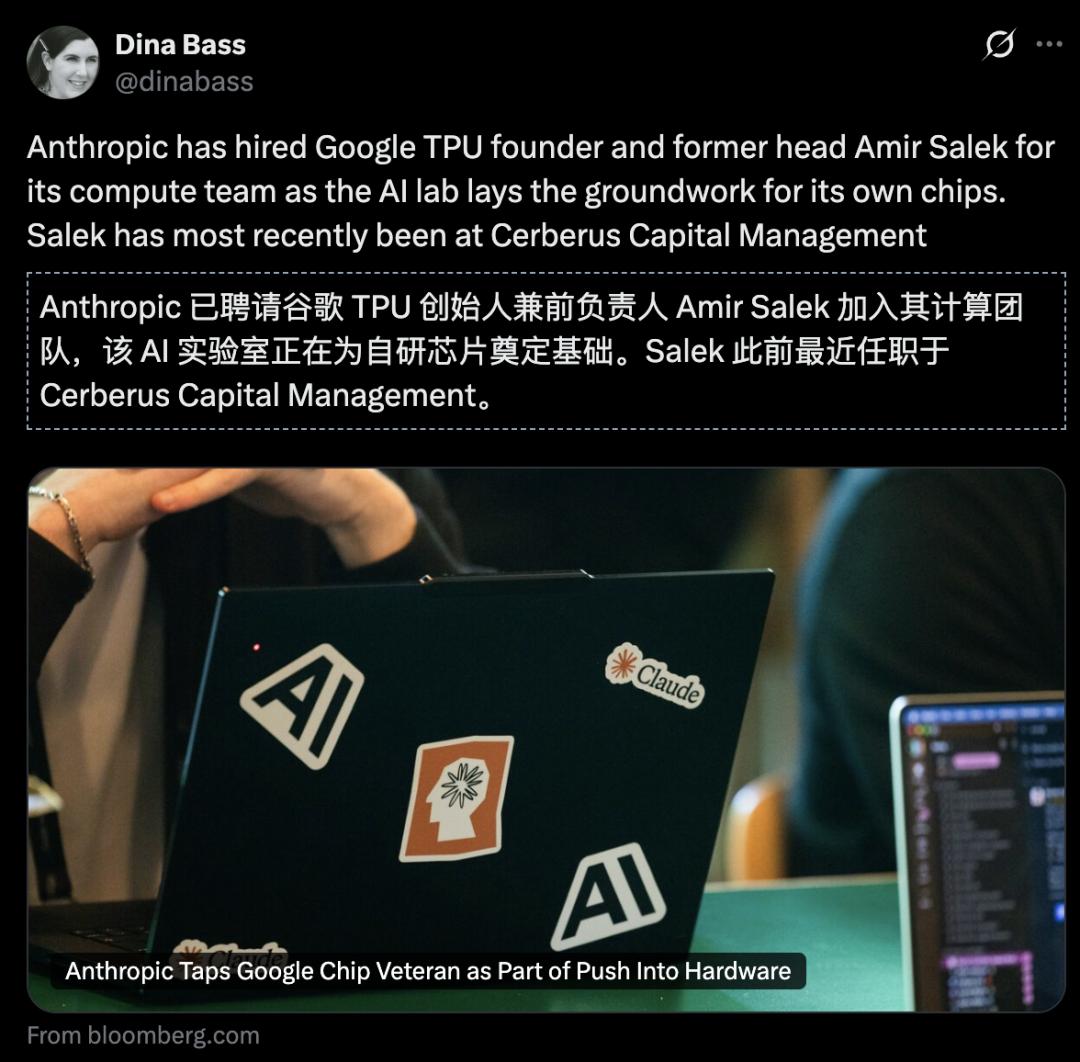
Foreign media broke the big scoop: Anthropic has successfully poached Amir Salek, the former Google executive and the renowned “Father of TPU”!
It seems that Anthropic is going to build its own chips.
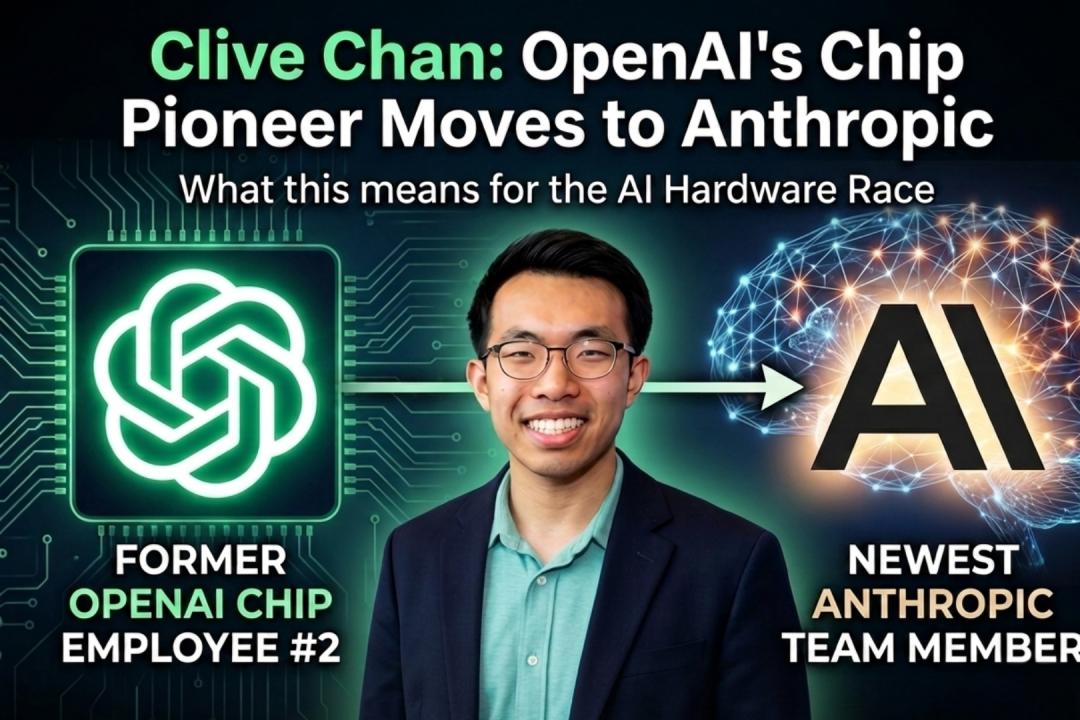
Earlier, Anthropic poached a key self-developed chip talent from OpenAI.
Clearly, the real battle for AGI has now moved from the software layer to the chip sector!
The Father of TPU + Defector from OpenAI, This Lineup Is Absolutely Terrifying
To develop self-designed chips, the core is always the “genius minds”.
Anthropic’s talent poaching this time can be described as a precise strike.
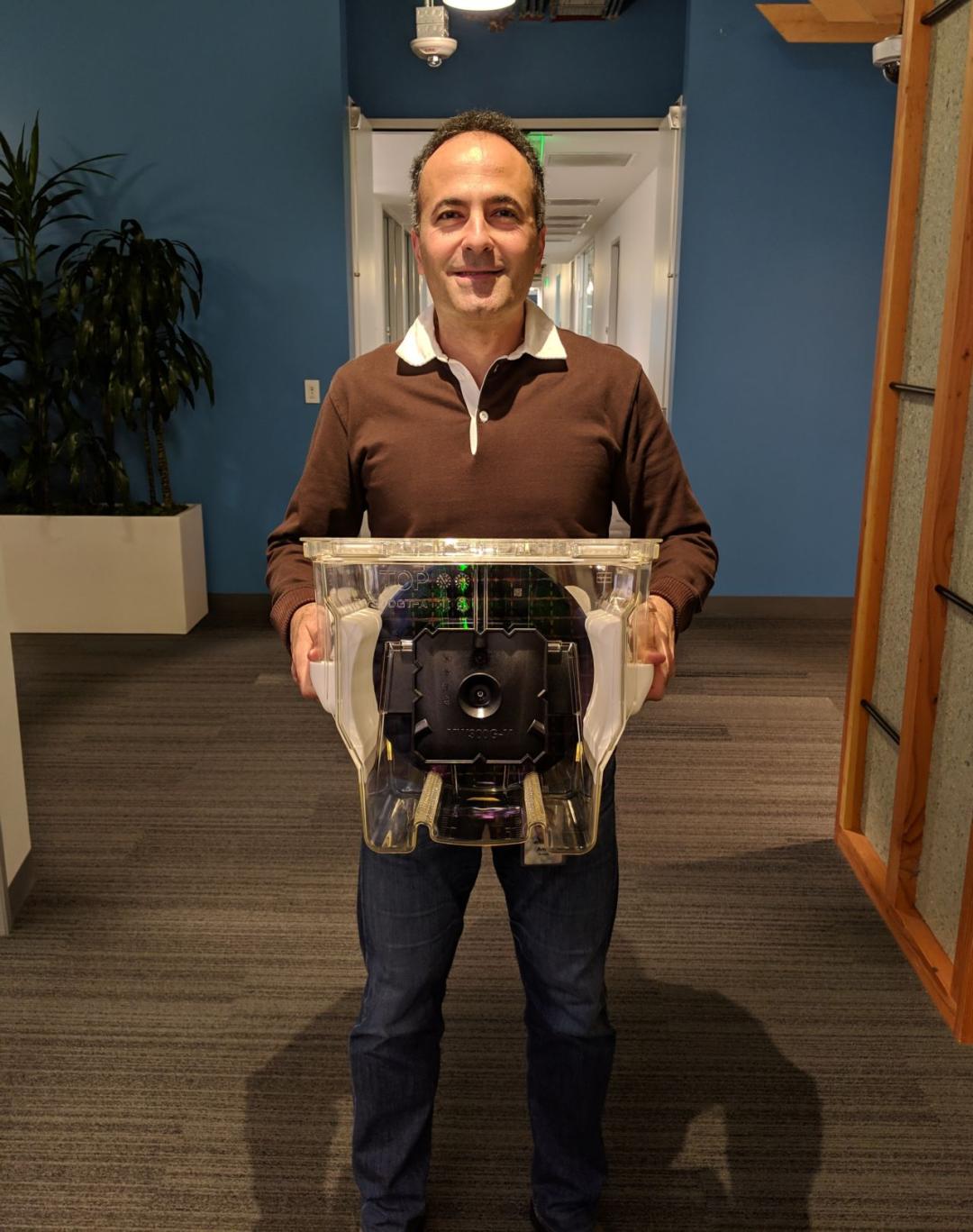
In the semiconductor and AI computing power circles, the name Amir Salek is extremely well-known.
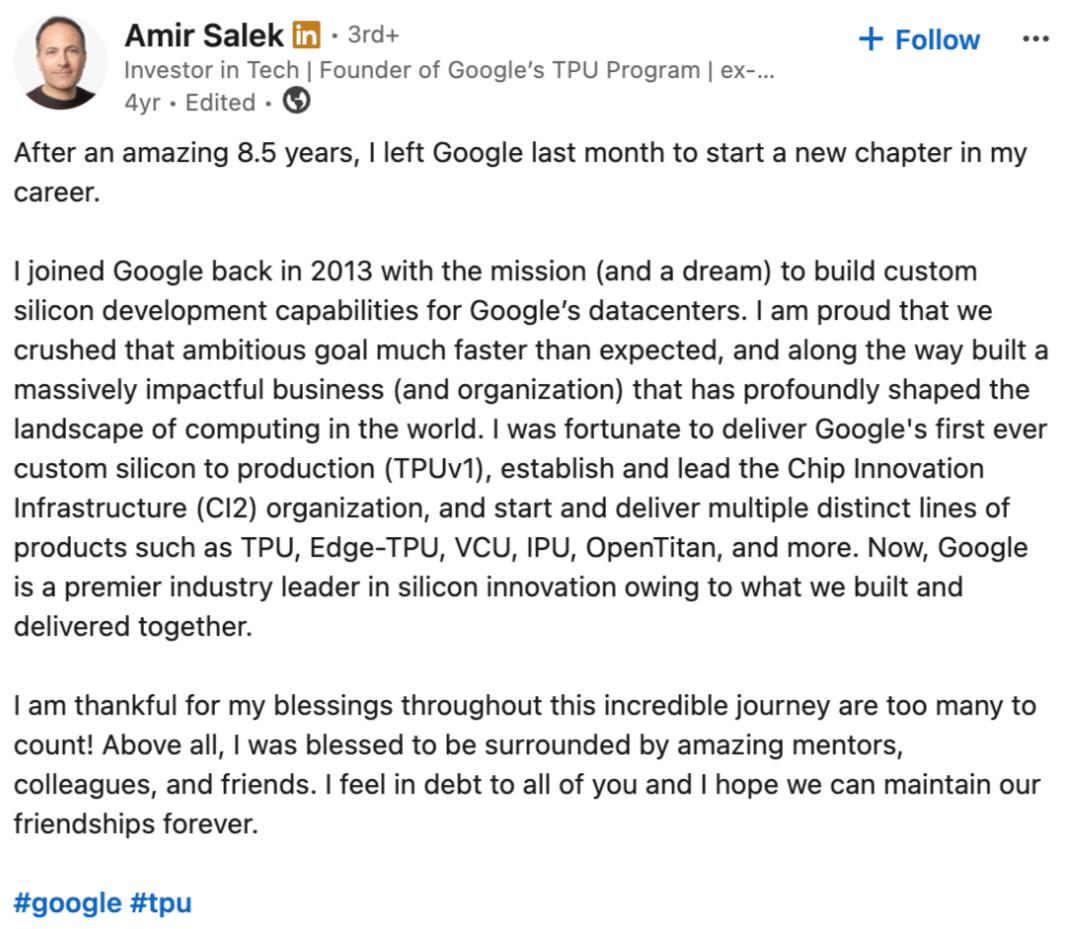
He is the renowned father of Google TPU, the core soul figure of the project for as long as 9 years.
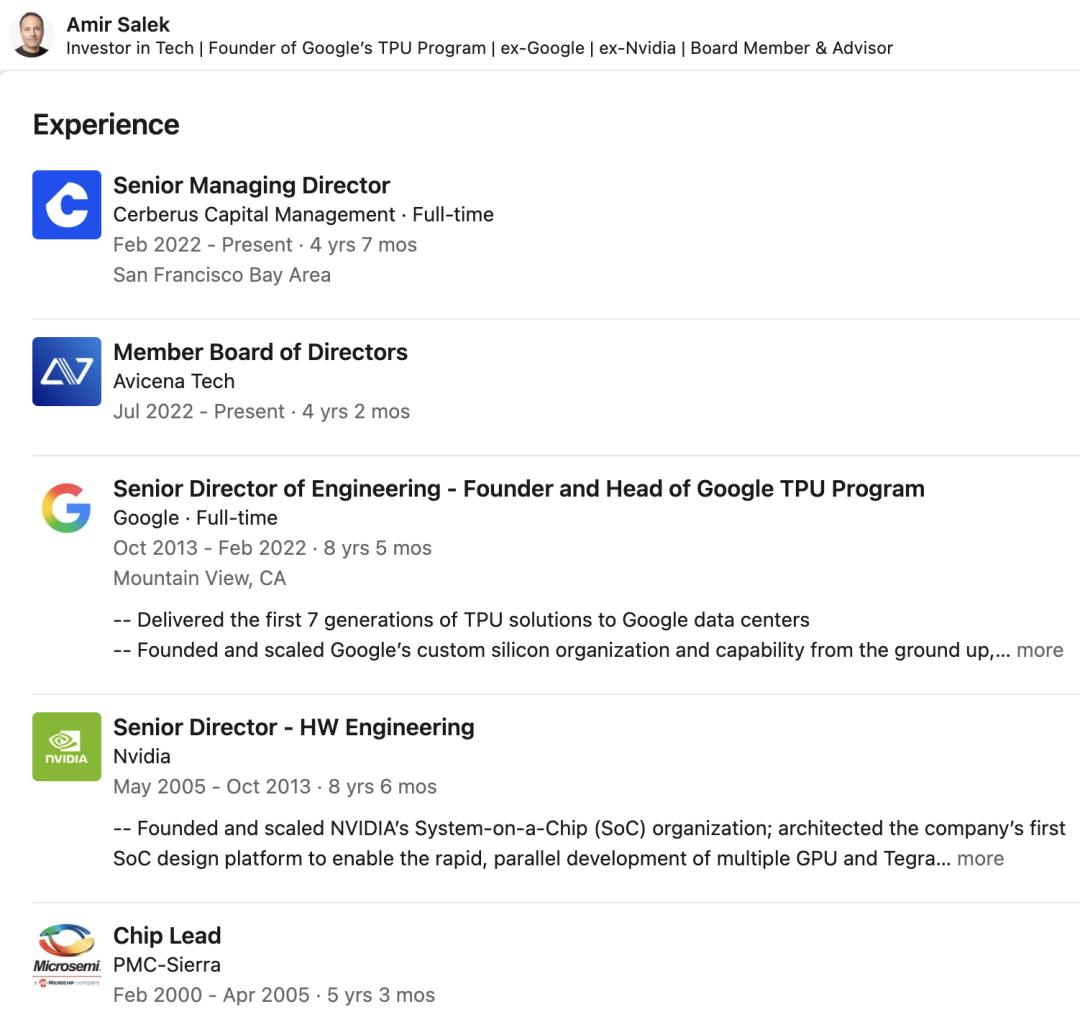
Before joining Google, Salek worked under Jensen Huang, leading Nvidia’s SoC design team, and has a deep understanding of the underlying logic of GPU and complex chip architectures.
In 2013, he joined Google. Over the 9 years, he not only built Google’s custom silicon team from scratch, but also led the delivery of the first seven generations of TPUs!
It is worth noting that TPU is the “computing power artifact” that Google built back then to get rid of its dependence on Nvidia, specially designed for AI machine learning.
It is precisely because of the TPU that Google has the confidence to compete with Nvidia.
After leaving Google in 2022, Salek did not rest. He joined Cerberus Capital Management, one of the world’s top private equity firms, as Senior Managing Director.
This experience gave him not only in-depth technical expertise, but also a mastery of capital operation and the commercial expansion of enterprise-level chip projects.
Now, the “Father of TPU” who integrates technology, management and business acumen, officially reports to James Bradbury, Head of Compute at Anthropic.
Moreover, Anthropic did not just poach talents from Google, it also took OpenAI’s key talent away.
Back in June this year, Clive Chan quietly joined Anthropic.
He was the second hardware employee on OpenAI’s self-developed chip team, and an early core member of OpenAI’s highly confidential self-developed chip project codenamed Jalapeno.
Now Anthropic’s chip team has perfectly gathered the “founding head of Google TPU” + “core expert of OpenAI’s self-developed chip project”.
Coincidentally, Anthropic just announced this month that it has officially established an internal Custom Silicon department, and it seems that they are ready to make a big move.
Why Build Its Own Chips?
Anthropic has raised so much money, and has the backing of Amazon AWS and Google Cloud behind it. Why go to such trouble to develop its own chips? Isn’t it great to just buy Nvidia’s H100 directly?
The answer is: it can afford to buy, but cannot afford the long-term cost; being constrained by others is far worse than mastering the technology on its own.
Jensen Huang’s GPUs are certainly easy to use, but they are expensive and in short supply.
According to reports, Anthropic’s estimated computing power expenditure in 2026 is 19 billion US dollars, and its inference cost exceeded the budget by 23% in 2025. The company’s gross profit margin in 2025 was 40%, which has a significant gap from the 77% gross profit margin target it told investors it planned to achieve before the expected Nasdaq listing.
For a giant like Anthropic that is committed to AGI, the “Nvidia tax” should be reduced as much as possible.
Building self-developed chips is the right path.
Besides, general-purpose GPUs are not custom-built for Claude after all.
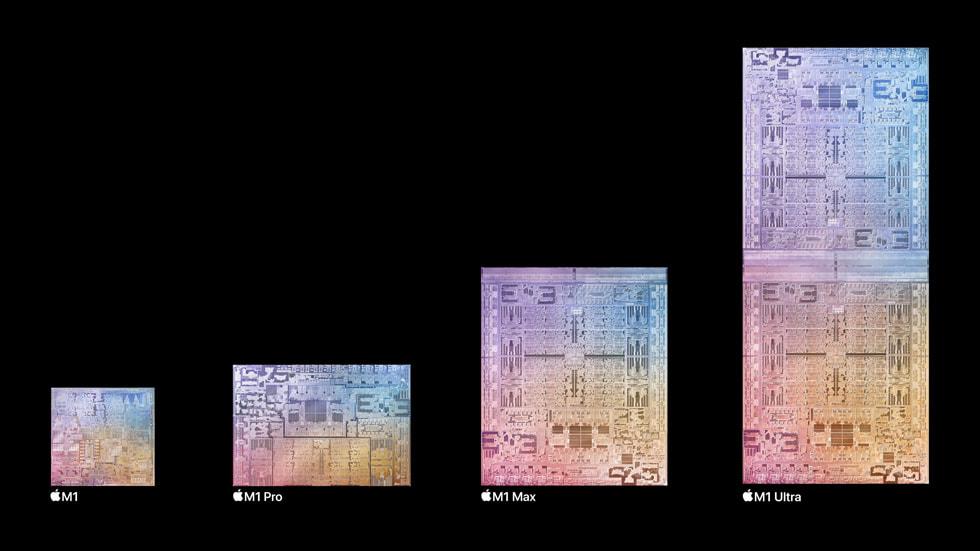
Apple’s M-series chips can outperform a large number of traditional PC processors, precisely because of the software and hardware co-design.
Anthropic also wants to do the same for Claude.
If people who understand the Claude large model algorithm and people who design underlying chips work closely together, the “model + chip” can be deeply integrated.
The future version of Claude may achieve far higher inference speed and intelligence level than its peers at a much lower cost.
Moreover, with an internal chip department, Anthropic does not need to fight for scarce data center facilities and wait in long queues.
This allows them not only to customize hardware according to their own needs, but also to effectively ease supply chain bottlenecks.
Beyond Competing in Silicon Chips
Anthropic’s “Infrastructure Maniac” Profile
Moreover, while recruiting Amir Salek, Anthropic is carrying out an astonishing “large-scale sweep of computing power infrastructure” around the world.
First of all, their first step is to stabilize existing partners.
Anthropic did not completely cut off ties with existing suppliers. According to sources, they are still purchasing a large number of chips from Nvidia, Amazon and Google.
The second step is to heavily bet on external startups to lock in future production capacity.
Anthropic has also rarely invested huge sums of money in external chip companies.
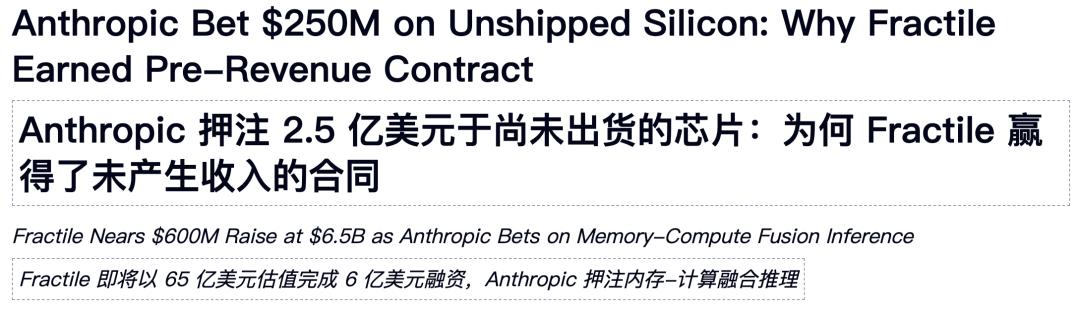
Recently, they issued an initial commitment order worth as high as 250 million US dollars to Fractile, a UK-based AI chip startup.
It is reported that Fractile is developing a brand new hardware architecture, which is claimed to enable LLM inference with extremely low power consumption.
Anthropic’s move means that while developing its own chips, it has also locked up the production capacity of a highly potential third-party chip startup.
The third step is to aggressively acquire resources to seize data centers and power supply.
Recently, Anthropic has quietly reached a series of infrastructure agreements, with partners including Riot Platforms Inc. (one of the largest mining companies in the US) and Volta Infra Holdings Ltd.
Cyclical fluctuations in a certain market have led a large number of mining farms to seek transformation.
Anthropic is stepping in to snap up these assets at low prices.
Clearly, it is building its own exclusive computing power fortress with an aggressive attitude.
Now, the competition among large model giants has completely changed.
In the past, the competition was about algorithms and data, then it was about financing.
Now, the war has spread to the chip manufacturing sector.
Whoever can take the lead in completing the closed loop of “model architecture + underlying silicon chip” will achieve a cliff-leading advantage in inference cost.
Now, OpenAI has the Jalapeno chip, and Anthropic has the Claude-exclusive TPU led by Amir Salek.
Whoever masters computing power can define AGI.
References:
https://www.bloomberg.com/news/articles/2026-08-21/anthropic-taps-google-chip-veteran-as-part-of-push-into-hardware
https://www.techtimes.com/articles/325089/20260820/anthropic-bet-250m-unshipped-silicon-why-fractile-earned-pre-revenue-contract.htm
This article is from the WeChat official account “AI Era”, written by ASI Revelation, edited by Aeneas, and published with authorization from 36Kr.

Related Posts


