
Radiology capacity is a bottleneck in hospitals, while imaging exams can be a major pain point for patients as well. Health systems and imaging centers are facing increasing volumes of medical imaging with outdated technology and limited scanner capacity. For patients, there can be long wait times and imaging procedures are often stressful and uncomfortable.
Menlo Park, Calif.-based Subtle Medical aims to address these challenges with AI-powered imaging software that enables faster, higher-quality medical imaging with less manual work. Longer scan times can reduce image quality, delay diagnosis and limit scanner capacity. Subtle Medical’s AI software improves image quality and accelerates scans on existing imaging systems, helping providers increase throughput without purchasing new hardware, according to the company.
Subtle Medical is building an enterprise AI infrastructure layer for medical imaging that boosts efficiencies for providers and benefits patients by reducing MRI scan times and improves safety by reducing radiation exposure.
The startup was born out of Stanford University by founders Greg Zaharchuk, M.D., Ph.D., a neuroradiologist and professor at Stanford, and Enhao Gong, Ph.D., a deep learning scientist. It developed vendor-neutral software solutions built on machine learning and generative AI that improves image quality on regular and accelerated image protocols, allowing radiologists to expedite patient care.
Gearing up for its next phase of commercial growth, Subtle Medical secured $33 million in growth capital, anchored by a series C financing led by funds managed by Morgan Stanley Expansion Capital. The financing included participation from Korea-based Shinhan Venture Investment and existing investors Fusion Fund, EnvisionX, BRV and Samsung Ventures. The company has raised $86 million to date.
Subtle Medical will use the new capital to fuel product development, expand commercial adoption globally and scale its vendor-neutral AI imaging platform across MRI, PET and CT workflows.
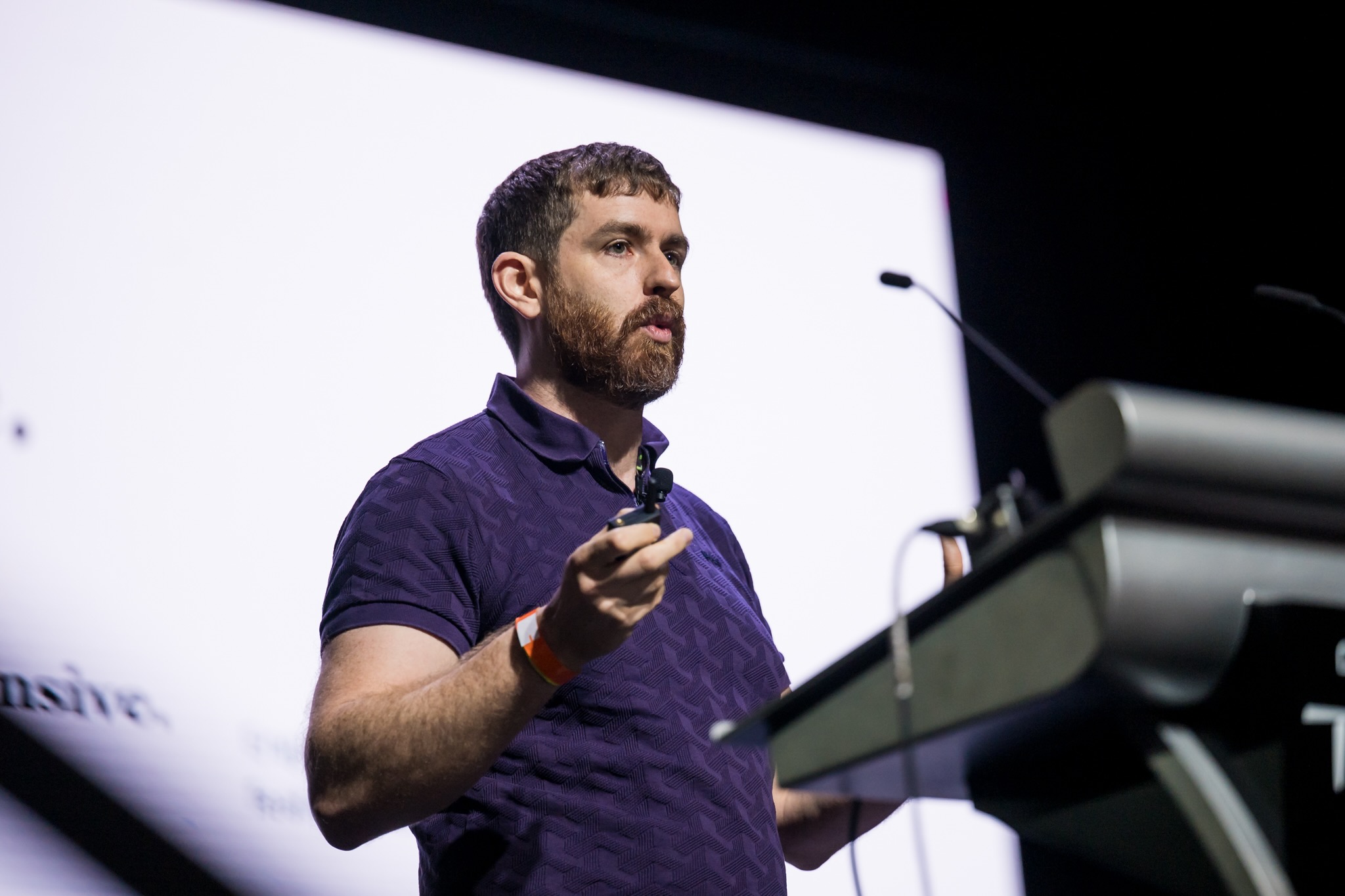
In addition to the funding announcement, Subtle Medical tapped medical imaging executive Ohad Arazi as its new chief executive officer, transitioning from Gong as co-founder and CEO. Gong will now serve as chief science officer, leading the company’s scientific roadmap and continue supporting operations and strategic partnerships in China.
“Subtle Medical was founded to make advanced imaging faster, safer, and more accessible,” Gong said in a statement. “As we enter this next phase, I’m excited to welcome Ohad and continue advancing the science behind our platform while expanding its impact across global imaging workflows.”
Subtle’s AI solutions are deployed on more than 1,300 scanners across major imaging networks, academic medical centers and health systems worldwide. Customers, including Mount Sinai, RadNet and Radiology Partners have reported measurable gains in throughput, efficiency and patient experience. The company has secured 11 Food and Drug Administration (FDA) clearances and published more than 25 peer-reviewed papers.
Subtle Medical developed a suite of deep learning technologies that improves MRI image quality, accelerates exam times and reduces manual tasks, enabling providers to deliver sharper images and more efficient workflows while extending the life of existing scanners. Its SubtlePET AI software improves PET image quality and allows for faster and lower dose PET scans, supporting safer, more comfortable patient experiences without compromising diagnostic accuracy.
SubtleMR uses AI to denoise and sharpen MRI scans, allowing facilities to conduct scans up to 80% faster. The company’s solutions are helping hospitals and imaging centers worldwide achieve faster, higher-quality imaging without requiring new hardware investments.
“We use software that overlays existing equipment, so no need to upgrade your scanner. We get a copy of those images, send them to the cloud, and then use AI to de-noise and leverage a neural network to kind of fill in the blanks, so that even with a much shorter scan time, we’re able to get higher-resolution images than what you would have otherwise been able to obtain with a standard scan,” Arazi told Fierce Healthcare.
Arazi brings decades of experience across digital health, medical imaging and healthcare IT as an entrepreneur, investor and public company executive. He held CEO and leadership roles at AI-powered ultrasound company Clarius, Zebra Medical Vision, Genoox, TELUS Health and McKesson/Change Healthcare’s PACS business.
Subtle Medical has established itself as an essential AI infrastructure layer for modern radiology, Arazi noted.
“I have to say, in my 20 years in medtech, I don’t think I’ve come across a value proposition that was just so clear and as well articulated as this one,” he told Fierce Healthcare. The company’s use of AI enhances the patient experience and provider efficiency, he said.
“Most hospitals are still in the red in our post-COVID reality, and essentially, what we do, in addition to the experience for patients by improving patient comfort and reducing anxiety, we also address motion-related challenges, because people tend to move during MRIs, which can often drive more imaging needing to be done, or callbacks. For providers, the value proposition is incredible because a typical MRI in the U.S. will do about 14 patient slots per scanner per day. So they are booking about 14 patients on an eight-hour shift or 10-hour shift when the scanner is being operated, and using our software, using the provider’s existing equipment, the existing shift length, the existing technology resources, we’re adding about four to five additional slots per scanner per day, so that is tremendous revenue improvement for the hospital. It reduces, of course, their patient backlogs and reduces wait times to be imaged,” Arazi said.
Subtle Medical has an expanding multi-modality AI imaging portfolio spanning MRI, PET and CT. The company’s imaging hub is a unified platform that gives health systems a single point of control for imaging performance across scanners, regardless of manufacturer. Rather than managing AI tools scanner by scanner or modality by modality, providers can enhance image quality, standardize outputs, and streamline workflows across their entire infrastructure in real time. Unlike OEM-native AI, which is tied to specific equipment, or fragmented point solutions that address one modality at a time, the Subtle Medical’s hub operates across MRI, PET and CT environments simultaneously.
“Subtle Medical solves a real operational problem for health systems: imaging backlogs that delay care and constrain capacity,” Kevin Han, executive director at Morgan Stanley Expansion Capital, said in a statement. “We are excited to support Subtle Medical’s next phase of growth to help enhance the patient experience in medical imaging.”
Subtle is also advancing AI-enabled contrast-enhanced imaging through strategic partnerships, including Bracco Imaging on AiMIFY for AI-powered contrast boosting. And the company is developing SubtleGAD, a technology designed to enable up to a 90% reduction in gadolinium contrast dose for gadolinium-enhanced MRI for safer medical imaging.
The company also developed an AI imaging solution for CT imaging, with FDA clearance pending. The AI-powered image enhancement software reduces noise and improves contrast-to-noise ratio.
In the past nine years, Gong and Zaharchuk built Subtle Medical into an AI-powered medical imaging software provider that is well-established in the scientific community, Arazi noted.
“They focused a lot on publications and research in order to build trust with clinicians that say, ‘Hey, I’m comfortable reading these images.’ That’s a big leap in terms of building trust, and that’s what the founders really excelled at. Now it’s about how do we take that scientific orientation and pour commercial rocket fuel on it by developing new channels, by moving into new markets, by maybe learning to tell that story in a little bit of a different way, and overcoming some of the visibility challenge,” he said.
Subtle Medical raised $12.2 million in a series A investment in 2020 and $30 million in a series B round in 2024.
The company is seeing accelerated growth and it’s targeting break-even profitability in the next 24 months.
“We’re basically viewing this as the last capital coming into the company. This is likely enough to catalyze us to whatever comes next for this company. Our focus is to grow commercially into new territories, new types of customers, they’re moving more from the conventional imaging center groups to more hospitals,” Arazi noted.