underlying society is changing. That was one of the ideas from Max Buckley’s talk at AI Engineer Singapore, and it has stuck with me ever since. For decades, software engineering was organised around scarcity. Code was expensive to write, engineers were scarce and features took time. This assumption shaped how teams worked. We prioritised carefully
ArcticSwarm: Multi-Agent Hybrid Deep Research
Consider a concrete example of a typical question a business executive might ask during an operational review:
“Why did user engagement drop, and what is the root cause?”
Crucially, a standard AI agent will often stop the moment it finds a convenient answer. If it browses the web and finds a major third-party dependency outage matching the timeline, it anchors on that single source of truth, files the report and closes the case. It completely misses the real story: that a buggy internal deployment went live at the exact same hour, compounding the issue.
Instead, an enterprise-grade system must execute and cross-examine two entirely distinct workflows:
- The internal data track: A coding agent dives into production databases to inspect error rates, active user sessions and deployment timelines to map exactly which customer segments were impacted and when.
- The external signal track: Simultaneously, a browsing agent tracks public status pages, incident reports and news to map external disruptions.
A definitive, trustworthy answer is only achieved when these two lines of evidence meet. By forcing both tracks to run independently before collaborating, the system helps ensure that an external outage isn’t used to paper over an underlying internal failure, giving leadership the full, unvarnished truth.
Why traditional AI agents fail at hybrid deep research
Long-horizon deep research is notoriously difficult for standard agent setups that rely on a single, solitary AI model to orchestrate an entire investigation. While this single AI bot can be equipped with web browsers and database query tools, it evaluates all incoming information through one static working memory. In practice, the moment it uncovers its first partial lead, it tends to aggressively anchor on it. Every subsequent web search or database probe becomes an exercise in confirmation bias, spinning around that initial guess rather than objectively evaluating alternatives.
To solve this bottleneck, developers often try distributing the workload, allowing specialized AI workers to run database queries and browse the web simultaneously. However, simply pooling multiple agents together without rigorous coordination rules creates a whole new set of problems. In a hybrid enterprise research environment, traditional, unstructured multi-agent setups inevitably fracture across three critical structural traps:
- The exploration trap (premature consensus): If parallel AI workers share leads too early, they fall into groupthink. Instead of searching independently, the swarm collapses onto the first plausible guess, magnifying one agent’s mistakes rather than exploring diverse paths.
- The exploitation trap (low confidence): Without a structured way to evaluate findings across both SQL and unstructured text, agents cannot confidently commit to an answer. Lacking a rigorous audit layer, the system gives up and defaults to answering “Unable to identify”.
- The reliability trap (unverified cross-source merges): Bridging messy web prose and rigid SQL rows is difficult. Without an explicit reconciliation layer, orchestrators silently force these sources together. This unverified merge leads to dangerous hallucinations, such as bending database rows to match a faulty web search or executing queries based on blind schema guesswork.
Introducing ArcticSwarm: Teamwork engineered for trust
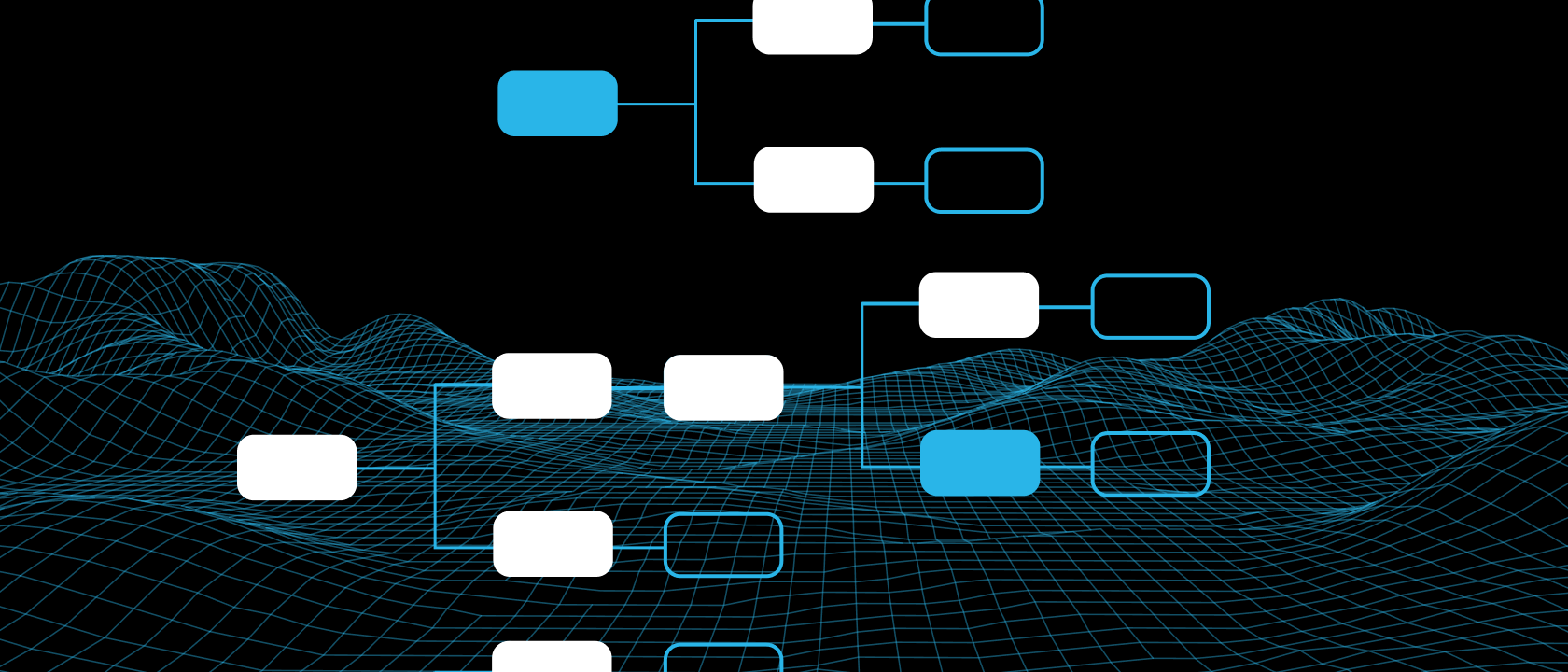
To solve these structural traps, Snowflake AI Research is proud to introduce ArcticSwarm, a dynamic multi-agent system built specifically to unite structured database precision with unstructured web depth. Instead of relying on a single agent or a rigid, sequential pipeline, ArcticSwarm operates as a coordinated team. A central orchestrator automatically spawns up to 16 specialized subagents operating under distinct functional profiles:
- Browsing agents: Highly optimized for web navigation, deep document extraction and search-heavy open-world investigation.
- Coding agents: Specialized in direct database introspection, executing precise queries, parsing complex schemas and supporting precise database querying and structured analysis.
- Reasoning agents: Conditioned for extended thinking, cross-domain reconciliation, candidate comparison and high-fidelity synthesis.

Related Posts