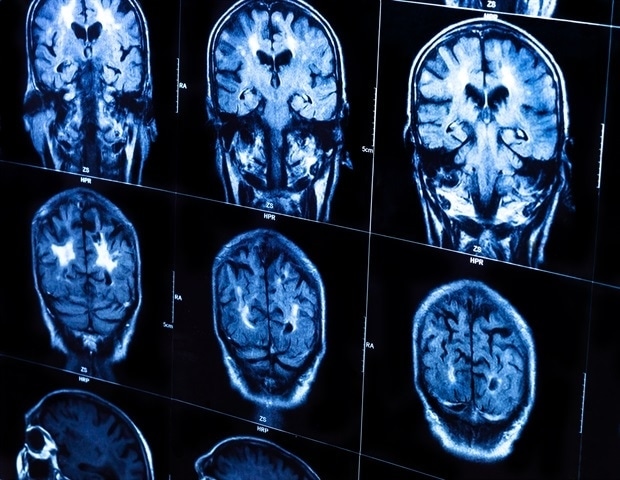
Announcing a new article publication for BIO Integration Accurate localization of anatomical landmarks is crucial for clinical diagnosis and treatment assessment. However, existing Convolutional Neural Network (CNN)-based methods may result in global spatial information loss and consequent localization failures in the presence of complex anatomical structures or parenchymal abnormalities. Therefore, a method capable of modeling

Manufacturing’s Missing Intelligence Layer: Why MOM Will Define the Success of Physical AI – Embedded Computing Design
By Sankar Natarajan
Global Head of Smart Manufacturing & Digital PLM
Hitachi Digital Services
August 14, 2026
Blog

Executive Perspective
Artificial Intelligence has become the defining topic in manufacturing boardrooms. Every discussion about the smart factory now includes AI, autonomous operations, or intelligent automation. Yet amid all the excitement, one important question often goes unanswered.
What gives AI the operational understanding required to make the right decisions on the factory floor?
The answer is not another AI model. It is the operational foundation on which AI depends.
As manufacturers move toward Physical AI, where intelligent systems perceive, reason, and influence real-world manufacturing operations, Manufacturing Operations Management (MOM) is evolving into what can best be described as the manufacturing intelligence layer. It connects enterprise planning, shop floor execution, quality, materials, equipment, and people into a unified operational model that enables AI to understand manufacturing as a complete system rather than as disconnected data sources.
Manufacturers have spent years building digital factories. The next decade will be about building intelligent factories. The difference lies in operational context.
The Smart Factory Has Reached an Inflection Point
The first phase of digital transformation focused on connectivity. Manufacturers invested in Industrial IoT, automation, cloud platforms, robotics, and analytics to create unprecedented visibility across operations.
Those investments delivered significant value.
However, more data has not automatically translated into better decisions.
Production targets continue to be missed despite healthy equipment. Quality escapes still occur even when process parameters remain within specification. Supply chain disruptions continue to affect production despite increasingly sophisticated planning systems.
These challenges persist because manufacturing is driven by operational context, not simply operational data.
Knowing that a machine is operating normally is useful. Understanding whether production followed the correct process, whether substitute materials were introduced, whether quality exceptions were approved, or whether production priorities changed during a shift is what ultimately determines manufacturing performance.
That context is rarely available from a single system.
The Manufacturing Intelligence Layer
For decades, Manufacturing Operations Management was primarily associated with production execution, genealogy, electronic work instructions, quality management, and regulatory compliance.
Those capabilities remain essential, but they no longer define the strategic role of MOM.
Modern manufacturing depends on dozens of enterprises and operational systems working together. ERP manages business planning. Automation systems control equipment. Asset management systems monitor machine health. Quality systems capture inspections. Warehouse systems manage inventory.
Each system performs its own function exceptionally well.
The challenge is that none of them independently understands the complete manufacturing operation.
This is where MOM is evolving.
Rather than functioning simply as another manufacturing application, MOM is becoming the manufacturing intelligence layer that continuously captures operational events, connects information across systems, and creates a trusted operational representation of the factory.
Instead of asking individual systems for answers, manufacturers gain a unified understanding of how production is actually performing.
Why Physical AI Depends on MOM
Physical AI represents a fundamental shift in how artificial intelligence will be applied within manufacturing.
Instead of generating reports or recommendations, AI will increasingly participate in production. It will optimize schedules as conditions change, coordinate autonomous equipment, identify quality risks before defects occur, recommend corrective actions, and eventually enable closed-loop operational decisions.
These capabilities require much more than machine data.
AI must understand production status, workforce activities, equipment availability, material genealogy, maintenance history, quality conditions, and business priorities simultaneously. More importantly, it must understand how these operational factors influence one another.
That level of understanding cannot be derived from isolated data sources.
It requires a trusted operational model of the factory.
This is one reason many industrial AI initiatives struggle to move beyond pilot programs. Organizations often focus on developing increasingly sophisticated AI models before creating a consistent operational foundation. As a result, AI produces valuable insights but struggles to deliver reliable operational outcomes.
Building Intelligence Before Autonomy
There is growing enthusiasm around autonomous factories. While that vision is compelling, autonomy should not be the starting point.
Manufacturers should first establish operational consistency by digitizing execution, standardizing workflows, improving traceability, integrating information technology with operational technology, and creating trusted operational data across production.
Only then can AI make decisions with confidence.
This thinking is also influencing the evolution of modern MOM platforms. Manufacturers increasingly prefer modular and composable architectures that allow them to solve immediate operational challenges while expanding capabilities as digital maturity grows.
Solutions such as Hitachi Smart Manufacturing Operations Management (SMOM) reflect this broader industry direction. Their value extends beyond digitizing manufacturing processes. They provide the manufacturing intelligence layer that connects enterprise planning, shop floor execution, and emerging AI capabilities while complementing existing manufacturing investments.
A New Way to Think About Smart Manufacturing
The next generation of competitive advantage will not come from collecting more data or deploying more AI models.
It will come from giving AI a complete understanding of manufacturing operations.
Physical AI has the potential to transform how factories operate over the coming decade. Its success, however, will depend on a manufacturing intelligence layer that provides trusted operational context, connects fragmented systems, and enables intelligence to act with confidence.
Manufacturing Operations Management is no longer simply a system of execution.
It is becoming the foundation on which the intelligent factory will be built.
Sankar Natarajan is the Global Head of Smart Manufacturing & Digital PLM at Hitachi Digital Services. He leads the global strategy, solutions, go-to-market initiatives, and delivery of integrated digital transformations across products, factories, operations, and sustainability. Under his leadership, teams drive large-scale innovation across the Hitachi Group of Companies and a rapidly expanding global client base.

Sankar Natarajan is the Global Head of Smart Manufacturing & Digital PLM at Hitachi Digital Services. He leads the global strategy, solutions, go-to-market initiatives, and delivery of integrated digital transformations across products, factories, operations, and sustainability. Under his leadership, teams drive large-scale innovation across the Hitachi Group of Companies and a rapidly expanding global client base.
More from Sankar
Categories
AI & Machine Learning – AI Development Tools & Frameworks
Industrial – Industry 4.0/Industrial IoT

Related Posts