Cole and Jaenisch explain why defending against AI poisoning in pharma manufacturing calls for a data steward role, immutable instruction ledgers, and automation. In the latest episode of Manufacturing Intelligence, PharmTech Associate Editorial Director Chris Cole and cohost Richard Jaenisch, senior director of Education, Outreach, and Digital Experience at Open Biopharma, move from diagnosing AI
PIP Innovations Takes a Deep-Learning Approach to French Fry Defect Removal

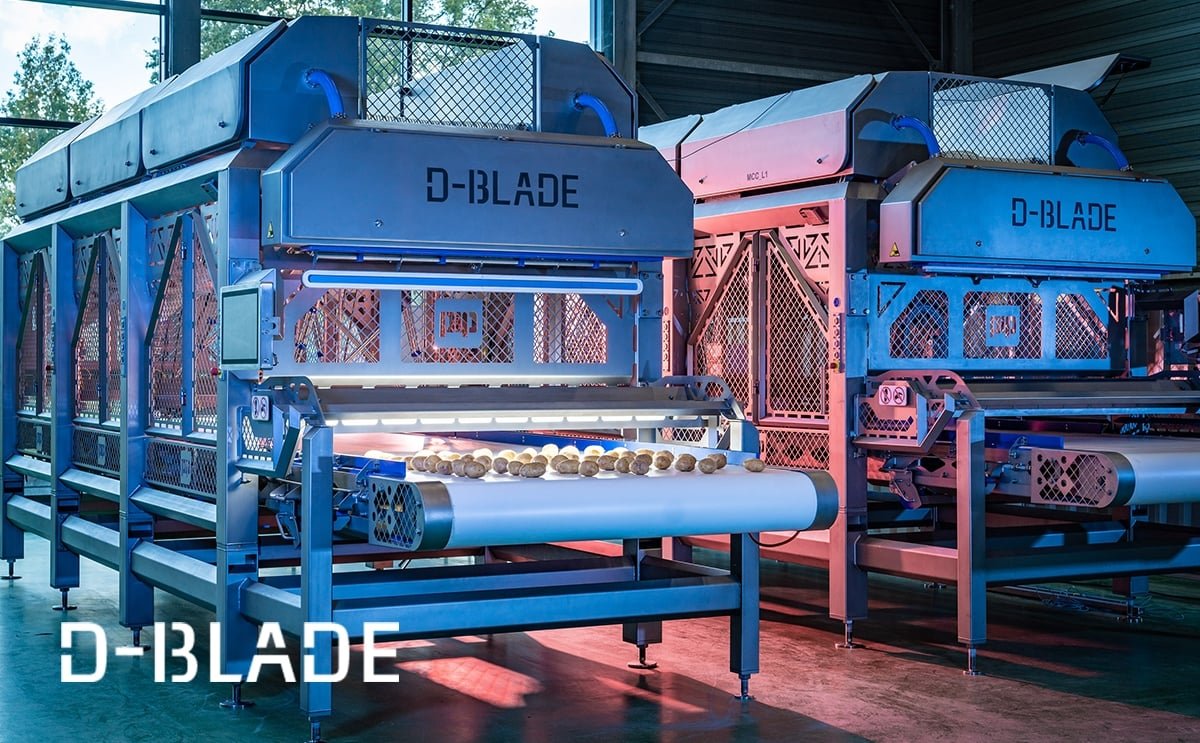
PIP Innovations D-Blade, Intelligent Robotic Cutting System
For French fry processors, defect removal is a balancing act: remove enough to meet quality requirements, but avoid throwing away good potato along with the defect.
That challenge led PIP Innovations to develop S-Blade, a dedicated French fry defect-removal system built around machine vision, deep learning and high-speed cutting. The system grew out of PIP’s earlier D-Blade platform, but the company found that the throughput required for French fry production called for a different approach.

PIP Innovations D-Blade uses robotic cutting technology to identify and remove defects from potatoes and other produce
Why a separate system for French fries?
PIP’s D-Blade is a flexible robotic cutting platform used for potatoes, vegetables and fruit. When potato processors began asking whether it could also remove defects from French fries, the answer was technically yes, but the capacity was not enough for modern French fry plants. According to PIP, processors can require more than 5 metric tons per hour for this application. The company therefore began developing a dedicated system in 2020, eventually choosing high-speed servo technology for the cutting mechanism.
PIP Innovations D-Blade, Intelligent Robotic Cutting System
The result was S-Blade, designed around one specific task: identifying defects in French fries and cutting them away while retaining as much good product as possible.
Deep Learning for More Precise Defect Detection
The main difference is in how S-Blade recognizes defects. Conventional vision systems can rely on predefined thresholds and settings. They may work well under specific conditions, but changes in the product, defect appearance or machine environment can require adjustments.
PIP’s approach uses deep learning instead. The company has trained its system using large amounts of imagery covering different fries, defects and production conditions. The images are manually annotated so the model can learn to distinguish an actual defect from normal variation, including the difference between potato skin and a defect.
This is important because the appearance of potatoes is not completely consistent. Raw material, storage and processing conditions can all influence what reaches the French fry line. PIP says its system is designed to handle these changes without operators continually retuning the vision system. PIP’s current technical material describes the same principle: the system analyses each fry, identifies the defective area and cuts out that section rather than simply rejecting the entire fry.
Removing the defect, not the whole fry
That distinction is central to S-Blade. Rather than rejecting a fry because a small section is defective, S-Blade uses high-speed blades to remove the affected portion. The system has 48 lanes, with the blades positioned beneath openings through which the fries pass. Water is used to transport the fries through the system, which PIP says also helps limit starch build-up.
PIP currently lists throughput of up to 20 metric tons per hour. The system is also designed to handle different French fry formats without conventional operator changeovers. For processors, the potential benefit is straightforward: if only the defective portion is removed, more of the usable fry can remain in the product stream.
Simple Mechanics, Smarter Operation
Although the technology behind S-Blade is sophisticated, PIP has deliberately kept the mechanical side relatively simple. The company says the system has few moving parts and is designed to clean itself during production. In its interview material, PIP links this design approach directly to reliability and cost of ownership.

PIP Innovations S-Blade, Automatic Defect Removal System
That combination of complex software and relatively simple mechanics is one of the more interesting aspects of the system. The aim is not simply to add AI to existing equipment, but to use software to make the machine less dependent on constant operator intervention.
The Next Step in Intelligent Fry Inspection
PIP sees S-Blade as more than a finished machine. The company says that when recurring cutting errors are identified, its team can improve the software and distribute updates across the installed machines. It is also working toward using the machine’s cameras and data for purposes beyond defect detection. One example is a cleanliness indicator that could give processors a data-based way to monitor the condition of the machine. Longer term, PIP envisages equipment that can identify potential problems, predict maintenance needs and adjust its own operating parameters.
PIP Innovations S-Blade, Automatic Defect Removal System
The company is also investigating ways to inspect more sides of the French fry, which could allow additional defects to be detected. For now, the idea behind S-Blade is relatively simple: use deep learning to decide what is actually defective, then remove only that part. The more interesting question for the wider potato industry is how far this combination of vision, software and automated cutting can eventually take defect removal.
Meet PIP Innovations at Interpom 2026
PIP Innovations will be exhibiting at Interpom 2026, taking place from November 29 to December 1 at Kortrijk Xpo in Belgium. Visitors can meet the company at Booth 577 to learn more about its S-Blade defect-removal system and intelligent cutting technology.
Highlighted Company
Products

Related Posts