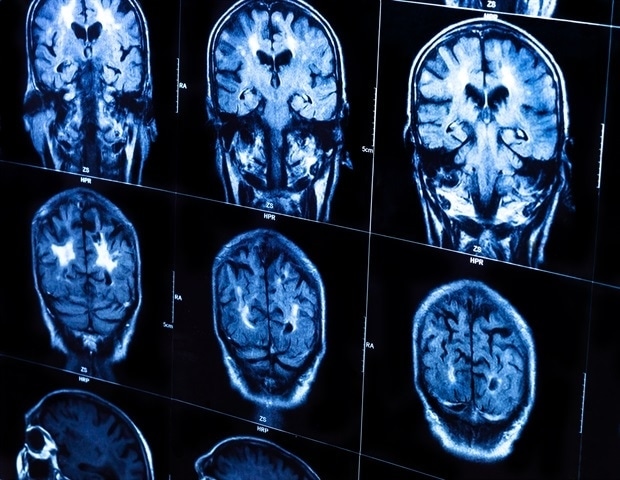
Announcing a new article publication for BIO Integration Accurate localization of anatomical landmarks is crucial for clinical diagnosis and treatment assessment. However, existing Convolutional Neural Network (CNN)-based methods may result in global spatial information loss and consequent localization failures in the presence of complex anatomical structures or parenchymal abnormalities. Therefore, a method capable of modeling
IU researchers advance transparent AI with support from REALLMS
When an AI system labels an image, the source can feel like a black box.
IU researchers Zachary Wilkerson, David Leake, and David Crandall are working on a more transparent approach — teaching the AI to find and compare previous examples it finds similar.
So what happens when a doctor, engineer, or scientist wants more than a label? The team’s DEL-CBR approach combines deep learning with case-based reasoning, a method that solves new problems by comparing them with previous cases.
First, the system first finds likely matches from a collection of labeled images, then a large language model (LLM) reviews the query image and the candidate matches to choose the closest example.
Testing that idea required many repeated AI model calls across datasets, training set sizes, and experimental settings. The team began by using the free capabilities of Gemini 2.5 Flash Lite, but their access came with practical constraints, including limits on how many queries could be completed per day. Thesis bottleneck throttled the results and shaped research around the model’s availability.
When Google later restricted the free-use limits even further, the team reconsidered its options. Paying for Gemini or another commercial model was possible, but the group turned towards other free/open-source models. These were appealing as it would improve reproducibility for other research groups. Many of those models, however, were much less accurate than Gemini 2.5 Flash Lite, making it harder to draw consistent conclusions.
The Research Technologies service, Research and Academic LLM Services (REALLMS) gave the team a path forward. The IU service, available to faculty, staff, and students at no cost, provided access to Llama 4 Scout without the query restrictions that had stagnated the earlier work. That meant faster experiments and access to open-source models with no commercial subscription.
Even better, Llama 4 Scout outperformed the other commercial models explored for the group’s needs. In the team’s comparisons, it showed accuracy similar to, and in some cases slightly better than, Gemini 2.5 Flash Lite.
“REALLMS was immediately impactful to our work,” the team said. “It addressed the temporal and/or monetary overhead that we would incur by continuing to use commercial models, while retaining better experimental reproducibility.”
For the research team, REALLMS removed a practical barrier at exactly the right moment.
More broadly, services like REALLMS help IU researchers accelerate experimentation, reduce costs, and explore AI-driven research with fewer technical and financial obstacles.
Researchers interested in exploring AI models for their own work can access REALLMS at reallms.rescloud.iu.edu.

Related Posts