
Announcing a new article publication for BIO Integration Accurate localization of anatomical landmarks is crucial for clinical diagnosis and treatment assessment. However, existing Convolutional Neural Network (CNN)-based methods may result in global spatial information loss and consequent localization failures in the presence of complex anatomical structures or parenchymal abnormalities. Therefore, a method capable of modeling
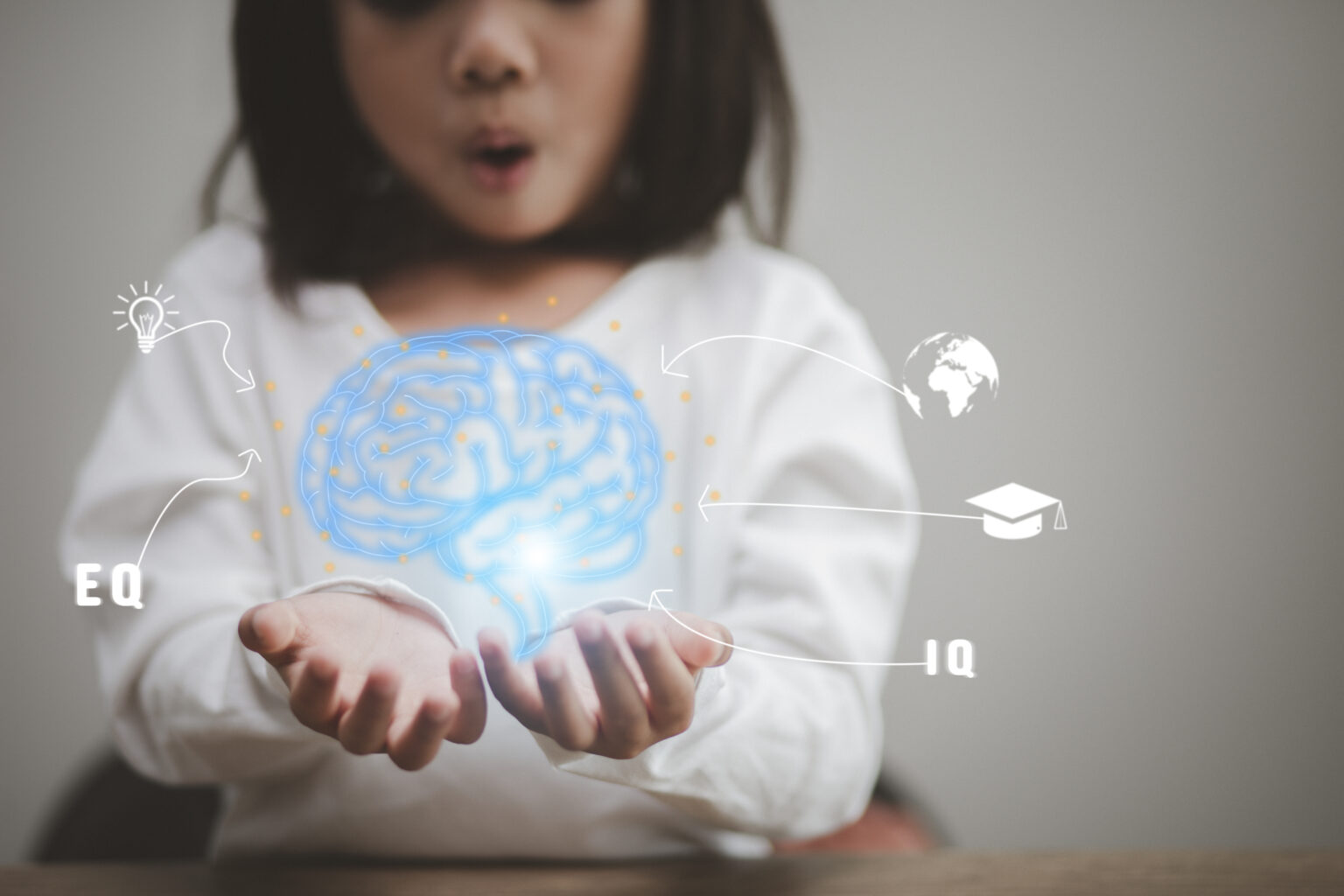
Developing a Foundation for AI-Integrated English Teaching – Language Magazine

Artificial intelligence has moved quickly from something teachers experimented with to something that now shapes everyday instructional decisions. While I have written about classroom uses of AI tools and practical entry points for basic use, it has become clear that tips and tricks alone do not prepare educators to work meaningfully with AI. The more I work with these systems, the more evident it becomes that the real challenge is not how to use AI but how to think about it, how it influences learning, reshapes decision-making, and can quietly shift agency away from teachers and students. This has impacted my own practice, as I move away from application to a more holistic understanding of AI in education.
Beyond the Hype: What AI Really Is and Why It Matters
Despite the name, artificial intelligence is not truly intelligent (Cook, 2025). AI doesn’t reason, understand, or make independent decisions. What it does is recognize patterns on a massive scale. Generative AI models like ChatGPT are trained on billions of words and images to predict what word—or pixel—should come next. Every time large language models (LLMs), like Copilot, generate a response, the output is a statistical guess based on probability.
Teachers bring something AI does not: understanding, empathy, and real-world experience. Educators have stood in front of a class, adjusted a lesson when a student didn’t understand, and responded to real, and sometimes unpredictable, human emotional responses to learning. This is not something AI can replicate, and as such pedagogical judgments remain firmly in the hands of educators.
AI’s Impact on Learning: Support or Barrier to Critical Thinking?
Over the summer, a key research paper drove debate on the potential impacts of AI in learning. This 2025 study from MIT’s Media Lab explored the cognitive impact of generative AI during writing tasks (Kosmyna et al., 2025). The 54 participants were divided into three groups:
- Group 1 used ChatGPT to write their essays from the start.
- Group 2 used Google Search to gather information before writing.
- Group 3 wrote entirely unaided at first, relying only on their own thinking and language—but later, they were allowed to use ChatGPT to revise one of their essays.
The results were intriguing. The ChatGPT-first group displayed the lowest brain engagement, showing minimal critical thinking and creativity. Over time, they became less active writers, eventually pasting AI-generated text directly into their assignments. Teachers described the essays as “soulless” and repetitive, and when asked to rewrite without AI, these participants struggled to remember their own ideas. In comparison, the unaided writers demonstrated the highest neural connectivity, particularly in areas linked to creative ideation, memory, and semantic processing. Their essays were more original, and when they later used ChatGPT for revision, their brain activity increased further.
This suggests that it is not the use of AI that harms learning but the timing and purpose of that use. When AI is introduced before students engage in their own reasoning, it can short-circuit critical thought; when used after application and reflection, it can enhance creativity and expression. As MIT researcher Nataliya Kosmyna notes, “Education on how we use these tools, and promoting the fact that your brain does need to develop in a more analog way, is absolutely critical.” In short, AI in education is ineffective without pedagogical thinking—something AI itself cannot do.
Teaching with Intention: Building AI Competence Through a Human-Centered Lens
AI is already a significant part of daily life for English language teachers. In a survey by the British Council in 2024, 70% of teachers indicated they were currently using AI tools (Edmett et al., 2024). However, only 20% of educators felt fully prepared to use AI for instruction. Teachers need a way to make sense of AI, as it currently exists and as it evolves and changes in real time. With that in mind, the AI Competency Framework for Teachers serves as valuable and flexible structure for supporting the use of AI in the classroom (Miao, F., and Cukurova, M., 2024). The framework is not a checklist but a reflection lens through which to explore the role of AI in learning that centers human knowledge.

The framework is built on five interconnected dimensions that define what it means to be a competent, ethical, and confident educator in the age of AI:
- A human-centered mindset
- Ethics of AI
- Foundations and techniques
- AI pedagogy
- Professional development
Each dimension contributes to a holistic understanding of how AI can strengthen what teachers already do best to guide and inspire learners.
1. A Human-Centered Mindset
At its heart, the human-centered mindset reminds us that education is a social act. It is critical to always remember that AI is a tool developed by humans, to be used by humans, for the benefit of humans. Learning depends on interaction, empathy, and shared meaning—qualities that no algorithm can replicate. Adopting a human-centered approach begins with a simple guiding question:
Does this tool enhance human interaction, or does it replace it?
This mindset positions the teacher as the decision-maker who ensures that AI supports relationships, accessibility, and authentic learning. For example, an AI writing assistant can help English learners refine drafts, but it should never remove the opportunity for peer feedback and personal expression. The teacher remains the curator and facilitator of those interactions.
| AI Experiment: Human-Centered Use |
| Ask a language model to create a short warmer activity for your learners. Include traits of your learners and the learner targets you might want to include based on your curriculum.
Review the output and check: Note: AI will often suggest activities focused on the traditional teacher–group model. The language level and cultural focus can be biased toward ESL classrooms. Review the initial output and then prompt, then refine to make content more learner focused, task oriented, and culturally appropriate. |
2. Ethics of AI
Ethical literacy is no longer optional. Teachers must understand that algorithms are trained on human data, and so every AI tool carries potential for bias, inequity, or misuse. A teacher using an AI pronunciation tool, for instance, might notice that it favors one accent or dialect over another. Recognizing this bias is an ethical act that protects students’ linguistic identities and affirms that no single “model of English” defines proficiency. As educators, our ethical role is to help learners evaluate the accuracy, fairness, and impact of the AI tools by considering these same questions ourselves in our use of AI.
Ethical literacy also requires understanding how LLMs handle data. Any prompt or interaction creates data. The information entered into a model may be used for training or system improvement. Even when controls exist, anything shared with an AI tool may be stored and potentially be accessible beyond the task. For this reason, educators must ensure that personally identifiable information, such as student names or ages, is never entered into AI systems. When AI is used for learning or analysis, best practice is to remove all identifying information before use.
| AI Experiment: Ethical Use |
| Ask a language model to create a reading for your class based on a tradition or holiday that is relevant to your learners.
Review the output and check: Note: Generative AI models tend to favor the largest representation in data sets. Always review output to ensure it reflects qualities that are appropriate for your learners and their context. |
3. Foundations and Techniques
The third key area of knowing is focused on how generative AI creates output and where it might go wrong. At a minimum, educators should be aware that the generative AI tools being adopted are still data-driven statistical models that are not capable of independent and creative thought. There are a variety of techniques that can help improve the output AI creates.
Understanding the strengths and limitations of specific types of AI can help clarify how we have learned to work with AI in a supportive way and where AI can be a distraction. The three major types of AI we use every day are:
- Machine learning—AI that learns from data to make predictions or decisions
- Spam filters, recommendation engines, grammar checkers
- Deep learning—A type of machine learning that uses neural networks to handle complex inputs like speech or images
- Translation applications, facial recognition, navigation systems (GPS)
- Generative AI—The newest type, which creates new content like text, images, video, or audio
- ChatGPT, Gemini, Claude, Grok
The task you want to accomplish helps determine which type of AI is most appropriate. A key difference between more traditional AI tools and generative AI is in how predictable the output will be. With machine learning and deep learning, the output is generally determined. However, generative AI is nondeterministic: the output can be anticipated but not always predicted. This lack of predictability is what makes generative AI useful, while increasing the need to carefully monitor what is generated.
| AI Experiment: Foundations and Techniques |
| Prompt an AI model to create an information gap activity for students. Try a context like sharing information on a schedule. Save the output.
Start a new chat thread and upload an information gap activity you have created. Ask the AI to create a new activity, using your activity as a model. Review the output and check: Note: One way to make generative output more predictable is to train the model on your personal content. Uploading a worksheet or activity in PDF or document format can immediately improve the quality of the content produced. |
4. AI Pedagogy: Integrating Tools into Learning Design
AI pedagogy is the art of using technology without losing humanity. As the human educator in the equation, it is important to note that while AI may know about pedagogy, AI does not know how to apply pedagogy for learning. When planning for student interactions with AI or using AI to create learning content, it is always important to remember that as the teacher, you are the pedagogical expert.
One specific challenge for language educators is that generative AI tends to favor teacher-centered learning. Even when a student-focused task is requested, with careful review you will notice that much of the activity is controlled by the teacher or completed individually to be reported to the teacher. Additionally, many activities are bland and designed to appeal to the largest representative group in the dataset, which creates content that is often meaningless and unengaging for the classroom. As language educators, it is important to review AI-generated content to ensure that it is student centered, task oriented, and centered on relevant communication for learners.
| AI Experiment: AI Pedagogy |
| Prompt an AI model to create a group activity based on a topic relevant to your curriculum.
Review the output and check: Note: Uploading model materials helps train the model to align to your pedagogical expectations. |
5. Professional Development: Lifelong Learning in a Fast-Moving Field
The fifth dimension of the framework recognizes that professional learning must evolve as fast as the tools themselves. AI literacy is not a one-time achievement; it’s a continuous practice of curiosity, collaboration, and experimentation.
Professional growth might include:
- Testing new AI tools with colleagues and sharing what works.
- Following research and policy discussions about AI in education.
- Reflecting on classroom experiments to refine ethical guidelines.
This ongoing development is not just about mastering technology—it’s about strengthening professional agency. Teachers who understand AI’s capabilities and limits become leaders who can shape how their institutions adopt these tools responsibly.
Conclusion
Viewed as a whole, the AI Competency Framework provides balance and keeps innovation grounded in ethical use, anchored in pedagogy, and focused on human experience. Further, while generative AI may change dramatically over the next several years, this guiding lens will always provide clarity when examining and considering AI models, as specific tips or tricks can quickly become irrelevant. This holistic approach to using AI supports a richer understanding of how generative AI tools can add value in educational contexts.
Using this lens, teachers can approach any new AI tool with clarity:
- Does it align with my learning goals?
- Does it respect my students’ needs and identities?
- Does it preserve the human connection that makes learning meaningful?
As educators begin to focus more on how AI can support productive and relevant learning outcomes, these tools become more empowering for learning.
References
Cook, T. (2025). “AI Isn’t Actually Intelligent: Why we need a reality check.” VKTR.com. www.vktr.com/ai-technology/ai-isnt-actually-intelligent-why-we-need-a-reality-check
Edmett, A., Ichaporia, N., Crompton, H., and Crichton, R. (2024). Artificial Intelligence in English Language Teaching: Preparing for the Future. London, United Kingdom: British Council. www.teachingenglish.org.uk/sites/teacheng/files/2024-08/AI_and_ELT_Jul_2024.pdf
Miao, F., and Cukurova, M. (2024). AI Competency Framework for Teachers. Paris, France: UNESCO. https://unesdoc.unesco.org/ark:/48223/pf0000391104
Kosmyna, N., Hauptmann, E., Yuan, Y., Situ, J., Liao, X., Beresnitzky, A., and Maes, P. (2025). “Your Brain on ChatGPT: Accumulation of cognitive debt when using an AI assistant for essay writing task.” arXiv preprint. https://arxiv.org/abs/2506.08872

Sara Davila, at Educating Her World, is an English language education specialist with global experience. Sara has helped educators and learning organizations reimagine English programs through evidence-based curriculum design, practical professional development, and 21st century approaches to teaching and learning. Sara’s based in Chicago, working worldwide. Learn more at saradavila.com.

Related Posts