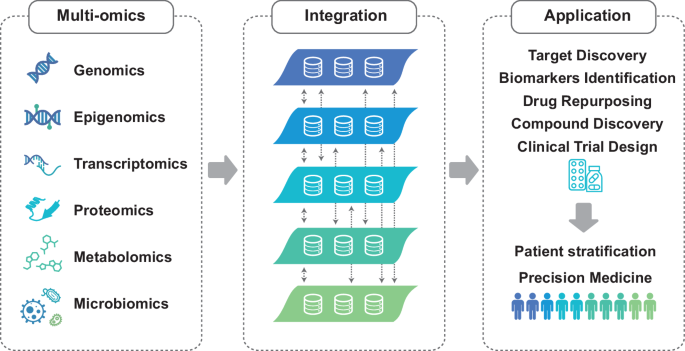
Introduction Contemporary pharmaceutical development persists as an exceptionally high-risk venture characterized by clinical trial attrition rates that now exceed 90% and aggregate expenditures that have risen to an average of 2.6 billion USD for every therapeutic that ultimately secures marketing approval.1 These staggering metrics reflect more than escalating expenses in labor, materials, and regulatory compliance;
Realize LIVE Americas 2026 Recap – Day 2
The second day of Realize LIVE Americas 2026 at Huntington Place in Detroit, Michigan, saw the 3,000 strong community of Siemens’ users, experts, industry leaders and partners gathered another day of learning, networking and hands-on technical immersion. With more than 450 sessions delivered across the event and 70 percent of that content presented by customers, Realize LIVE is founded on the principle of a working community of engineers, designers and manufacturers sharing what they’ve built, what they’ve learned and where they’re heading next.
The Realize LIVE experience
The keynotes and general sessions set the strategic direction, but they’re only part of the story. Realize LIVE is built around a catalogue of deep-dive workshops and hands-on training labs spanning everything from industrial AI and simulation to digital thread strategy and cloud-native deployment. Attendees build their own itineraries around the topics that matter most to them, and the range is deliberately broad, covering aerospace, automotive, electronics, energy, medical devices and more.

The Solution Center at Realize LIVE Americas
At the heart of the event is the Solutions Center, a central hub where Siemens brings its latest innovations to life through interactive demos, product expert consultations and partner showcases. It’s where attendees go to get hands-on with the technology , ask pointed questions of the people who built it and explore what’s possible with the tools they already own. New this year is Braindate, a topic-driven networking experience sponsored by Microsoft that lets attendees host or join one-on-one and small-group conversations on subjects of their choosing. No topic is too big or too small, and the format is designed to foster the kind of candid, peer-to-peer exchange that rarely happens in a lecture theatre.
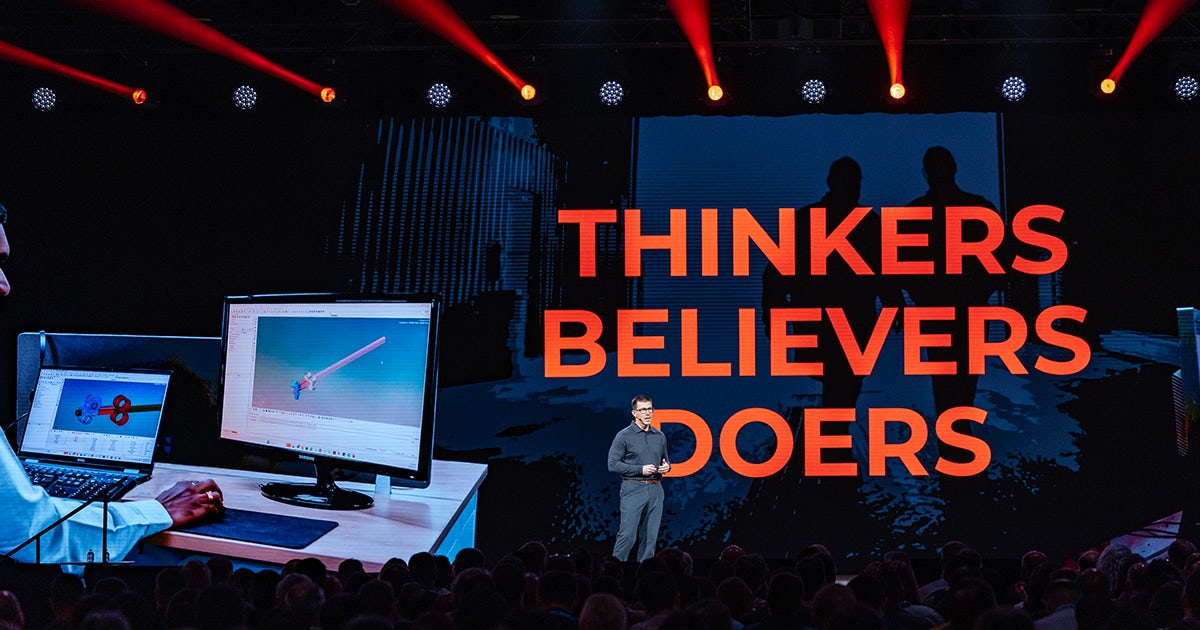
Joe Bohman opens up the second day
On the main stage, Joe Bohman, executive vice president of PLM Products at Siemens Digital Industries Software, delivered a wide-ranging keynote covering the evolution of the Siemens simulation portfolio, the rise of cloud-native products, manufacturing intelligence and the growing role of agentic AI across the product lifecycle.
Bohman opened by framing the challenge facing engineering teams: complexity is rising, timelines are shrinking and simulation has historically been locked behind specialist workflows and long preparation cycles. His answer was the new Simcenter, a unified simulation portfolio that brings together solvers, test solutions and AI-driven performance engineering under a single brand – driven by the acquisition of Altair last year.

Joe Bohman, executive vice president of PLM Products at Siemens Digital Industries Software
Simcenter Simsolid was a standout example. By eliminating the geometry preparation and meshing bottleneck, it takes engineers from CAD assemblies to structural analysis in minutes rather than hours. “We’re not replacing the physics. We’re removing the barriers to getting to it,” said Bohman. He walked through how Simcenter STAR-CCM+ continues to lead in computational fluid dynamics (CFD) and thermal simulation, while Simcenter FEKO delivers electromagnetic performance insight earlier in the design cycle. The message was clear: simulation should be accessible to every engineer, not just the specialists.
From silicon to systems with PAVE360
Bohman returned to the theme of pre-silicon verification, highlighting PAVE360 as the technology that lets customers validate embedded software against virtual hardware before physical chips exist. By connecting silicon, electronics, mechanics and manufacturing into a comprehensive digital twin, Siemens is enabling enterprise-scale verification that catches hardware-software integration issues months earlier than traditional lab-based approaches. Polarion, Siemens’ application lifecycle management (ALM) software, plays a central orchestration role, connecting requirements, test cases and change management into a single traceable digital thread.
Manufacturing intelligence and Opcenter
The second half of Bohman’s keynote shifted to manufacturing. He positioned Opcenter as the operational backbone of the smart factory, connecting production planning, scheduling, quality and execution into a single digital thread from engineering through to the shop floor. Bohman drew a direct line between the engineering digital twin and manufacturing execution, arguing that the industry is moving from reactive operations to predictive, AI-driven manufacturing where the factory itself becomes an intelligent system.
He highlighted Foxconn’s AI factory initiative with NVIDIA as a proof point, showing how Siemens’ technology is helping one of the world’s largest electronics manufacturers embed intelligence into production at scale. He also referenced NVIDIA’s Jensen Huang’s vision for AI infrastructure, positioning Siemens as a key enabler of that ecosystem.
Vibe coding, Intelligence Center X and the rise of the citizen developer
In one of the more forward-looking segments, Bohman introduced the concept of vibe coding, using natural language and AI to generate production-ready applications without deep programming expertise. Inteligence Center X, Siemens’ recently announced industrial AI orchestration software is central to this vision. Bohman demonstrated how manufacturing teams can build custom applications via Intelligence Center X that connect directly into Teamcenter, Opcenter and the broader Siemens Xcelerator portfolio, turning domain experts into application builders.
The Siemens Xcelerator as a Service portfolio
Bohman also outlined the continued expansion of Siemens’ cloud-native Siemens Xcelerator as a Service portfolio: Teamcenter X, Designcenter X, Simcenter X, Opcenter X and now Intelligence Center X. Each delivers the full capability of its on-premise counterpart as a managed cloud service through Siemens Xcelerator as a Service, with the added benefit of continuous updates, elastic compute and simplified IT management.
He framed the transition not as a migration exercise but as a strategic enabler. “This isn’t about moving what you have to the cloud. It’s about unlocking what you couldn’t do before,” said Bohman. He cited semiconductor lifecycle management as a prime example, with GlobalFoundries using it to connect design, fabrication and yield optimization across a global footprint. The closing message tied back to Intelligence Center X and the agentic AI vision introduced on day one, with Bohman describing a future where AI agents, orchestrated by Intelligence Center X and deployed on hyperscaler infrastructure, work alongside engineers and operators as a trusted hybrid workforce.
Shape Corporation: from reactive engineering to predictive manufacturing
Following Bohman in the second day’s general session, Ed Pleet, chief technology officer at Shape Corporation, gave a compelling account of how the Michigan-based manufacturer is fundamentally rethinking product development and manufacturing.
Shape Corporation engineers and manufactures crash and energy management systems that help modern mobility perform at a higher level. Historically grounded in automotive, the company is now expanding into aerospace, humanoids and other emerging technologies where complexity is increasing and faster development cycles are expected.
Pleet was clear that Shape’s transformation is not about digitizing for the sake of it. “We’re not taking our current process and just making a digital representation of that. We’re looking to redo most of our processes and then digitize that, and that’s a real return on our digital transformation,” he said.

Ed Pleet, chief technology officer at Shape Corporation
The ambition is bold: make the very first physical part a saleable part. No prototypes, no rework cycles, no waste. To appreciate why that matters, Pleet walked the audience through the legacy reality most manufacturers still face. Design teams would build CAD, mesh, simulate, fail and repeat. Manufacturing feasibility came too late, BOMs were created manually and systems were disconnected. The result was development cycles stretching to 18 months from concept to launch.
Shape has replaced that model with an AI-driven, parallel approach. By training machine learning tools on thousands of historical designs, the engineering team now generates new concepts with predicted performance outcomes and feeds them into automated parametric Designcenter models. “It used to take us months to bid a job in the development cycle. Now it happens in days,” said Pleet.
The gains extend into manufacturing. Using Simcenter Inspire Extrude, Shape has cut extrusion development from eight to ten physical iteration loops down to one, eliminating significant time and cost from a process that was previously one of the longest lead items in the program.
Pleet credited Siemens as a major enabler of the transformation. “Leveraging tools like Teamcenter, Designcenter, costing modules, change management and digital twin capabilities has been tremendous,” he said. “And with the acquisition of Altair and the integration of tools we’ve been working with for years, like Simcenter Hypermesh, Simcenter HyperView and Simcenter Inspire Extrude, we see tremendous scalability. Together, these technologies create the connected digital thread we need from concept all the way through manufacturing and execution.”
“What’s really exciting to me is not necessarily the technology itself, it’s what the technology enables,” Pleet concluded. “Faster learning, smarter decisions and the ability to solve problems that once seemed impossible. That’s the future we’re building at Shape, and we believe we’re just getting started.”
What’s next
Realize LIVE Americas continues tomorrow with the final general session and another packed day of learning, networking and community activities. If you’re not in Detroit, you can explore the full session catalogue and learn more about the event at https://events.sw.siemens.com/en-US/realizelive/americas/

Related Posts