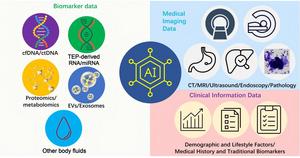
What if cancer screening no longer had to look for one cancer at a time? Cancer screening has long followed a one-organ-at-a-time model: mammography for breast cancer, colonoscopy for colorectal cancer, low-dose CT for lung cancer, and cervical testing for cervical cancer. These programs save lives, but they also leave gaps. Many cancers still lack

SE-HG-GNN: a novel explainable deep learning approach for financial distress prediction using optimized graph neural networks – Scientific Reports
- Article
- Open access
- Published:
- M. Kavitha1 &
- M. Kalamani2
Scientific Reports (2026) Cite this article
We are providing an unedited version of this manuscript to give early access to its findings. Before final publication, the manuscript will undergo further editing. Please note there may be errors present which affect the content, and all legal disclaimers apply.
Subjects
Abstract
Financial Distress (FD) prediction is a critical task of study for decision-makers. The accurate prediction of financial distress supports a company and its investors in avoiding major losses. The current FD prediction models have failed to achieve higher accuracy in prediction for various factors. These models are based on static feature selection, class imbalance, poor hyperparameter tuning, and a lack of explainability. To solve these issues, in this work, a novel deep learning model called Squeeze-and-Excitation Heterogeneous Graph Neural Network (SE-HG-GNN) is proposed for robust classification in imbalanced datasets. The core of the model uses Graph Neural Networks and Gated Recurrent Units (GRUs) for temporal encoding and message aggregation. The final representation is derived via an attention mechanism that dynamically weighs the importance of the self versus the neighbourhood context. To maximise predictive power, the hyperparameters of the model are tuned using Modified Spider Wasp Optimisation (MSWO). In addition, the training is stabilised against imbalance using the Focal Loss function. Experimental results and SHapley Additive exPlanations (SHAP) analysis show that the MSWO-tuned SE-HG-GNN achieves superior accuracy and provides enhanced interpretability compared to default configurations.
Funding
The authors received no specific funding for this study.
Ethics declarations
Competing interests
The authors declare no competing interests.
Additional information
Publisher’s note
Springer Nature remains neutral with regard to jurisdictional claims in published maps and institutional affiliations.
Rights and permissions
Open Access This article is licensed under a Creative Commons Attribution-NonCommercial-NoDerivatives 4.0 International License, which permits any non-commercial use, sharing, distribution and reproduction in any medium or format, as long as you give appropriate credit to the original author(s) and the source, provide a link to the Creative Commons licence, and indicate if you modified the licensed material. You do not have permission under this licence to share adapted material derived from this article or parts of it. The images or other third party material in this article are included in the article’s Creative Commons licence, unless indicated otherwise in a credit line to the material. If material is not included in the article’s Creative Commons licence and your intended use is not permitted by statutory regulation or exceeds the permitted use, you will need to obtain permission directly from the copyright holder. To view a copy of this licence, visit http://creativecommons.org/licenses/by-nc-nd/4.0/.
Reprints and permissions
About this article

Cite this article
Kavitha, M., Kalamani, M. SE-HG-GNN: a novel explainable deep learning approach for financial distress prediction using optimized graph neural networks. Sci Rep (2026). https://doi.org/10.1038/s41598-026-64057-y
Download citation
-
Received:
-
Accepted:
-
Published:
-
DOI: https://doi.org/10.1038/s41598-026-64057-y
Keywords

Related Posts